The Muon Magnetism Mystery express
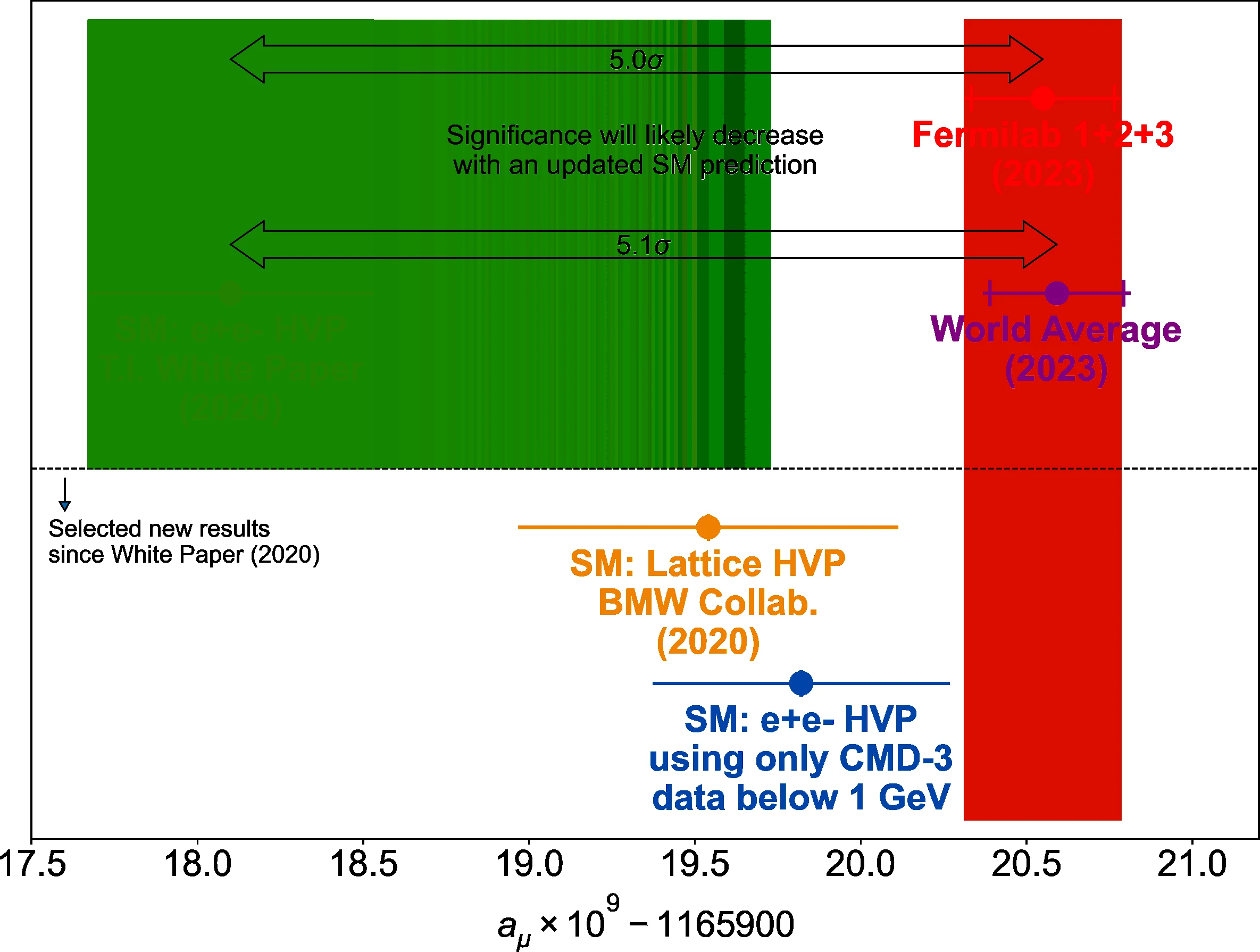
The muon is a tiny spinning top, twirling in the turbulent sea of the vacuum. Its magnetic axis points slightly away from what the Standard Model predicts. The deviation is just a couple of parts per million, but for physicists, it's a full-blown mystery.
The new MUonE experiment will be the first to measure this ripple directly: it will collide muons with electrons and track the bending of their paths. This will let us check whether particles of dark matter hide in this ripple, or echoes of forces from the Big Bang era. By the way, the same cosmic muons that fly through us have already peered inside Egyptian pyramids — and now they'll help us examine the very fabric of emptiness.
Muons constantly bombard Earth from space: about one muon passes through your palm every second.
In sci-fi, anomalies open portals to other worlds — the muon mystery could be a doorway to new particles and forces.