Popular

Supersolidity Is Born at the Liquid Boundary ⚡ экспресс

Original: "Fluctuation-Induced Supersolidity at the Superfluid-Solid Interface"
arXiv:2512.08739 · 2025-12-09 · CC BY 4.0 · ⏱ 1 min · Quantum Gases Mesoscale Quantum Physics
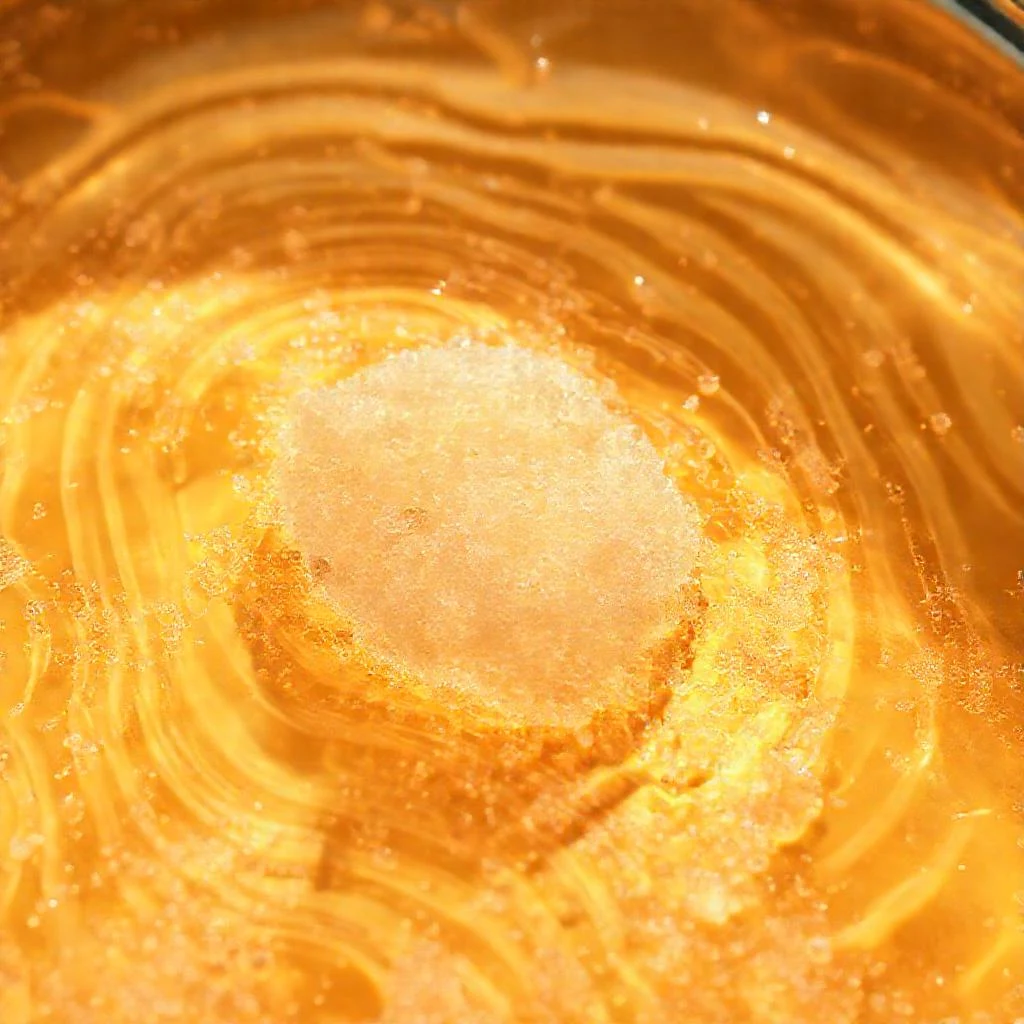
Special ripples on liquid helium’s surface freeze it solid—without altering what’s underneath.
Abstract

Supersolidity is an exotic state that combines crystalline order with superfluidity (the ability to flow without friction). It's usually achieved in ultracold gases by finely tuning atomic interactions. New research shows that supersolidity can emerge without such tuning—simply at the boundary between a superfluid liquid and a solid wall. The interplay of sound vibrations in the liquid and the solid causes a crystalline ripple to spontaneously appear near the surface, while the bulk remains superfluid. It's like waves suddenly freezing yet still flowing. This hybrid material could let us harness both the properties of a solid and a superfluid quantum liquid simultaneously.

Links in the knowledge graph 1

📄 Showing the "Simple" version — "Popular" is not ready yet. Add it to favorites to help prioritize it.

A supersolid is ice that flows. Think of a pond with a frozen crust, but beneath it, a liquid depth without friction. Usually, creating that crust means changing the liquid's properties throughout its entire volume. A team of researchers studying liquid helium found a simpler way: they made the surface vibrate with special waves, and the liquid grew its own solid 'skin.'

Those vibrations weren't just ordinary ripples—they were quantum whirlpools called rotons, whose nature was uncovered by Feynman. By coupling with the motion, they order the atoms at the boundary into a crystal. In BoseEinstein condensates, a similar effect occurs when the wavelength matches the trap size. The result is a material whose surface holds its shape while the inside flows freely. It’s possible that similar processes harden the crust of neutron stars.

🎯 The idea of supersolidity is over half a century old, but it wasn’t until 2017 that it was realized by trapping ultracold atoms in a laser cage.

Scientists
Jacob BekensteinStephen HawkingLudwig BoltzmannEnrico FermiPaul DiracSubrahmanyan Chandrasekhar
Tags
helium entropy neutron star
Laws
second law of thermodynamicsBekenstein-Hawking entropyBoltzmann distributionFermi–Dirac statisticsfirst law of thermodynamicsChandrasekhar limit
Original: arXiv:2512.08739 · CC BY 4.0 · bridge42worlds