The 'Chef' Black Hole That Prevents Star Birth express
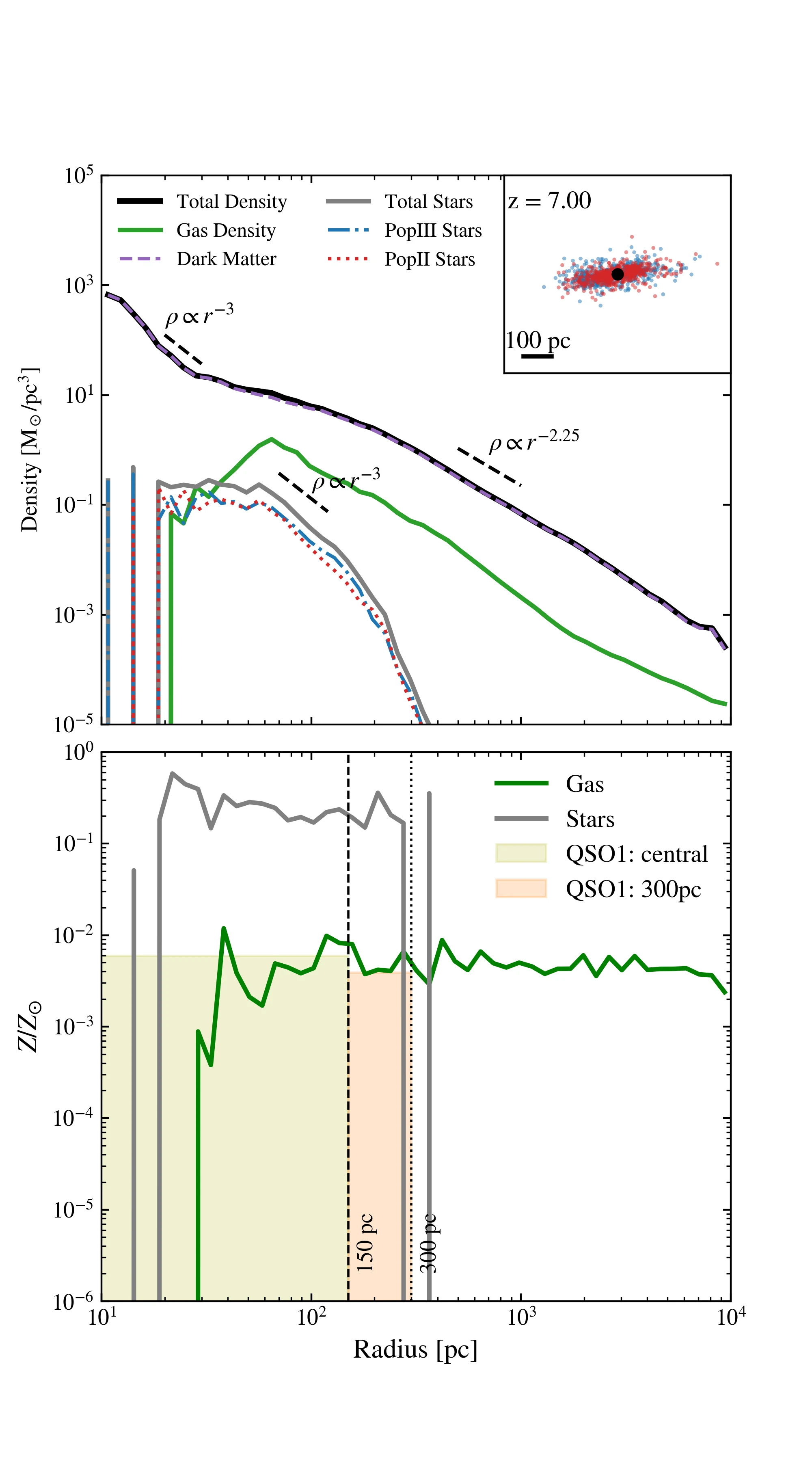
The James Webb Space Telescope spotted galaxy Abell 2744-QSO1, which has almost no heavy elements (astronomers call them metals), and its central black hole weighs hundreds of times more than all its stars combined. Standard scenarios can't explain this imbalance.
The answer may lie in a special type of black hole — one born not from a star, but from a clump of ultra-dense matter right after the Big Bang. This giant hole (about 50 million solar masses in the model) behaves like an extreme chef. It voraciously gobbles up gas, but in doing so, it heats the galaxy's 'oven' so fiercely that the stellar 'dough' can't set — stars fail to ignite. When the first stars do eventually burst to life, they quickly saturate the gas with metals. The hole then ejects this 'oversalted' batch and pulls in fresh, clean fuel from intergalactic space. The cycle repeats, leaving the galaxy almost metal-free but with a grossly overgrown black hole.
In a surprising twist, this same turbulent cooking makes the hole's surroundings dazzlingly bright — like an open oven lighting up everything around it. It was this very light that allowed Webb to spot the galaxy at the edge of the observable universe.
Primordial black holes were first described in detail by Stephen Hawking in the 1970s. He suggested they could be extremely tiny but would eventually evaporate.