Diamond clocks without a thermometer express
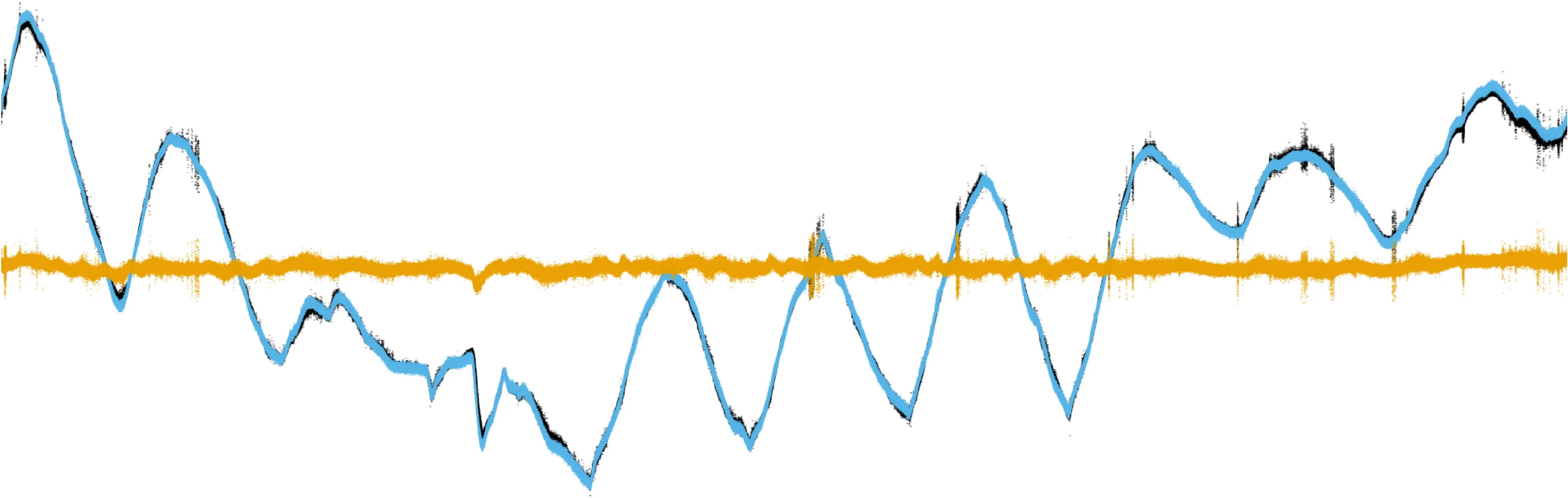
Heat an ordinary quartz watch by ten degrees, and it will start losing seconds each day. Atomic clocks are more precise, but they take up an entire cabinet. Diamond with a tiny defect, a nitrogen vacancy, promises atomic-clock accuracy in the volume of a grain of sand. One catch: this defect is highly sensitive to heat, like a tuning fork that changes pitch with air temperature.
In the new work, the defect was made to sing in two voices at once. One voice is electronic: it depends strongly on heat. The second is nuclear: it barely notices heat. If you measure both and subtract one from the other, the thermal error shrinks by a factor of two hundred. This trick resembles how sailors of old determined longitude: they compared local time with port time, and the difference gave their precise position.
Clocks made from such diamond were tested for ten consecutive days at room temperature, checked against rubidium atomic clocks. The timekeeping stability turned out better than that of any other solid-state clock of this size. And now the main enemies of accuracy are not temperature but weak magnetic fields and laser power fluctuations.
These diamond clocks will not replace large atomic standards, but they could go into smartphones, drones, and satellites where size and robustness matter. A small diamond that is not afraid of heat is a step toward having ultra-precise time always at hand.
The nitrogen vacancy in diamond is so sensitive that it can detect the magnetic field of a single electron from tens of nanometers away.