A Thermometer That Changes Color express
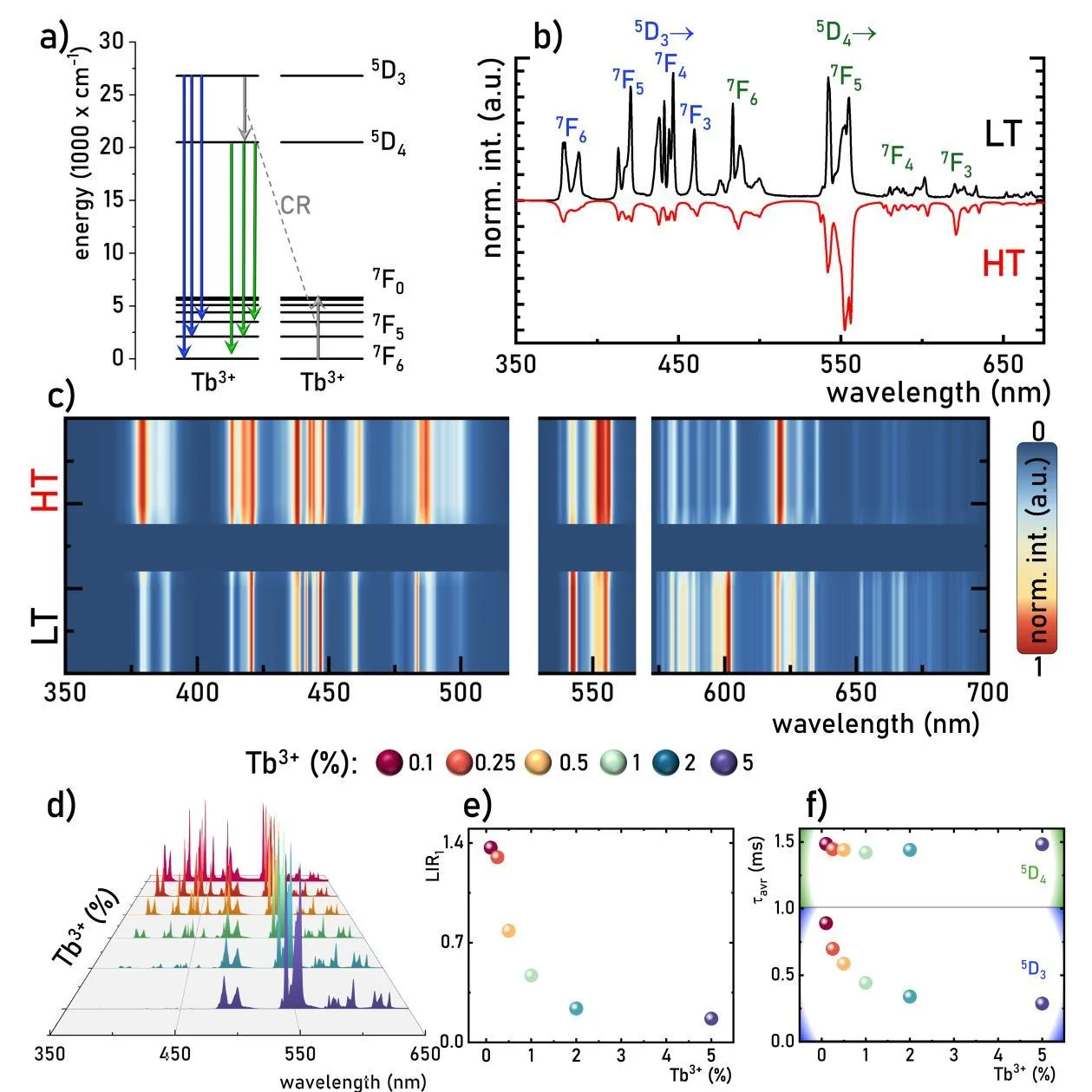
A piece of material glows blue. Heat it up, and the glow turns green, as if someone flipped a switch at a traffic light. That's how the new luminescent thermometer described in the paper works.
Inside the material are terbium ions — a rare-earth metal that knows how to shine. At room temperature, they emit blue light. But when heated above about 27 °C, the crystal lattice of the material slightly rearranges. The terbium ions find themselves in new positions, and a process kicks in that quenches the blue glow and switches on the green.
This material could serve as a simple, visual temperature sensor. For instance, coat a part that must not overheat and watch its color. Or capture a thermal map with an ordinary digital camera by separating the blue and green channels — no expensive infrared equipment needed.
A blue light that turns green with warmth — a simple way to see temperature with your own eyes.
Terbium is named after the village of Ytterby in Sweden, where the mineral containing this element was found. Three other rare-earth metals were also discovered there: yttrium, erbium, and ytterbium.