How Squeezed Light Makes Microscopes Sharper express
Even a laser beam has an invisible tremor — quantum noise. Physicists have learned to 'squeeze' it, like a balloon pinched at the waist: the noise quiets in one direction but amplifies in another. Scientists hid the excess noise where it doesn't interfere with precise light measurements.
Roy Glauber predicted such a trick, and now physicists have set a record: inside a tiny transparent waveguide — a light-guiding capillary — the noise was squeezed 35-fold. This hushed beam makes it possible to illuminate living cells and the water inside them with powerful light without overheating the sample. Composition analysis of cells becomes as clear as a radio signal after static is suppressed.
This same squeezed light already helps LIGO detectors pick up gravitational waves — the shudder of spacetime from black hole collisions, trillions of times quieter than a human whisper.
Original abstract
as written by the authors arXiv:2601.15565
Squeezed states of light enable enhanced measurement precision by reducing noise below the standard quantum limit. A key application of squeezed light is nonlinear microscopy, where state-of-the-art performance is limited by photodamage and quantum-limited noise. Such microscopes require bright, pulsed light for optimal operation, yet generating and detecting bright pulsed squeezing at high levels remains challenging. In this work, we present an efficient technique to generate high levels of bright picosecond pulsed squeezed light using a $$\chi^2$$ optical parametric amplification process in a waveguide. We measure $$-3.2~\mathrm{dB}$$ of bright squeezing with optical power compatible with nonlinear microscopy, as well as $$-3.6~\mathrm{dB}$$ of vacuum squeezing. Corrected for losses, these squeezing levels correspond to $$-15.4^{+2.7}_{-8.7}~\mathrm{dB}$$ of squeezing generated in the waveguide. The measured level of bright amplitude pulsed squeezing is to our knowledge the highest reported to date, and will contribute to the broader adoption of quantum-enhanced nonlinear microscopy in biological studies.
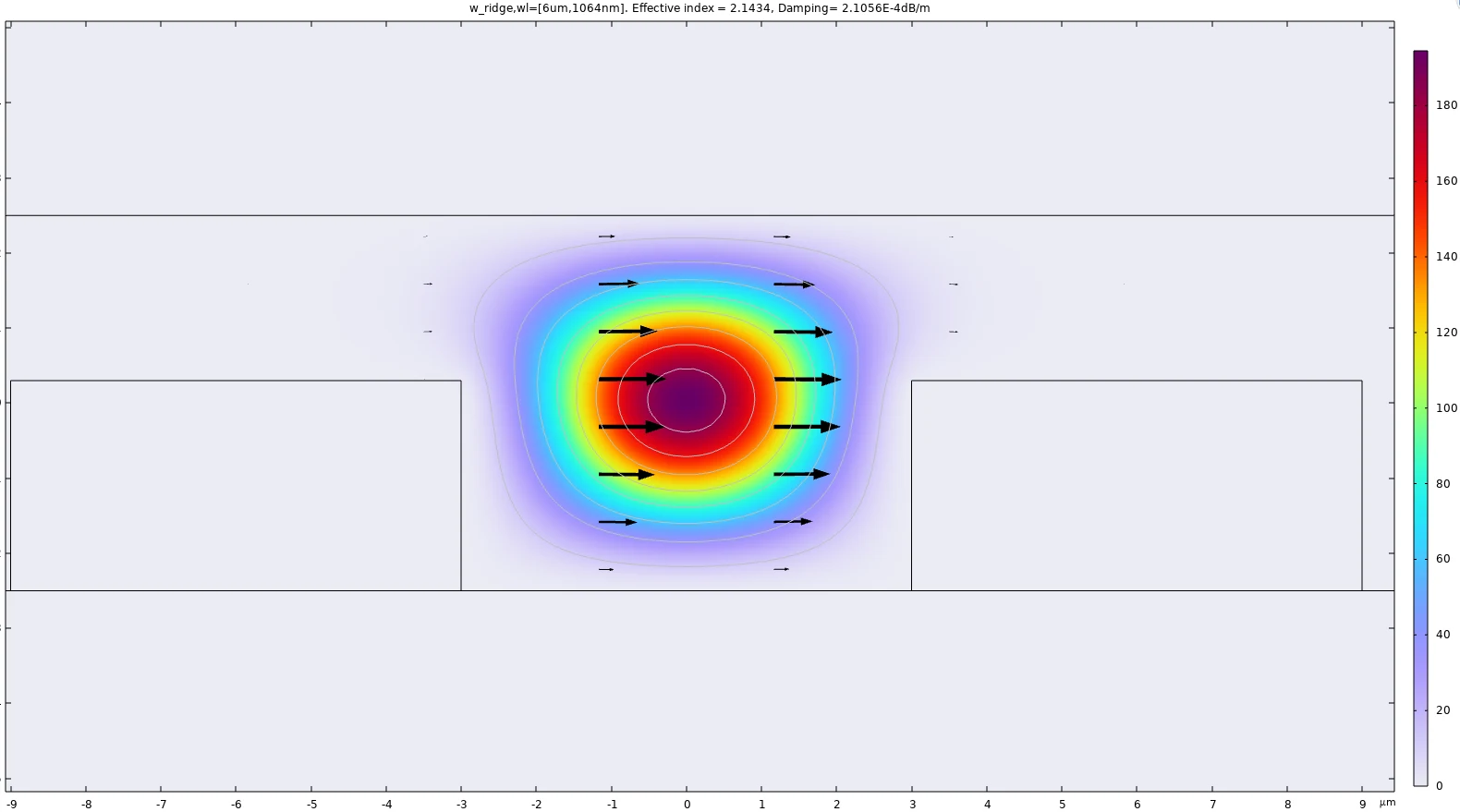
To achieve this squeezing, light was passed through a waveguide as thin as a human hair but several centimeters long.
Quantum squeezing turns light into an invisible scalpel, capable of cutting without touch and leaving behind only pure information.