Neutrinos are ghostly particles that barely interact with matter, passing through entire planets as if they were empty space. To catch them, physicists build enormous underground detectors — tanks filled with thousands of tons of ultrapure water, blocks of ice, or liquid scintillator — shielded from cosmic rays by kilometers of rock. When a neutrino does collide with an atomic nucleus, it produces a faint flash of light or a charged particle track that sensitive photomultiplier tubes can amplify and record.
History
The first neutrino detection was achieved in 1956 by Clyde Cowan and Frederick Reines, who used a tank of water near a nuclear reactor. Reines later won the Nobel Prize in Physics in 1995 for this work.
How it works
The detector waits for a neutrino to interact with a proton or neutron in the target material. In water Cherenkov detectors, a neutrino converts a proton into a positron and a neutron; the positron moves faster than light in water, emitting a cone of blue Cherenkov radiation. In ice detectors like IceCube, the same principle works with the Antarctic ice sheet as the target, using strings of optical sensors buried deep below the surface. The timing and pattern of light flashes reveal the neutrino's direction and energy.
In practice
Neutrino detectors are used to monitor nuclear reactors, study the Sun's interior, observe supernovae, and search for dark matter signals — as well as in proposed systems to detect stealth submarines by their neutrino emissions.
Fun fact
A single neutrino has a 50% chance of passing through a light-year of solid lead without interacting.
Deep inside a mountain, where cosmic-ray muons are muffled by a thick layer of rock, stands a detector that catches not light but its absence. Positronium is a tiny atom in which an electron and its antiparticle, the positron, circle each other like a pair of dancers. Usually they come together and vanish in a flash of two or three gamma quanta.
The universe is constantly sending us signals, but many are too faint to notice. Relic neutrinos, particles left over from the Big Bang, pass through Earth by the billions every second, yet catching even one is a feat on the edge of possibility. We need a detector that can sense energy a thousand times smaller than what it takes to move a speck of dust.
Empty space is not as empty as it seems. According to quantum theory, the vacuum is filled with particles that constantly pop in and out of existence. In 1976, physicist Bill Unruh showed that if an observer moves with acceleration, this 'quantum soup' turns into a genuinely warm bath for them — the Unruh effect.
At nine in the morning, the DarkSide-50 detector, 1400 meters beneath Gran Sasso, records a weak ionization pulse. By eleven at night, the frequency of such events drops noticeably. This is not an electronics glitch or a seasonal background variation.
A huge pool of clear liquid is hidden deep underground. Inside, there is nothing but a pristine 'broth' that flashes with faint light when an invisible particle flies through. This is the JUNO detector—20,000 tons of liquid scintillator built to hunt for neutrinos.
The main enemy of such a hunt is not darkness but its own noise.
Dark matter — the invisible architect of the universe, holding galaxies from flying apart. Thanks to the pioneering work of Fritz Zwicky and Vera Rubin we know: ordinary matter in the cosmos is just a negligible impurity. But what lies behind this dark matter?
An old photograph taken at the moment of the universe's birth has been carrying its light to us for nearly 14 billion years. This snapshot is the cosmic microwave background, the cooled echo of the Big Bang. It captures the tiny inhomogeneities from which galaxies later grew.
An invisible fence blocks the strait. You can't climb over it or dive under it: it's not made of steel, but of a stream of particles penetrating the water column. That's one way to describe the idea of detecting nuclear submarines by their antineutrino emission.
A dark matter detector is like a room where you're trying to hear a whisper while static electricity crackles nearby. This crackle is produced by radon atoms — a radioactive gas that seeps out from materials and air.
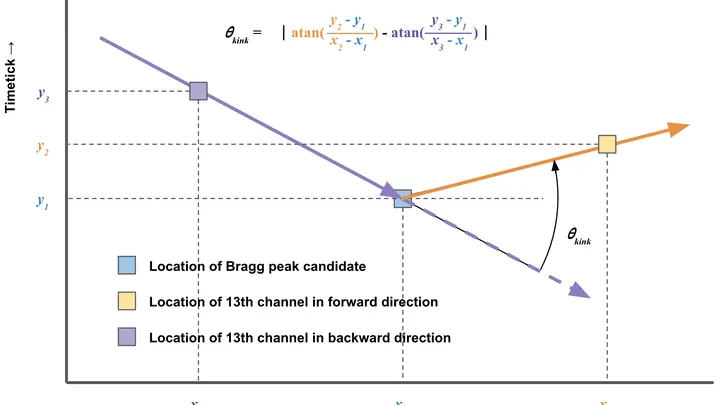
The MicroBooNE detector is a large tank of liquid argon that catches particles flying through it. When a particle passes, it leaves a trail of charge and a flash of light. These trails combine into a three-dimensional picture of the event, as if the particle were drawing its path in a transparent cube.
In a field stands a tank of water that usually catches particles from space. Now it keeps an eye on how much moisture is in the soil underfoot. The water in the tank acts as a trap for neutrons — tiny particles that fly out of the soil when cosmic rays hit it. The drier the ground, the more neutrons escape, and the more often the tank registers them.
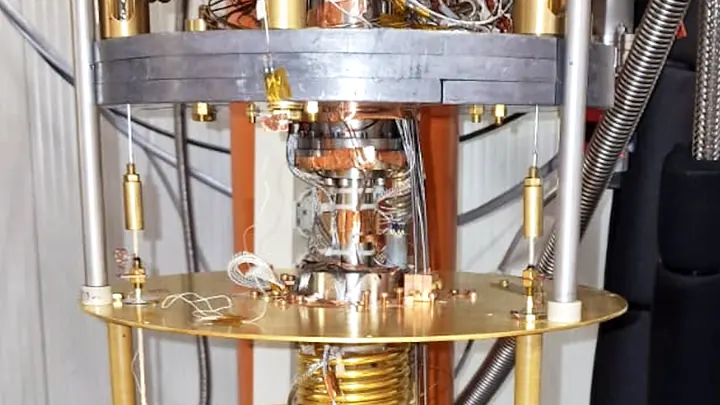
Ancient lead that lay on the seafloor for two thousand years has become the heart of a detector searching for the most elusive substance in the universe. From it, researchers grew a transparent lead tungstate crystal weighing 13 grams and cooled it to near absolute zero.
Heavy water (the kind where ordinary hydrogen is replaced by its beefier cousin, deuterium) was subjected to an electric current. Palladium settled on the cathode, and in this modest electrochemical bath, detectors repeatedly caught something unexpected: traces of slow neutrons.