X-ray Light from the Lab express
An X-ray telescope captures light from hot gas around stars, but that light arrives 'blurred'—like a voice over a bad phone line. To make out the words, you need a dictionary of the exact frequencies at which atoms glow. Such a dictionary is written not only with calculations but also with direct experiments.
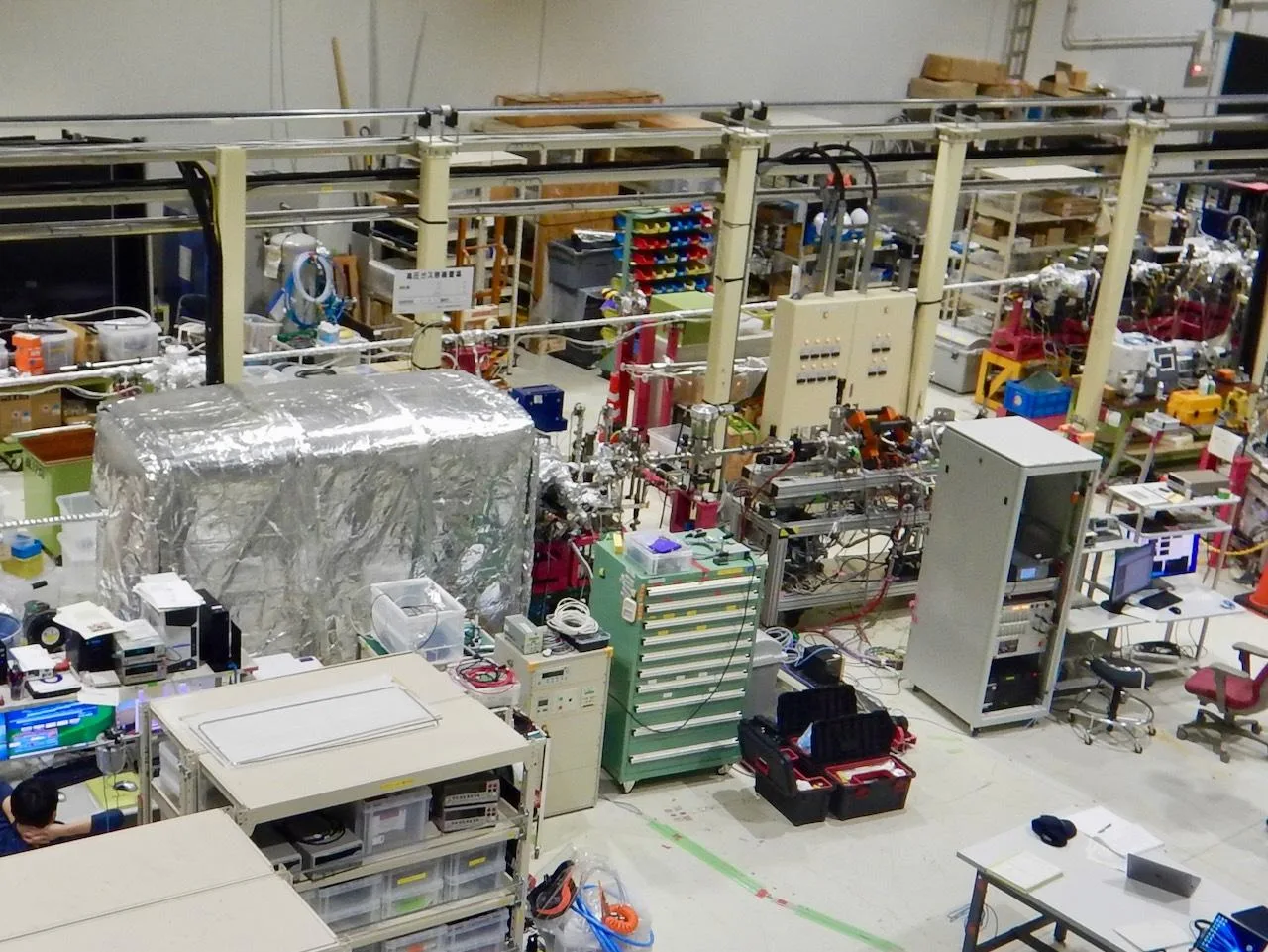
In a Japanese lab, researchers assembled a device — a trap where an electron beam holds iron and oxygen ions like an invisible cage. When an ion captures energy, it emits an X-ray of a very specific color. The scientists measured these colors with high precision by illuminating the trap with synchrotron radiation — a very bright X-ray flashlight.
It turned out that one of the transitions in the iron ion is slightly weaker than previously thought. It's like adjusting the volume of a single note in a sheet of music. Now astronomers will be able to determine more precisely how much iron and oxygen are in distant gas, and better understand how stars live and die.
An iron ion stripped of 16 electrons glows so brightly in X-rays that it can be seen across the entire Galaxy.