A Laser Wall for Particle Beams express
In giant particle accelerators, particles fly at nearly the speed of light and smash head-on. But sometimes one beam is slightly denser than the other, like someone stepping onto a packed escalator the wrong way. Then collisions become uneven, and detectors start 'flickering,' throwing off measurements. To prevent this, you need very precise control over beam density.
Scientists propose using a laser for this. A light beam aimed at the particles gently pushes them back, like a jet of water from a hose knocking back a light ball. This effect is called inverse scattering: a particle gives up some energy to a photon and changes its trajectory. If you aim the laser at an overly dense spot in the beam, it 'trims' the extra particles and smooths the flow. The same idea works as an unbreakable barrier: a laser beam won't break or overheat, unlike the metal plates currently used to trim beams.
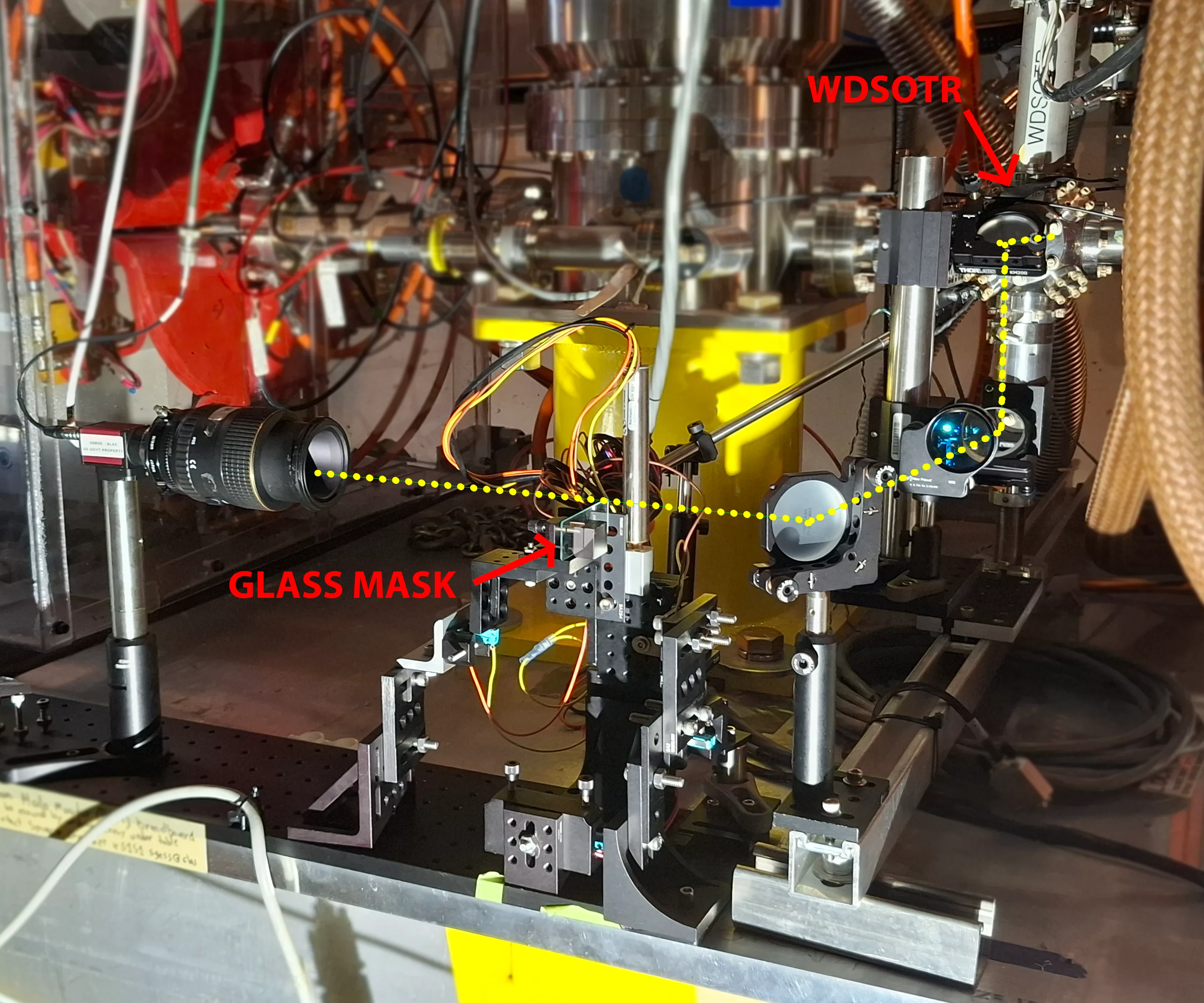
These ideas are being tested at the FACET-II facility in the US. An experiment is already being prepared there: an electron beam will be collided with a laser pulse, and researchers will watch how its shape and density change. Special detectors will measure how many particles were deflected and how much smoother the beam became. If it works, such laser 'walls' could be installed on the future circular collider FCC-ee, which will be several times larger than the current Large Hadron Collider.
A laser stream that pushes away extra particles, like water pushing a ball, could become an indispensable tool for the most precise machines on Earth.
The pressure of sunlight on Earth is only half a milligram per square meter — about the weight of a small ant, but in space that's enough to propel sails.
In the novel 'Firefly,' laser sails propel ships to distant stars, the same force being tamed in accelerators.