A Comb for Magnetic Waves express
Waves in magnets resemble the vibrations of a string: if you pluck a string, it sounds a single note, but with a strong pluck, overtones appear — sounds at multiple frequencies. In magnonics, spin waves play the role of the string, and magnonic frequency combs play the role of overtones: a series of lines spaced at equal intervals, like the teeth of a comb.
So far, such a comb has been produced via three-magnon scattering: three waves collide and generate new frequencies. The process is finicky: it requires high power and strict matching of momenta and energies, like in billiards where balls must strike at an exact angle. The authors of the new work propose a different route — stimulated generation, where the comb emerges at lower cost and can be tuned.
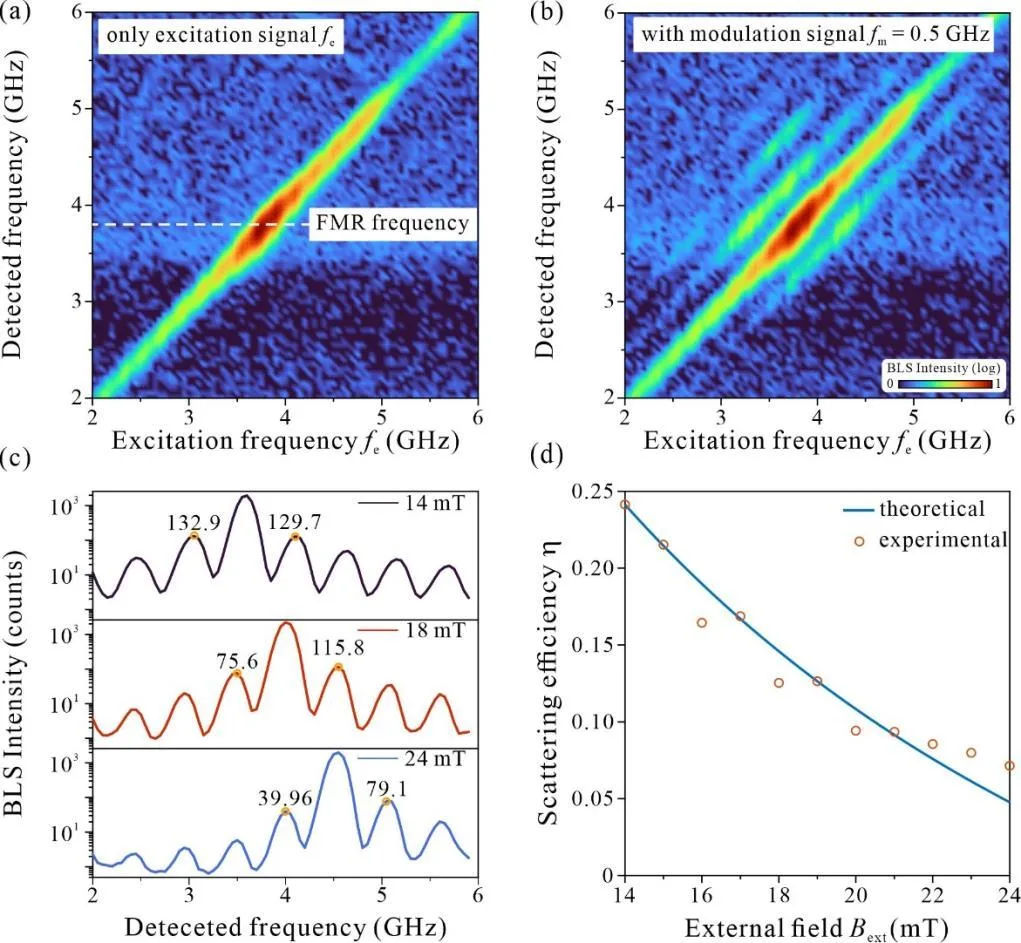
The method was verified in three ways: analytical calculations, computer simulations of micromagnetics, and a live experiment. All three confirm that the comb can be created controllably. This is an important step toward embedding magnonic combs in real devices — from sensors to signal-processing circuits, where waves of magnetization run instead of electricity.
Magnons are quanta of spin waves, and they can carry information without moving electrons, and thus with almost no heating.