Spectromicroscopy: Seeing the Unseen in Just 4% of Measurements express
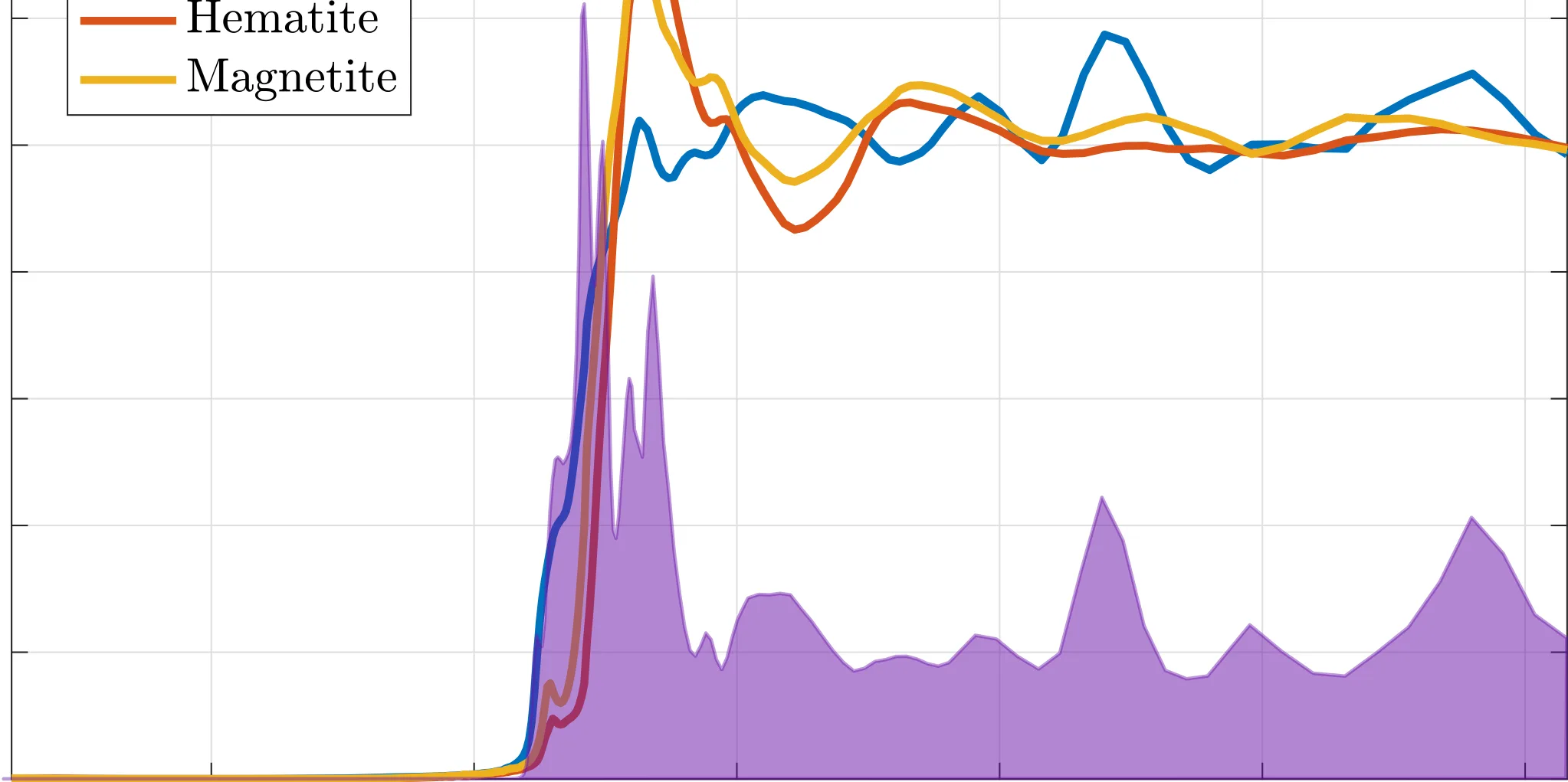
A chemical map of a sample is like a mosaic: each point has its own color, its own chemical composition. To assemble such a mosaic, a spectromicroscope scans the sample point by point, recording a spectrum at each location — a "fingerprint" of how the material absorbs or emits light. But a full scan takes hours, and the X-ray or electron beam gradually damages the sample.
The new strategy is like a skilled mosaic restorer: instead of placing every single tile, they pick a few key fragments and reconstruct the entire pattern. Scientists measure only 4–6% of the points, choosing them not randomly but based on importance maps: where the composition changes more rapidly, they measure more densely. Then mathematical algorithms fill in the missing spectra using neighboring points.
This approach is useful wherever chemical changes need monitoring, from hydrogen fuel cells to living cells. The sample suffers less damage, and the researcher gets the same information as from a full scan.
Original abstract
as written by the authors arXiv:2602.03744
Spectro-microscopy is an experimental technique which can be used to observe spatial variations in chemical state and changes in chemical state over time or under experimental conditions. As a result it has broad applications across areas such as energy materials, catalysis, environmental science and biological samples. However, the technique is often limited by factors such as long acquisition times and radiation damage. We present two measurement strategies that allow for significantly shorter experiment times and total doses applied. The strategies are based on taking only a small subset of all the measurements (e.g. sparse acquisition or subsampling), and then computationally reconstructing all unobserved measurements using mathematical techniques. The methods are data-driven, using spectral and spatial importance subsampling distributions to identify important measurements. As a result, taking as little as 4-6\% of the measurements is sufficient to capture the same information as in a conventional scan.
When selecting the 4–6% of points to measure, scientists use "importance maps": areas with sharp compositional changes are scanned more densely, while uniform regions are scanned sparsely. It's like how an artist renders the details of a face but only sketches the background.
The idea of reconstructing a full picture from a small sample echoes the "saccadic perception" in Ted Chiang's story "Story of Your Life," where aliens perceive the world not sequentially but all at once.