Four Sentinels of the Solar Wind express
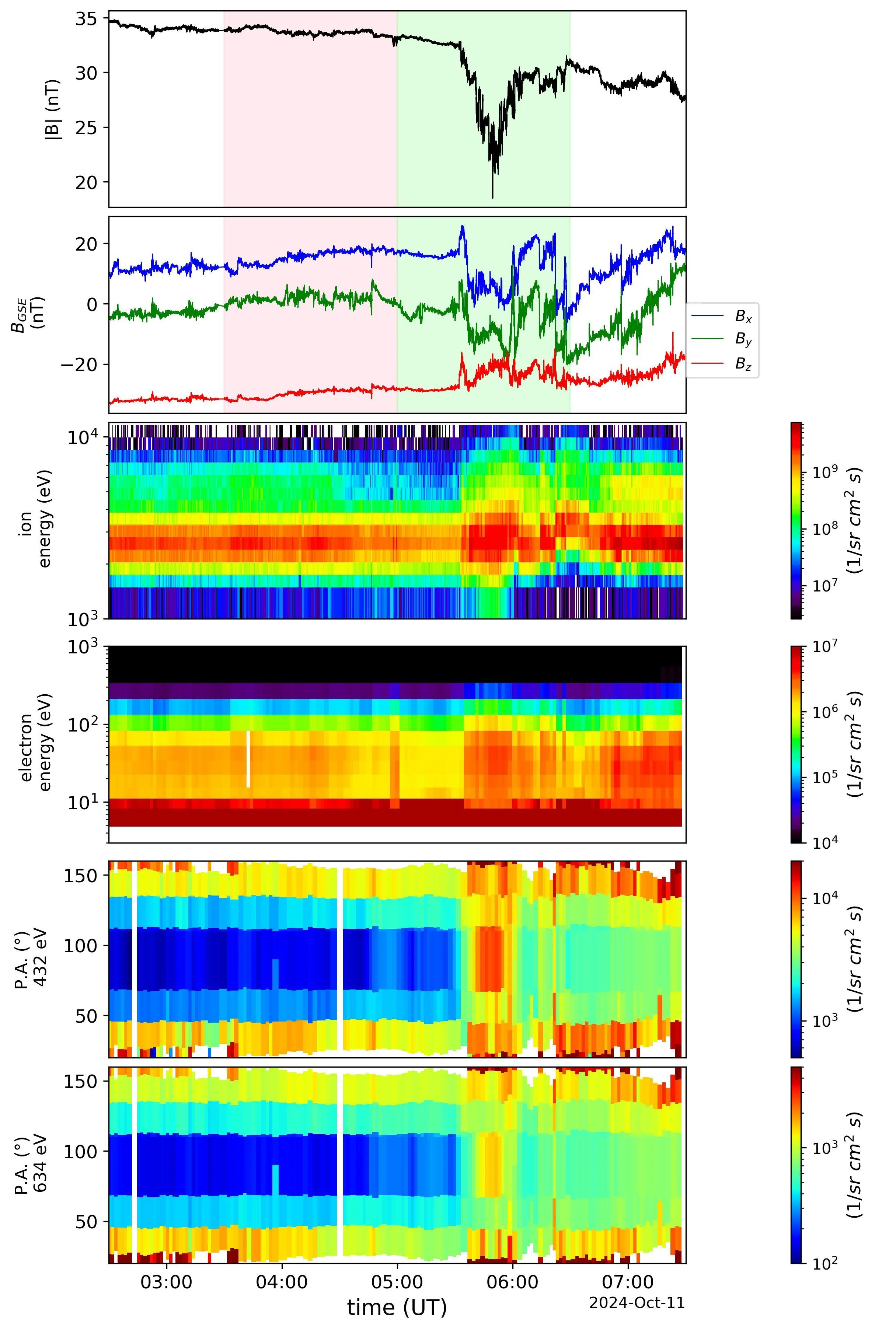
October 10, 2024. The Sun hurled a cloud of magnetized plasma toward Earth, and four spacecraft, stationed at a single point between the Sun and Earth, simultaneously recorded how that cloud churned. The distance between the outermost probes was just 80 Earth radii, about half a million kilometers. By cosmic standards, that's like four buoys in the same harbor.
But the buoys' recordings differed. The turbulence, chaotic swirls of the magnetic field within the cloud, was not the same even over such a small patch. In one spot it had already calmed down, while in another it was still seething. Inside the cloud, there were zones where energy cascaded from large eddies to small ones at different rates: along the magnetic field lines at one pace, across them at another. And where the cloud slammed into the regular solar wind, the turbulence sharply intensified, like water churning around a bridge pier.
The most interesting finding came from the interaction zone within the cloud itself. Where magnetic ropes rubbed against each other, the turbulence became compressible — the plasma thickened and thinned like air in a sound wave. This is a direct signature of magnetic reconnection, the process that tears and reconnects field lines, releasing energy. Such processes inside the ejection may determine how strong the magnetic storm at Earth will be.
The practical takeaway is simple: a single satellite at L1 does not see the whole picture. To predict space weather reliably, you need a chain of sensors spread over at least half a million kilometers. Four buoys in a harbor showed that even within one harbor, the waves differ.
The Lagrange point L1 lies 1.5 million kilometers from Earth — four times farther than the Moon. But for watching the solar wind, it's the front line: from there, plasma takes about an hour to reach Earth.