A Glimpse of Light, Captured in an Instant express
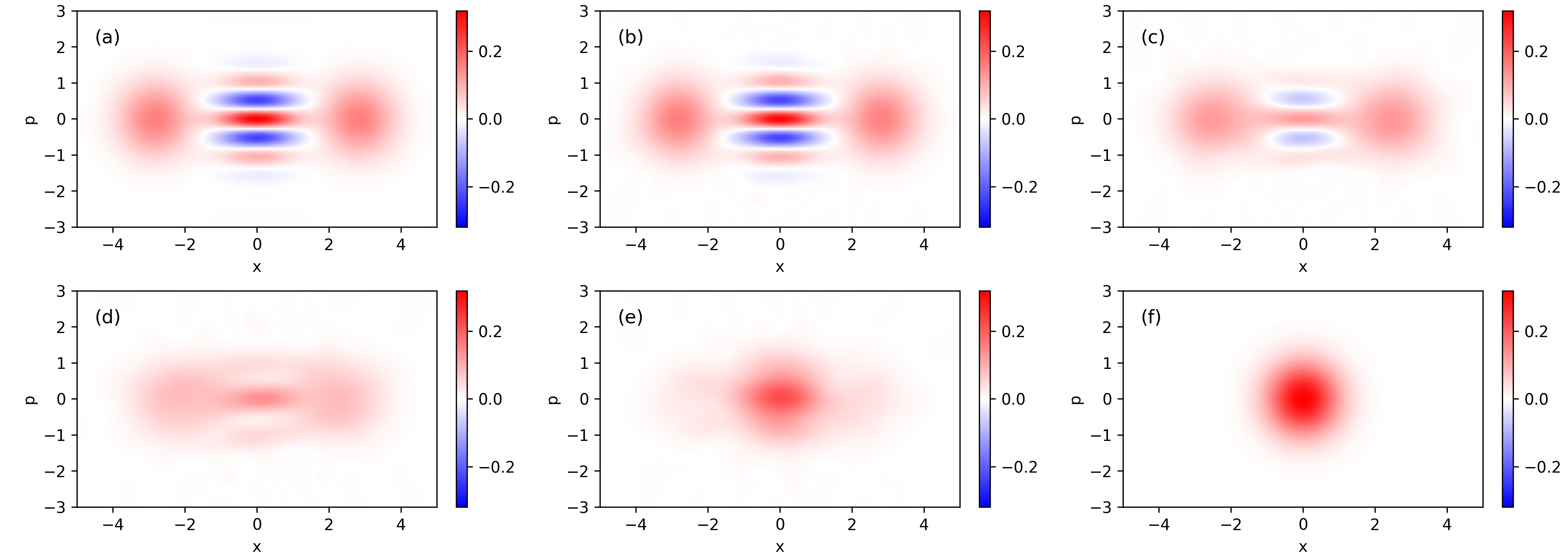
Light can be more than just a stream of particles; it can be a wave with a specific shape over time. Sometimes this shape changes so rapidly that capturing it is like photographing a bullet in flight. Scientists have devised a way to measure such fleeting quantum states of light.
For this, they use a device called a balanced homodyne detector. It works like a highly sensitive scale for light: it compares an unknown signal with a reference beam and produces an electric current that oscillates in sync with the light waves. The problem is that the signal from a short pulse can be distorted or lost. The authors developed an algorithm that accounts for possible measurement errors and helps recover the true shape of the light pulse.
The method has been tested in computer simulations. It allows not only precise measurement of short pulses but also tomography — a complete map of the quantum state. It's like taking an X-ray, but for a quantum wave. The practical benefit lies in quantum communication and computing, where information is encoded in such short light signals.
In the future, such measurements could help build more reliable quantum networks. If we can accurately read light messages, we can also transmit them without errors.
Original abstract
as written by the authors arXiv:2602.13946
We present an analysis of the time domain measurement of temporally resolvable quantum states using balanced homodyne detection. Our approach outlines a formalism of detecting quantum states in arbitrary temporal modes via projection of the temporal mode onto a natural detector basis. We then present an algorithm for simulating the resultant photocurrent of continuous homodyne detection in the presence of a temporally resolved mode, and use this algorithm to explore the effects of realistic measurement errors on marginal reconstruction and quantum state tomography. A complete implementation of the method is provided through open source code on a GitHub repository.
The balanced homodyne detector is so sensitive that it can detect a change in the light field smaller than the energy of a single photon.
In the series Star Trek, quantum communication is used for instant data transmission through subspace: it seems our technology is taking the first step toward such a future.