Lungs Like a City: How Air Flows Through Bronchial Streets express
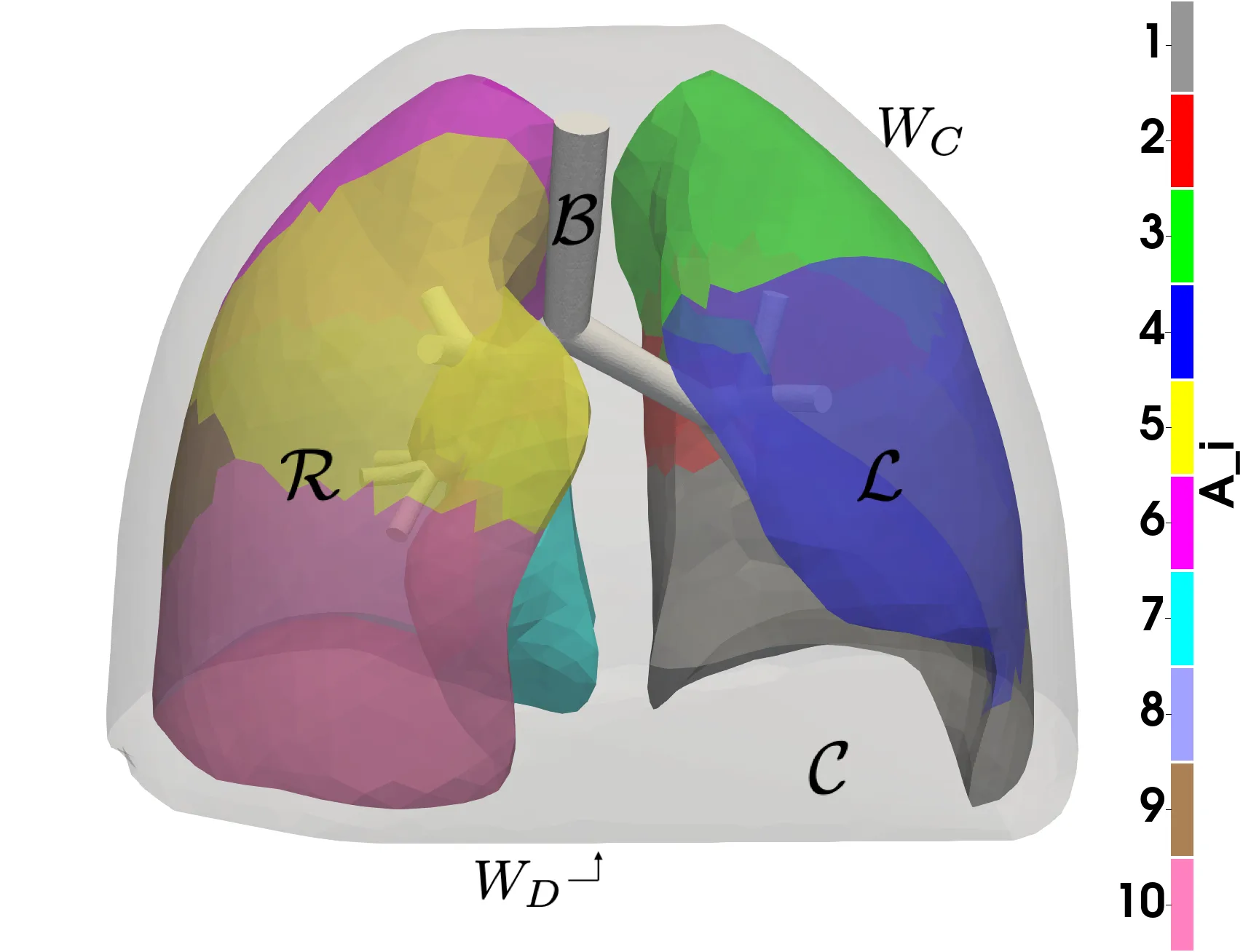
A lung scan reveals a tree: the trunk is the trachea, branches are the bronchi, and leaves are the alveoli. But how does air spread through these branches? Scientists built a computer model that replicates the lung's shape from images obtained via computed tomography. Large branches were taken directly from the scans, while smaller ones were drawn in following the rules of how a real tree grows.
The lung tissue in the model is elastic, like a rubber glove: it stretches during inhalation and pulls the bronchi along. Air flows inside with inertia considered, like water in a hose that can't be stopped instantly. The bronchial walls are also pliable: they slightly expand under the pressure of air. All this was calculated on a computer by dividing the lungs into thousands of tiny pieces.
The results showed that air flows differently in various corners of the lungs. In some places, it lingers; in others, it rushes through too quickly. Particularly interesting are shear stresses — the forces with which air rubs against the bronchial walls. Too much friction can damage delicate tissue, while too little might prevent the lungs from expanding properly.
Such a model is like a city map for a doctor. You can see where air traffic jams occur and where streets are empty. In the future, this could help tailor treatments to ensure air reaches the farthest corners of the lungs.
Original abstract
as written by the authors arXiv:2602.17265
We propose a multi-scale lung model to investigate spatio-temporal distributions of ventilation variables. Lung envelope and large airway geometries are derived from CT scans; smaller airways are generated using a physiologically consistent algorithm. Tissue mechanics is modeled using nonlinear elasticity under small deformations, coupled with local air pressure from fluid dynamics within the bronchial tree. Airflow accounts for inertia and static airway compliance. Simulations employ finite elements. Using this model, we explore spatio-temporal airflows and shear stresses distributions.
Human lungs contain about 500 million alveoli — if spread out flat, they'd cover the area of a tennis court.
In Robin Cook's novel "Pandemic," the virus attacks the small bronchi, and the heroes must fight for every breath — our model could show where air stops flowing.