The Proton: A Baryonic Core Within express
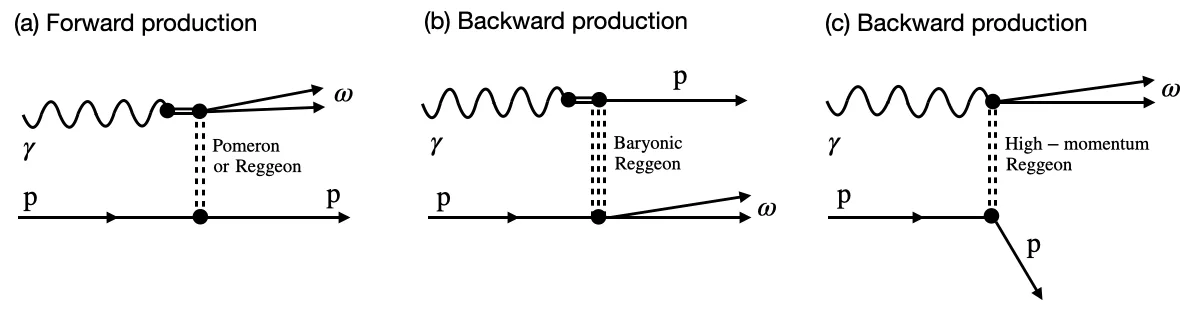
The proton is not a solid ball. Its charge, mass, and other properties are distributed differently in space, and each property has its own radius. Physicists have long been able to measure where the proton's charge is concentrated and where its mass lies. Now they've tackled another property — the baryon number, which indicates how many heavy particles (baryons) are involved in a process. It turns out that the proton's baryon number lives in a very tight core.
To see this, researchers collided photons with protons and looked at which mesons were produced: rho mesons, omega mesons, pions. By measuring how strongly these mesons scatter sideways (their transverse momentum), they could reconstruct the region of the proton from which they emerged. The method is similar to using ripples on water to determine where a stone fell. They found that the baryon number is concentrated in a region with a radius of 0.33–0.53 femtometers. One femtometer is one millionth of one billionth of a meter, roughly the size of an atomic nucleus.
For comparison, the proton's charge and mass are spread noticeably wider: their radius is at least 0.67 femtometers. So the baryon number is like a dense kernel inside a looser cloud of charge and mass. This picture helps us better understand how the proton is structured and why nuclear forces behave the way they do.
This result is another step toward a complete map of the proton's interior. The more precisely we know where things are inside these tiny particles, the better we understand the matter around us.
The radius of the proton's baryonic core is 0.33–0.53 femtometers. If the proton were the size of a football field, this core would be smaller than a ball.
In Liu Cixin's novel "The Three-Body Problem," protons are unfolded into multidimensional structures, but here we see that even an ordinary proton has a hidden internal structure with an unexpected distribution of properties.