Saturn's Thunderstorms Reveal Invisible Particles express
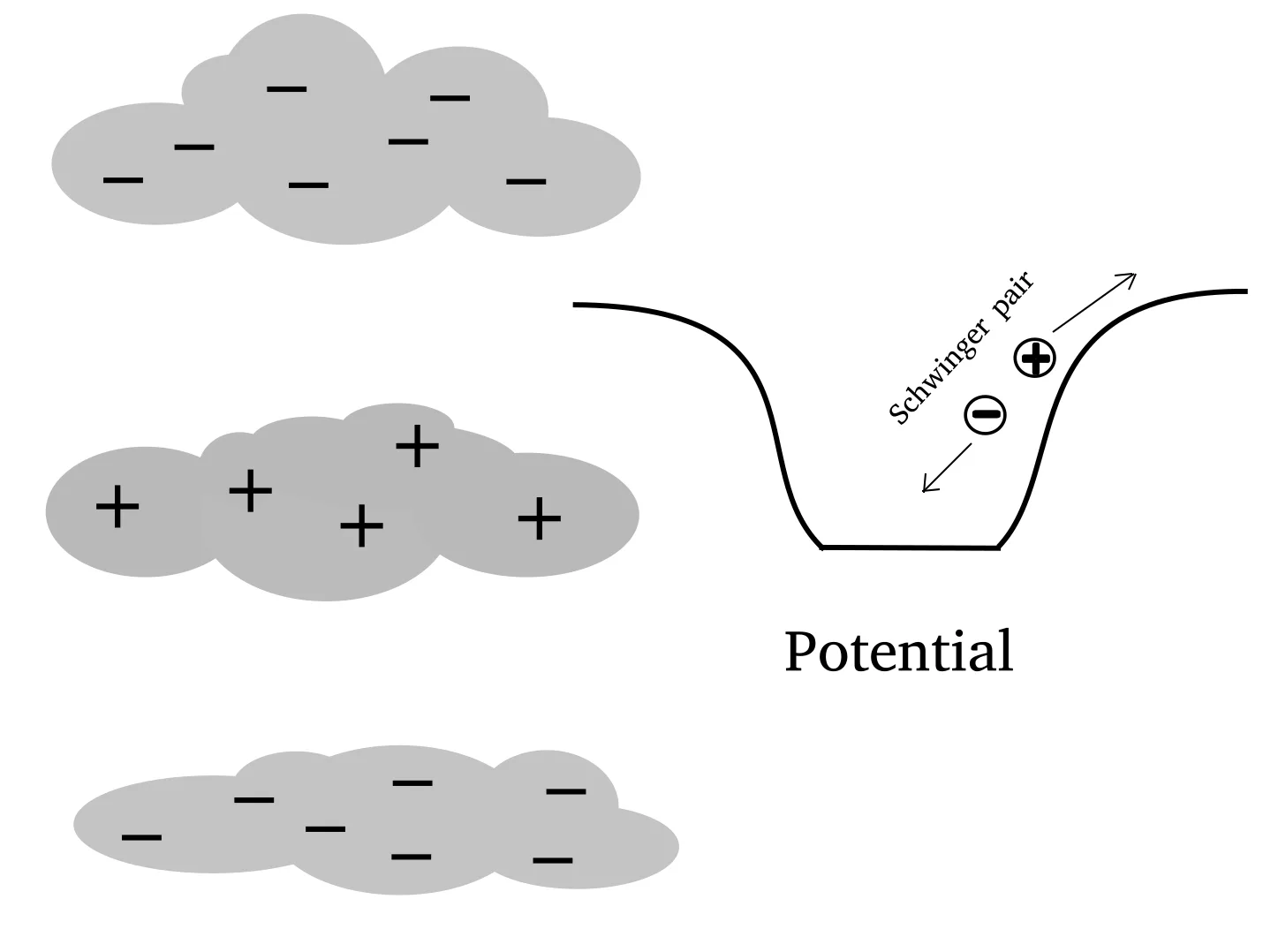
A thundercloud stores electricity like a battery before a flash. It can discharge in two ways: by lightning or by producing particles with a tiny charge: these are called millicharged particles. Such particles are nearly invisible to detectors, but their trace can be caught by how often lightning strikes.
The authors compared thunderstorms on different planets in the Solar System. It turned out that thunderstorms in Saturn's atmosphere provide the best constraints on millicharged particles. If the clouds there are layered, then the charge of such particles must be greater than one ten-septillionth of the electron's charge. These are the strongest constraints for bosonic particles to date.
The idea is simple: if millicharged particles are produced in a thunderstorm, they carry away energy, and there are fewer lightning bolts. By comparing how many lightning bolts we see with how many we expect, we can figure out which particles might have stolen the energy. Thus, an ordinary thunderstorm becomes a laboratory for searching for new physics.
A charge of $10^{-24}$ of the electron's charge is so small that at a distance of one meter, such a particle would be attracted to an ordinary electron with a force a billion times weaker than the attraction between two electrons.
In the series "Dark Matter," particles with fractional charge are the key to understanding the hidden sector of the Universe.