A Bead on a Balance: Catching the Decay of a Single Atom express
A tiny glass sphere floats in a laser beam like a speck of dust in sunlight. Inside it is radioactive lead, which decays from time to time. Each decay ejects charged particles, and the sphere loses or gains a tiny electric charge.
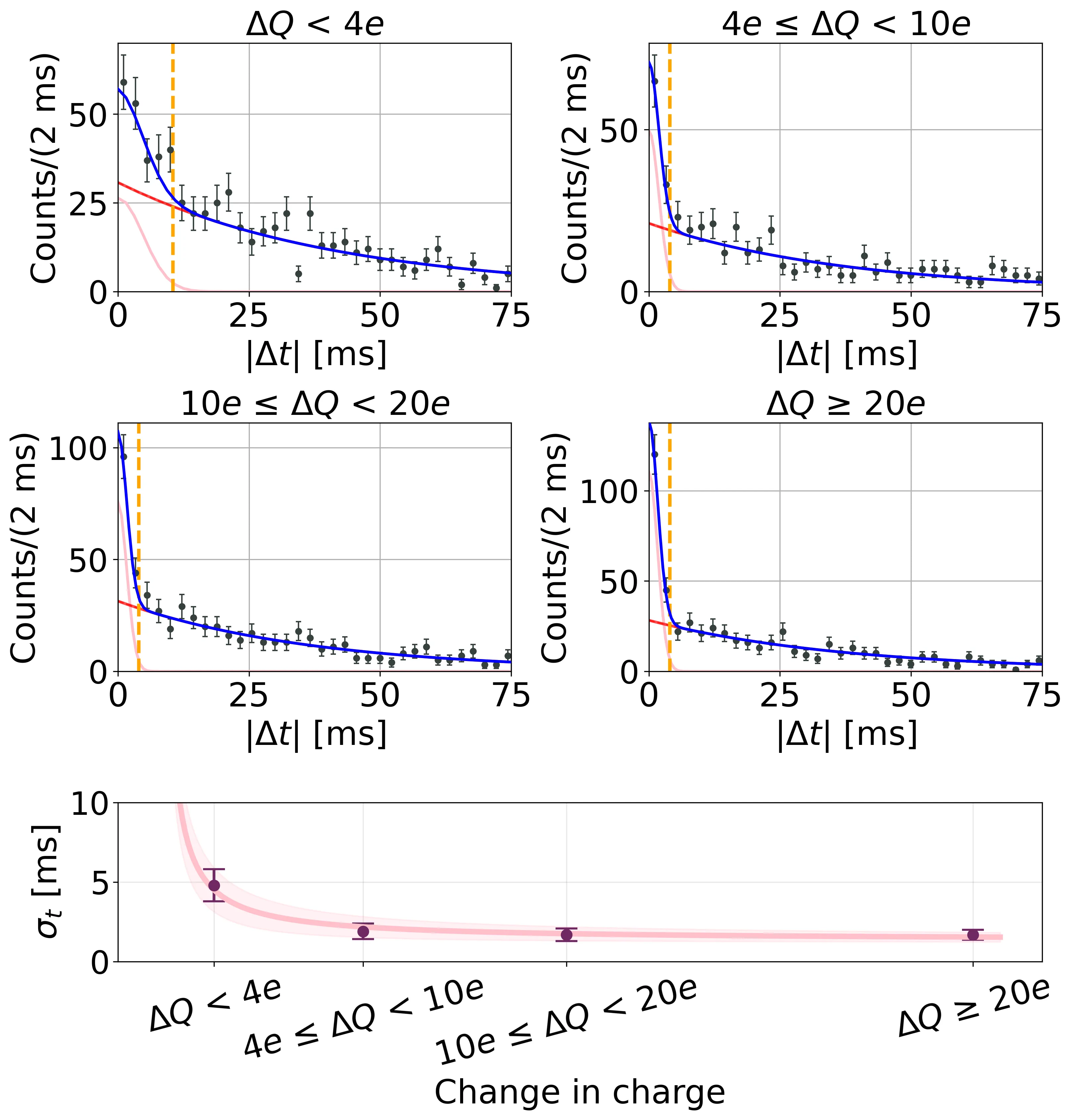
Scientists made the sphere oscillate in an alternating electric field and, from those oscillations, computed its charge a thousand times per second. A nearby detector caught the escaping particles. When the detector fired, the sphere's charge changed in a jump — by less than the charge of a single electron. In this way, they linked each decay to a change in charge.
It turned out that alpha decays and beta decays knock out different sets of charges from the sphere. Alpha particles, heavy and fast, carry away more charge, while beta particles carry away less. Moreover, the alpha decay of radon, which is born from the lead, knocks out a whole shower of slow electrons from the sphere's surface.
This method opens the door to studying the faintest radioactive emissions — one decay at a time. It's as if we learned to hear each raindrop hitting the glass, rather than just the overall noise of the storm.
The sphere is so sensitive to charge that it notices the loss of even a fraction of an electron's charge — less than the charge of any known free object.