Bacteria Teach Quantum Batteries to Store Light express
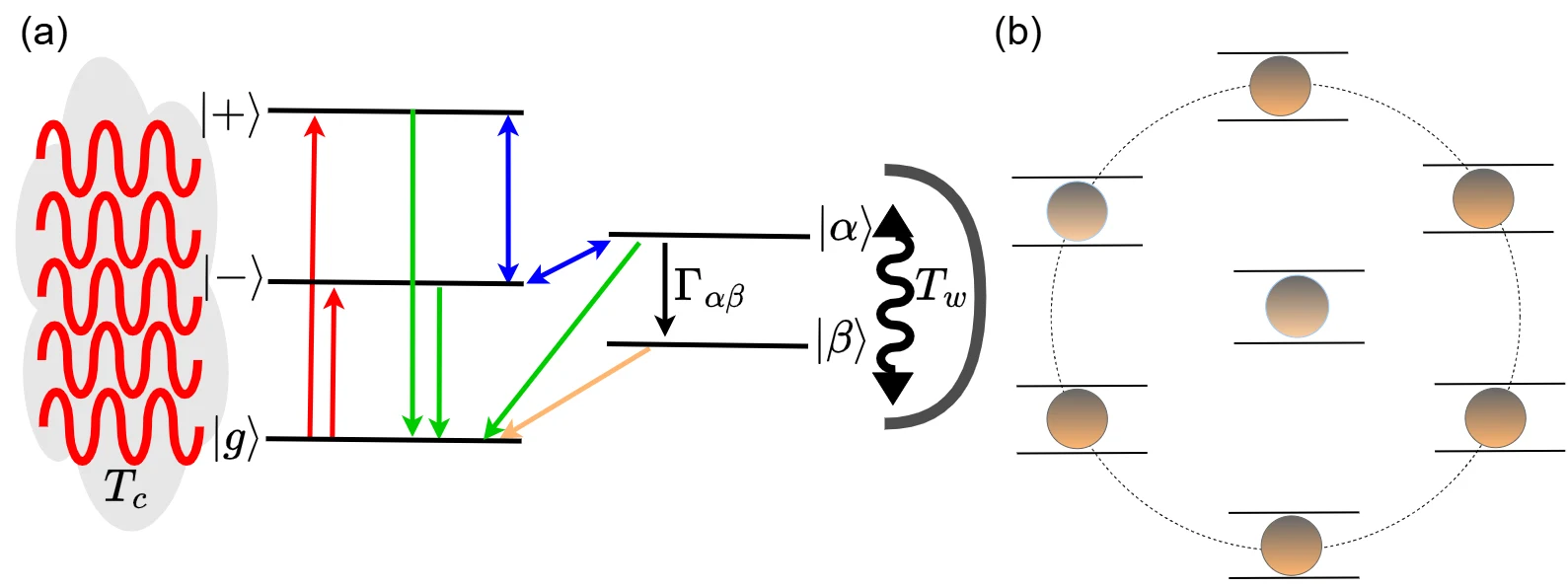
The quantum battery works like a sponge that absorbs light but won't release it without a forced squeeze. The inspiration came from bacteria's natural solar traps: capturing solar photons, they transfer energy almost losslessly, as proven by spectroscopy. Physicists recreated this principle by assembling atoms into a ring and placing them in a mirrored cavity. The collective behavior of the atoms created a one-way valve effect: energy easily enters, but the way back is blocked. This achieves entropic irreversibility — a concept developed by Ludwig Boltzmann.
This effect arises from quantum connections between the atoms. Regular batteries lose energy with each charge, but the quantum version promises near-perfect efficiency. The size of the ring affects performance: small rings deliver power faster, while large ones store more. With weak coupling to the cavity, output increases, but strong coupling turns the battery into a simple buffer.
Bacteria mastered this trick billions of years ago, transferring light with efficiency close to 100%. Now engineers dream of creating gadgets that charge in an instant and hold their charge forever.
Bacterial light traps transfer energy with 100% efficiency, without losses or heating — still an unattained dream of energy technology.