How to Catch Microplastics with Twin Light express
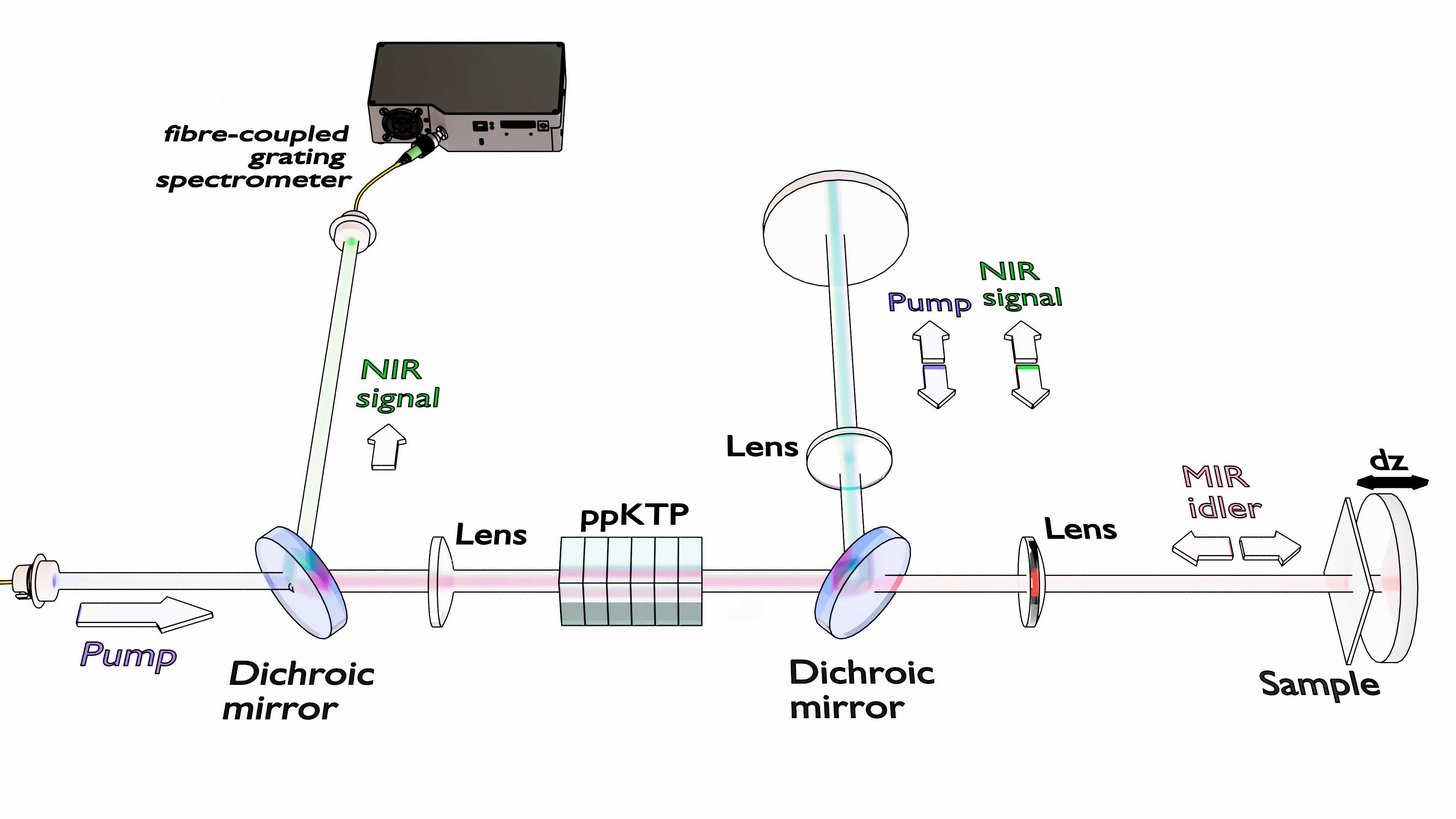
Microplastics are found even in mountain glaciers and food. Conventional spectroscopy, analysis by light, required expensive detectors for invisible infrared radiation. The new method sidesteps that: the device creates a pair of light twins. One twin (infrared) makes plastic molecules, chains of carbon and hydrogen, vibrate like guitar strings. The second (visible) reads those vibrations and passes the picture to an ordinary camera — the kind in every smartphone. By tracking changes in signal brightness, the detector instantly distinguishes plastic from a wrapper or bottle. The fist-sized gadget delivers 100 measurements per second without nitrogen cooling or bulky lasers. Soon, pocket analyzers will test stream water right on the spot.
Original abstract
as written by the authors arXiv:2603.22253
Plastic pollution has become a critical global challenge, with microplastics pervading ecosystems and entering human food chains. Effectively monitoring this widespread contamination demands rapid, reliable, and portable material identification techniques that often elude conventional Raman and FTIR spectroscopy. Undetected photon spectroscopy within a nonlinear interferometer (NLI) offers a solution, allowing the retrieval of mid-infrared absorption spectra by detecting only near-infrared signal photons using standard silicon-based technology. Here, we demonstrate a highly compact, micro-integrated, thermally-stabilised NLI with a Michelson-like geometry designed for the rapid spectroscopy of plastics. We benchmarked its room-temperature performance, demonstrating a signal-to-noise ratio of 34 with a measurement rate of 100 Hz and a spectral resolution of 6 cm$$^{-1}$$. We show that we can accurately and rapidly retrieve the characteristic vibrational absorption spectra of common polymers such as polypropylene, polyethene, and polystyrene, without using mid-infrared technology. These results establish our compact module as a promising field-deployable platform for robust, real-time environmental monitoring systems and other mid-infrared spectroscopy applications.
Every liter of bottled water contains about 240,000 microplastic particles on average — twice as many as tap water.
A real-life tricorder from Star Trek: it figures out what an object is made of in a second.