Detecting Microplastics with Quantum-Correlated Spectroscopy express
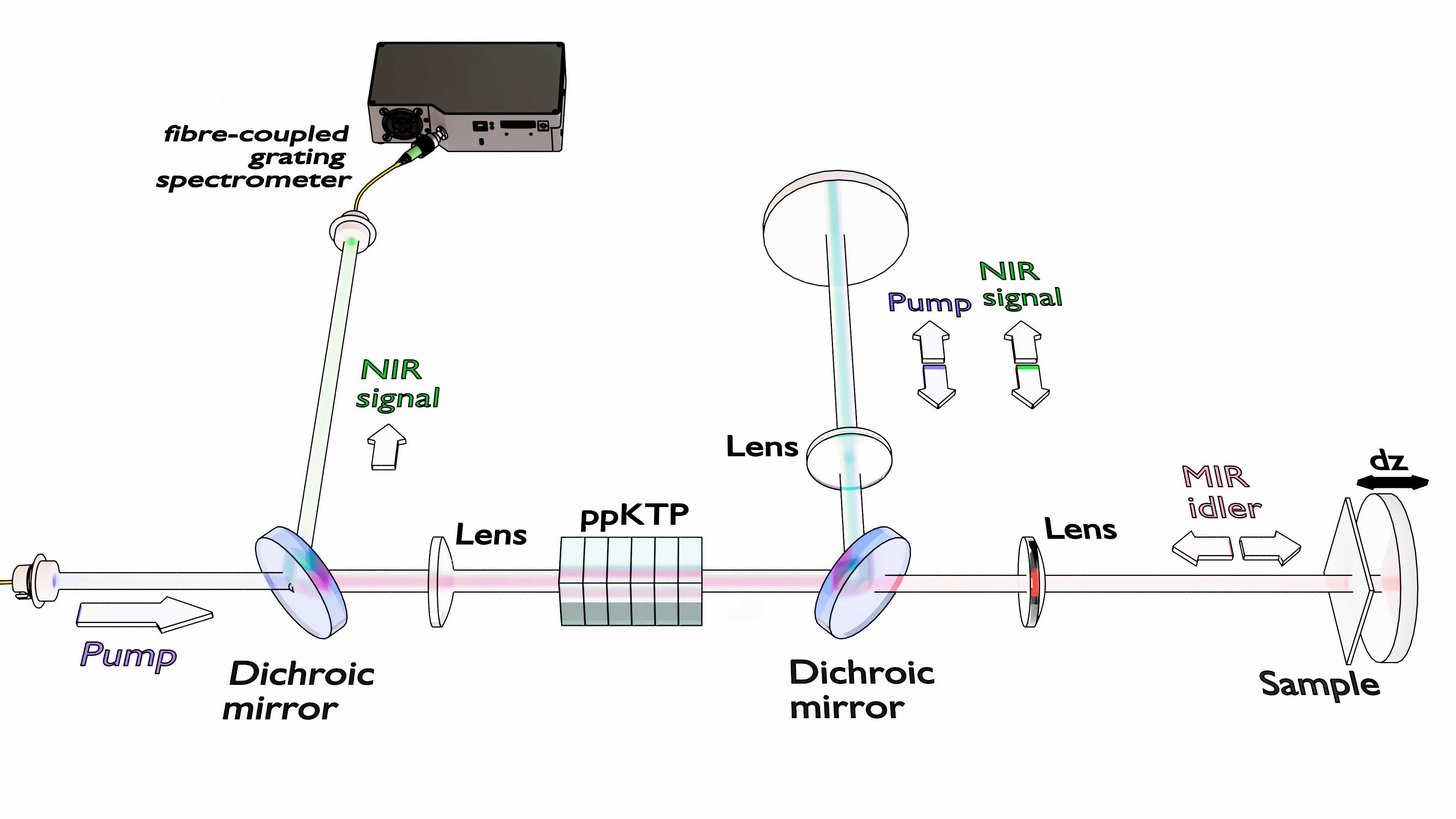
Microplastics, tiny fragments of synthetic polymers, are now found everywhere, from mountain glaciers to food. The traditional analytical approach, spectroscopy, which relies on light interacting with matter, has long required costly detectors to register invisible infrared radiation. The new method sidesteps this limitation: the device generates a pair of light quanta that behave like twins, thanks to quantum entanglement. One twin, an infrared photon, interacts with the sample, causing the plastic molecules, which are long chains of carbon and hydrogen atoms, to vibrate like guitar strings. These vibrations are unique to each plastic type and serve as its "fingerprint." The second twin, a visible photon, reads information about these vibrations through quantum correlation and relays it to an ordinary camera, like the one in any smartphone. By analyzing changes in the brightness of the visible light, the detector instantly identifies the plastic type, for instance telling a polyethylene wrapper from a PET bottle. The fist-sized device performs up to 100 measurements per second without needing nitrogen cooling or bulky lasers. In the future, this could lead to portable analyzers for on-the-spot testing of stream water.
On average, each liter of bottled water contains about 240 thousand microplastic particles — twice as many as tap water.
A real tricorder from Star Trek: in a second, it figures out what an object is made of.