Flexible Threads Turn Clothing into Radiation Detectors express
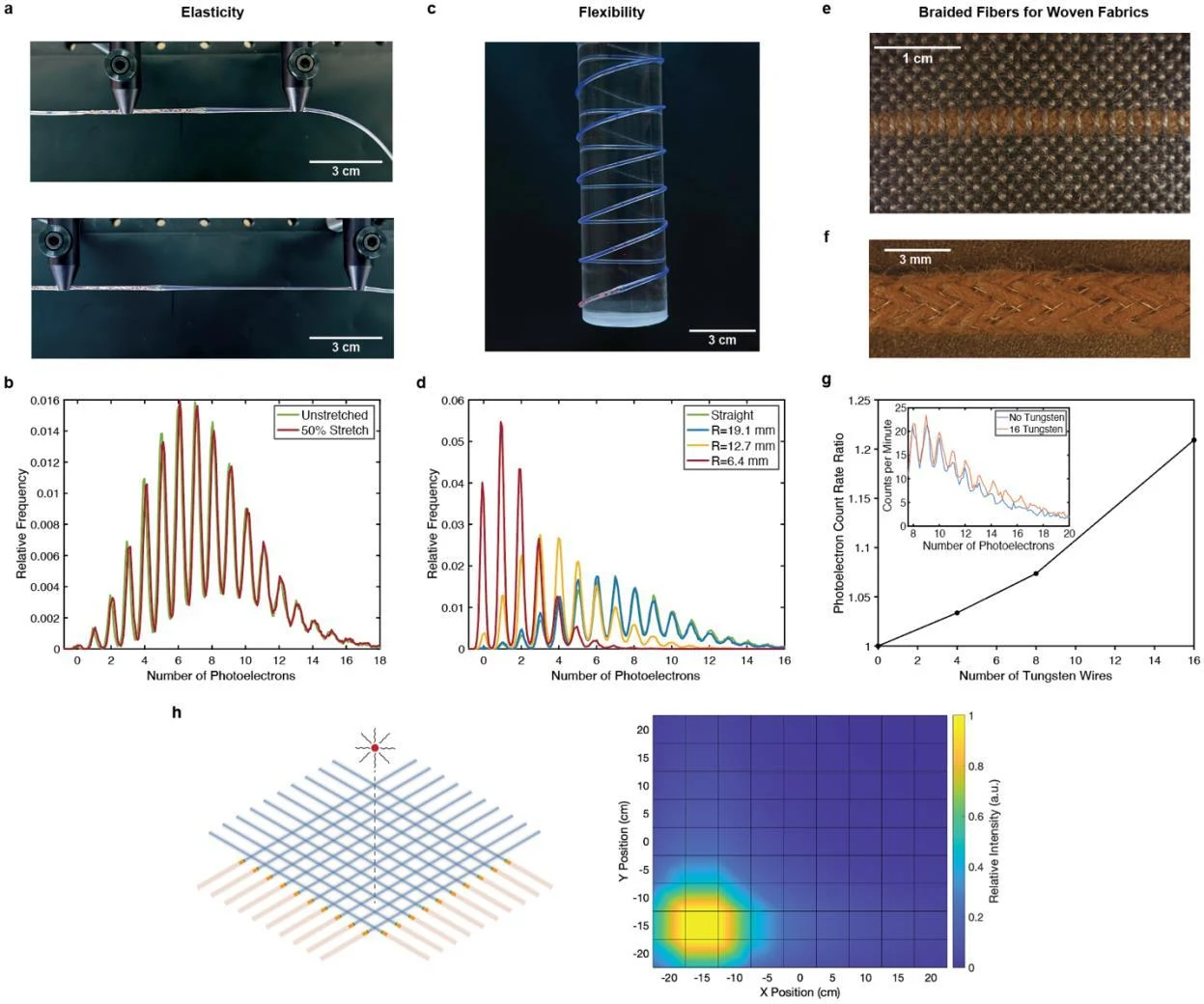
Inside an ultra-thin polymer thread are microscopic crystals — scintillators. When an invisible radioactive particle hits, they flash for a moment, like fireflies. A sensitive sensor catches each flash, turning the thread into a flexible detector.
Tests with strontium-90, cesium-137, and cobalt-60 showed that the fabric even senses natural background radiation. To boost the signal, tungsten and merino wool were added to the braid: this unexpected pairing of metal with soft wool increased sensitivity by 20%. Tungsten converts gamma rays into a shower of electrons, which the crystals catch more readily. This also helps distinguish types of radiation, paving the way for portable studies of fundamental particles and smart clothing that warns of danger at nuclear power plants and in radiation therapy.
The first radiation detectors used by Marie Curie and Ernest Rutherford required entire laboratories. Now you can wear a detector like a sweater.
Isaac Asimov's Foundation series mentions personal dosimeters, but fabric detectors are now a reality.