Threads Left from the Very Beginning express
In the first moments after the Big Bang, the cosmos resembled a giant cooling pond. Just as water, when freezing, becomes covered with a network of cracks, so the cooling universe could have cracked — not into ice, but into the thinnest filaments of pure energy. These filaments are called cosmic strings. They are thinner than an atomic nucleus, yet so dense that a segment a few kilometers long would weigh as much as an entire mountain.
If a string arises from the breaking of a special type of symmetry (global, not gauge) then, as it decays, it behaves differently. Instead of sending a shiver of gravitational waves into space, it emits a swarm of light particles that barely interact with ordinary matter. These particles, named after physicist Nambu–Goldstone bosons, could still be filling the universe, like an inaudible hum left over from the birth of the cosmos.
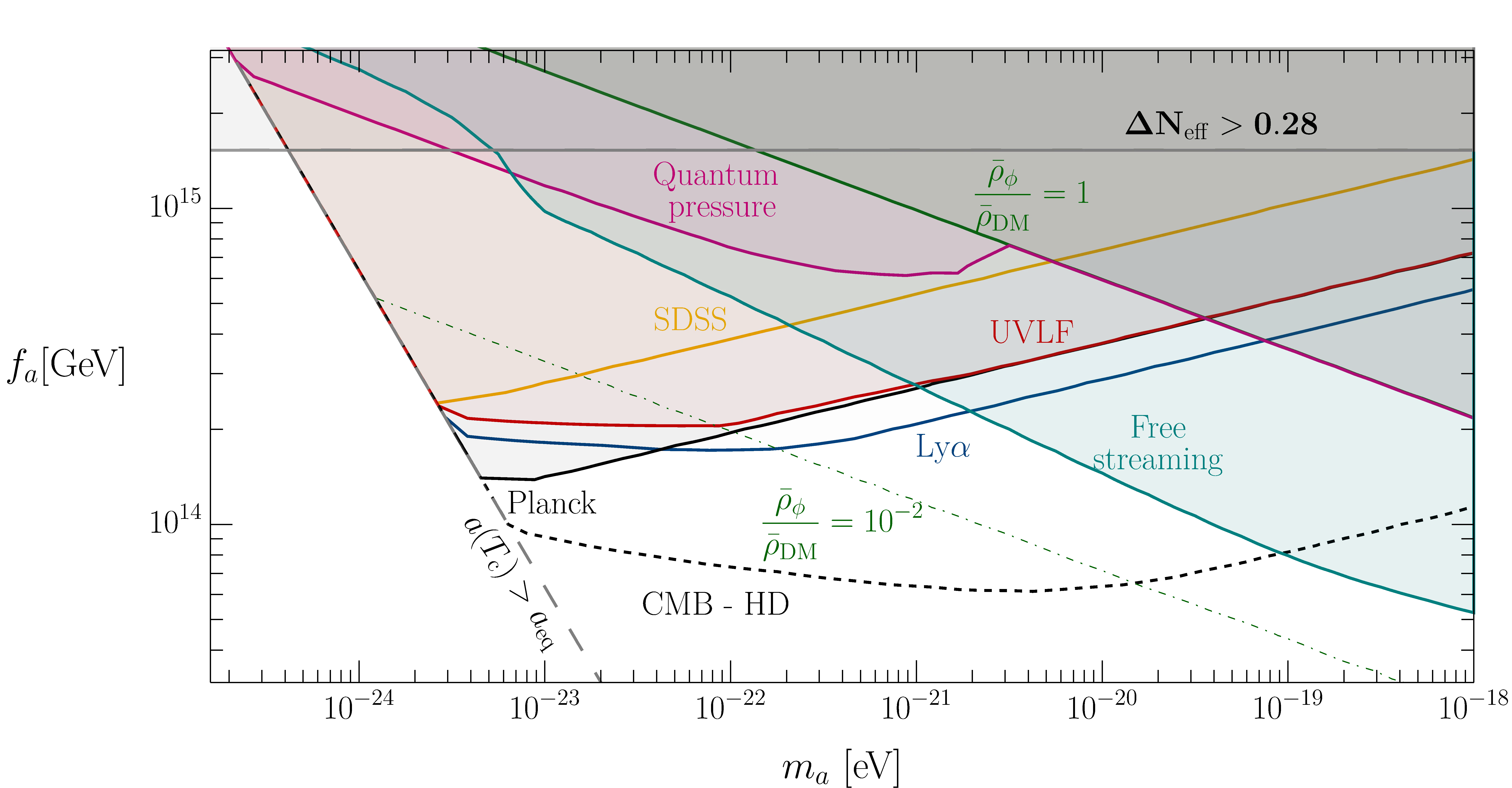
The authors of the new study calculated how such a cloud of particles would affect the cosmos. They compared their calculations with what telescopes see: ripples in the ancient light of the cosmic microwave background, the distribution of galaxies, shadows from gas clouds in the spectra of distant quasars. It turns out that if these particles truly exist, their mass must be very small — billions of times lighter than the electron. Current instruments are already almost capable of detecting such a trace, and future missions that will succeed the James Webb Space Telescope could either find it or put an end to this hypothesis.
So the threads that emerged in the first fraction of a second may still be governing how galaxies assemble. And if we learn to hear their silent hum, we will find out what our world is truly made of.
A cosmic string as thick as a proton would weigh more than the entire Earth if stretched just one kilometer.
In Roger Zelazny's novel "The Chronicles of Amber," characters travel through Shadows — different versions of reality connected by invisible threads reminiscent of cosmic strings.