Scientist

Rainer Sachs

1932–2024 · astrophysics, cosmology, general relativity
American astrophysicist of German origin, one of the authors of the Sachs–Wolfe effect, which explains large-scale temperature fluctuations in the cosmic microwave background by gravitational perturbations in the expanding Universe. He also contributed to the theory of gravitational lensing, deriving equations that describe the distortion of light in the Universe. His work has become key in modern cosmology.

Biography

Rainer K. Sachs was born on 13 June 1932 in Frankfurt am Main, Germany. He emigrated to the USA, where he earned his doctorate at Syracuse University. He worked at the University of California, Berkeley, and at other research institutions. Together with Arthur M. Wolfe in 1967, he predicted the effect linking the anisotropy of the cosmic microwave background to gravitational potentials. His research covered general relativity, cosmology, and mathematical physics. He passed away on 16 January 2024.

Key discoveries

💡 Sachs began his scientific career in theoretical biology before switching to cosmology, where he achieved outstanding results.
Concepts
cosmic microwave backgroundgravityspacetime curvatureexpansion of the universe
Laws
Sachs–Wolfe effect
Scientists
Robert HookeJacob BekensteinRalph AlpherKarl SchwarzschildJoseph WeberAdam RiessEmmy NoetherChristian Doppler

Related articles

Quantum Physics2025-11-211 minarXiv:2511.17022express
A Tabletop Light Maze Captures Gravity
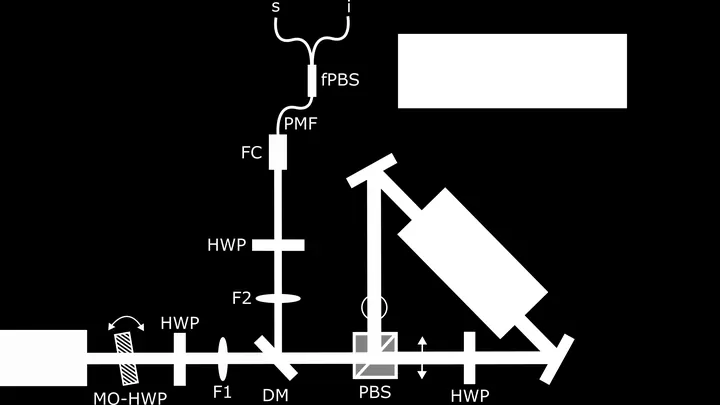
The theory of gravity by Einstein — general relativity — rarely intersects with quantum physics in direct experiments. Here, scientists built a 50-kilometer glass labyrinth on a table and sent single photons through it.

Cosmology2026-01-081 minarXiv:2601.04760express
A Tiny Tweak to Inflation Theory Explains a Cosmic Anomaly
According to the Big Bang theory, developed by Georges Lemaître, the Universe began from a hot dense point and then rapidly expanded — an inflation proposed by Alan Guth. Echoes of that time reach us as a faint glow — the ancient light.
Quantum Gases2026-01-102 minarXiv:2601.06468express
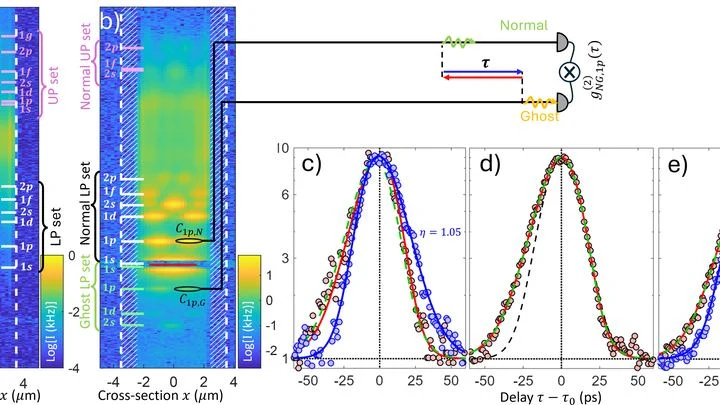
Twin Photons in a Light Cavity
Inside a tiny mirrored cavity, smaller than the thickness of a hair, light is trapped and bounces off the walls many times. If you place a material that can absorb and emit light inside, the light particles (photons) start to 'dress' in excitations of the material — this is how polariton modes are born.
Cosmology2026-01-161 minarXiv:2601.11360express
Ancient Energy Blobs Stirred Up Space-Time
In the first moments after the Big Bang, the cosmos was like a pot of boiling broth. In it, like lumps of flour, dense clumps of energy — oscillons — curdled and swelled. They grew, gained strength, and soon took over the expansion of the Universe.
Quantum Physics2026-02-021 minarXiv:2602.01715express
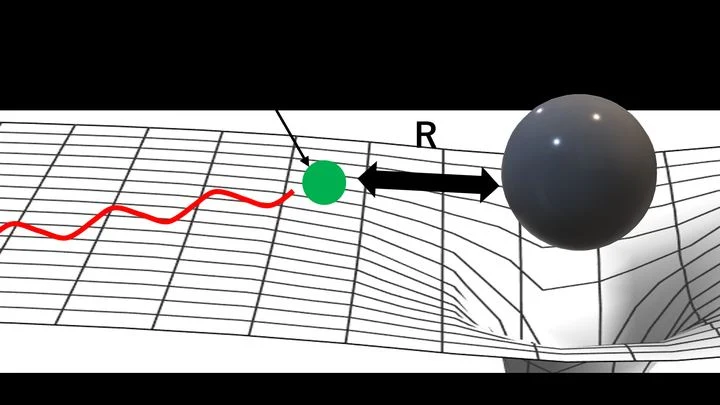
Gravity Alters How Atoms Emit Light
An atom excited by light gives its energy back in an instant — it emits a photon. This process is like a tired runner dropping a heavy load. But if the runner is on a mountain slope, it's harder to pick up speed. Gravity acts on the atom similarly: near a massive body, time flows slower, and the atom emits differently.
Cosmology2026-05-042 minarXiv:2605.03007express
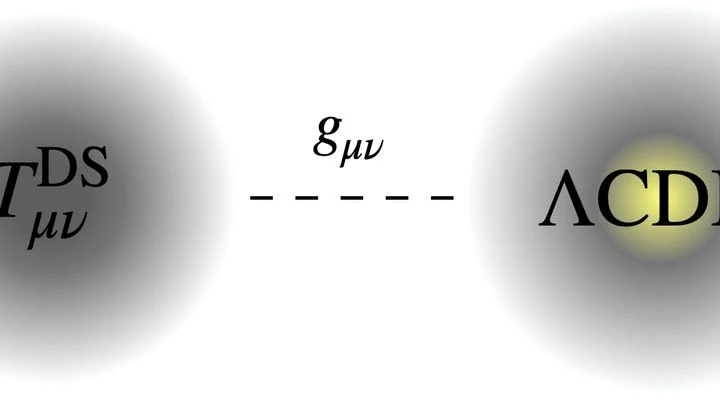
The Shadow Life of the Cosmos: How the Dark Sector Leaves Traces on Ancient Light
A pond with ripples spreading from a fallen stone. So it is on cosmic scales: a sudden burst of energy in the dark sector, an invisible substance that emits no light, creates ripples in the fabric of space. These ripples alter the path of light particles traveling to us from the very birth of the cosmos. The authors of the new study built a mathematical framework to describe these distortions.
General Relativity2026-06-122 minarXiv:2606.14379express
How Galaxy Clusters Change the Color of Gravitational Waves
Light passes through a crumpled film — and comes out slightly altered. In much the same way, gravitational waves born in the early universe feel the lumpy distribution of galaxies and dark matter.
Cosmology2026-06-253 minarXiv:2606.26823
Fossil Traces of Inflationary Particles in Petrified Light
The cosmic microwave background is the petrified light of the first moments. Shortly after the Big Bang, microscopic quantum fluctuations were stretched by inflation to the scales of galactic superclusters.
Cosmology2026-07-024 minarXiv:2607.02651
A Five-Dimensional Trace in the Cosmic Microwave Background
The cosmic microwave background is not just a faint glow with a temperature of 2.7 K. It's a snapshot of the Universe 380,000 years after the Big Bang, when the primordial plasma finally became transparent to light. But for theoretical physicists, what came before is far more interesting.
Quantum Physics2026-08-041 minarXiv:2608.03549express
Gravity Muffles Light's Voice
Light escaping a massive body loses steam. Its frequency dips slightly, and its color shifts toward red. Physicists call this gravitational redshift. In classical theory, it's all clear, but the moment you bring quanta into the picture, trouble starts. Previously, this shift was modeled as a kind of mode mixer — a device that entangles different states of light.