Popular

How Stellar Flares Change the Atmosphere of Faraway Planets ⚡ экспресс

Original: "Stellar flare-driven evolution of primordial early exo-Earth atmospheres: Insights from a Young M Dwarf Flare model"
arXiv:2604.20325 · 2026-04-22 · CC BY-SA 4.0 · ⏱ 1 min · Exoplanets Stellar
A new model shows that frequent flares on red dwarfs can permanently alter the chemical makeup of Earth-like planets' atmospheres.
Abstract

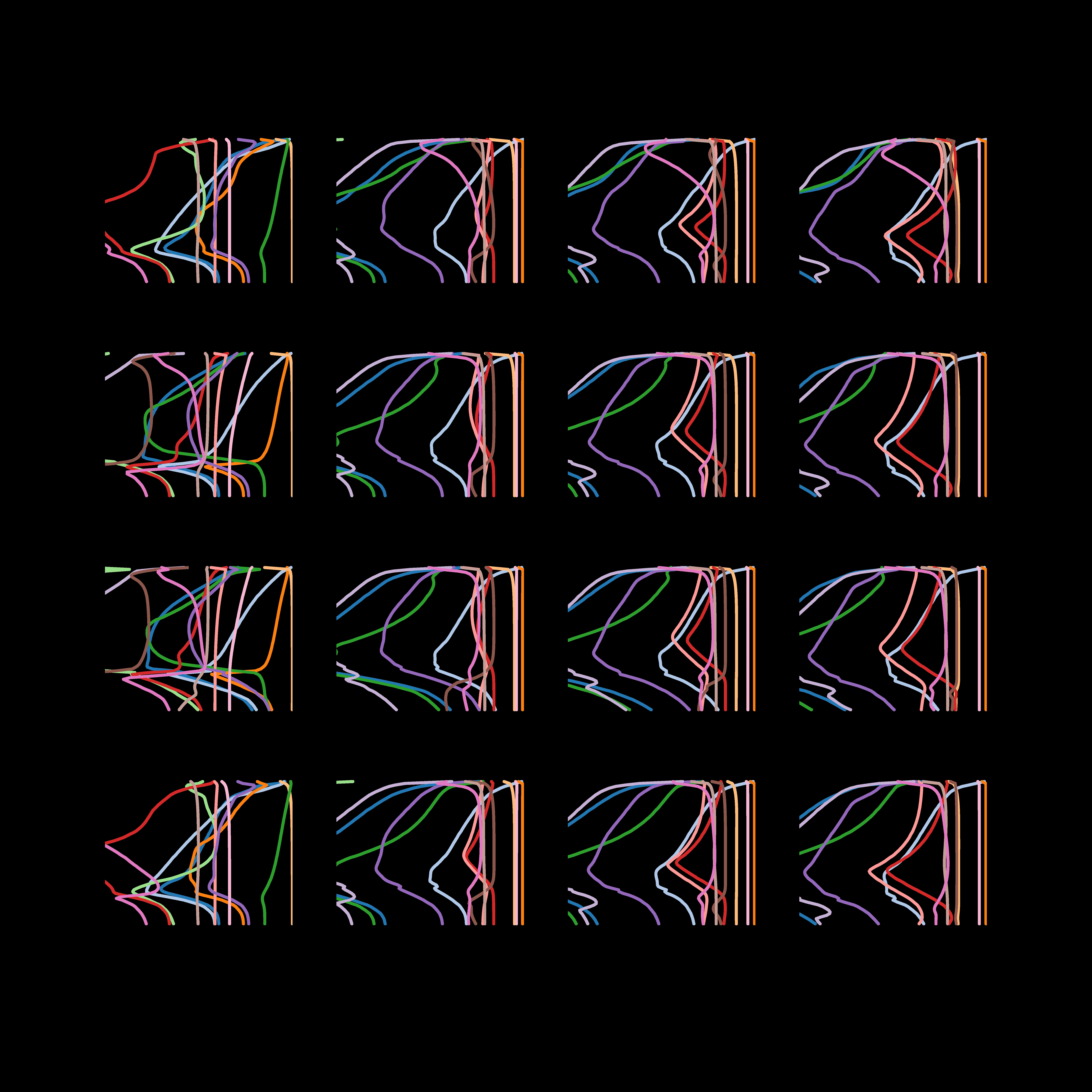
M-dwarfs are prime targets for finding Earth-like planets, but their powerful flares can destroy atmospheres. In this study, the YMDF flare model was combined with the VULCAN chemical kinetics code to track the year-long evolution of a young exo-Earth's atmosphere around an active star. It turned out that moderate-strength flares can cause irreversible changes in the concentrations of rare gases, and the more water vapor, the more pronounced the effect. Interestingly, this resembles how frequent small forest fires change an ecosystem more over time than a single catastrophic blaze. The results help us understand which planets could preserve conditions for life.

Links in the knowledge graph 1

📄 Showing the "Simple" version — "Popular" is not ready yet. Add it to favorites to help prioritize it.

Around small, cool, but extremely restless red dwarfs, planets the size of Earth often orbit. Such a star is like a temperamental stove that intermittently erupts flares: powerful streams of light and particles batter the planet's atmosphere, as if someone splashed fire into a simmering soup pot.

A new computer simulation tracked a year in the life of a young planet's atmosphere under these attacks. It turned out that even a single moderate flare permanently alters the chemical cocktail—especially if the air is moist and rich in water vapor or hydrogen. Heating the lower layers speeds up reactions like a pressure cooker: ordinary gases turn into unexpected compounds.

Now astronomers who study the light of such worlds using spectroscopy (splitting it into a rainbow and reading chemical fingerprints) must reckon with this stellar "cooking." A flare might create the illusion of biomarkers or, conversely, hide real traces of life. The very molecules we seek as evidence of habitability can be born simply from a star's whim.

🎯 One powerful flare on a red dwarf can destroy a planet's ozone layer within hours, leaving its surface vulnerable to dangerous radiation.

🎬 A planet orbiting a red dwarf enduring flares evokes the fictional world of Proxima b, often depicted in books and films as a harsh cradle of life.

Scientists
Christian DopplerD. B. McLaughlinDidier QuelozMichel MayorR. A. RossiterDavid Charbonneau
Tags
exoplanet spectroscopy Water hydrogen
Laws
Doppler effectKepler's third lawCoulomb's lawMaxwell's equationsPlanck's lawPlanck–Einstein relation
Original: arXiv:2604.20325 · CC BY-SA 4.0 · bridge42worlds