Stellar Rivers Reveal the Shape of the Invisible Halo express
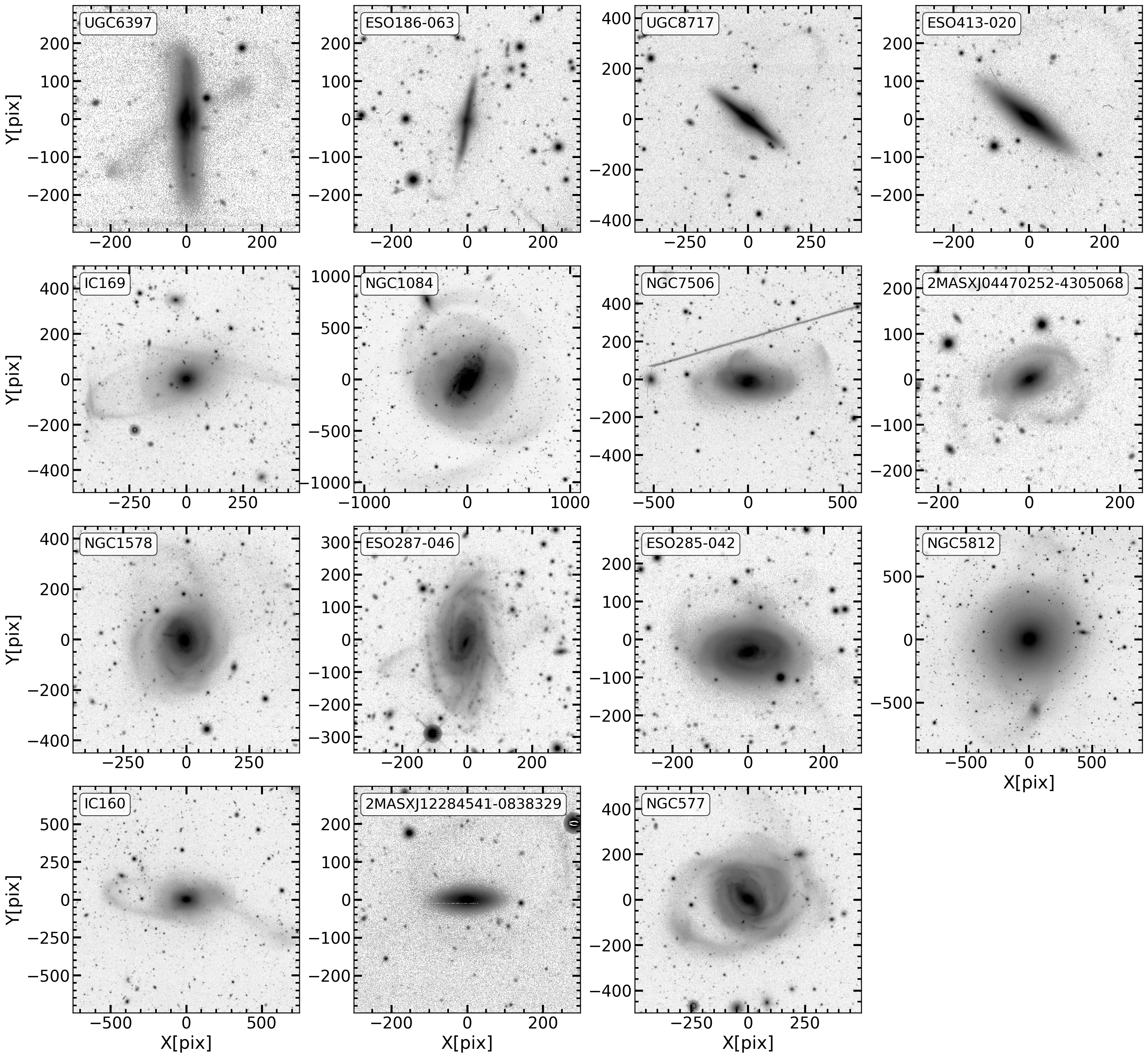
A stellar river winds around the center of a distant galaxy like a glowing ribbon on an invisible frame. That frame is the dark halo: a vast cloud of invisible dark matter whose gravity holds stars and gas in place. If the halo is squashed like a pumpkin or stretched like a melon, the stellar stream will bend differently. The Potamides team traced the bends of 15 streams in other galaxies and, for the first time, derived the halo's shape from them.
The key is in the turns. A stream that grazes the galaxy edge-on and swings into a sharp loop acts like a taut string: the slightest asymmetry in gravity alters its path. Such streams rule out whole ranges of flattening. Streams that follow a smooth great-circle arc, by contrast, reveal almost nothing about the shape: they can exist in halos of any geometry. The sample contained both types, and each was tested separately.
For all 15 streams, the data best matched a nearly round halo when viewed from a certain direction. This does not mean the halo is a perfect sphere; rather, the method senses flattening only in one dimension at a time. When the Euclid and Rubin telescopes uncover thousands of new streams, the same approach will let astronomers gather statistics across hundreds of galaxies and understand how halo shape relates to the type of dark matter and ordinary matter.
Astronomers no longer have to wait for a stream to loop all the way around a galaxy. Just find a stretch with a sharp bend, and the halo's shape begins to emerge, like the riverbed's relief revealed by a break in the current.
The sharpest stream in the sample turns almost at a right angle, like a river meeting a cliff.
In the novel Blind Spot, the invisible mass of the universe is sought by the bending of light rays — here, stellar rivers play the same role.