X-ray passports for habitable worlds
Twelve stars have received X-ray passports. Now, for each of them, we know the exact radiation dose received by a planet in the habitable zone, the region where liquid water is possible.
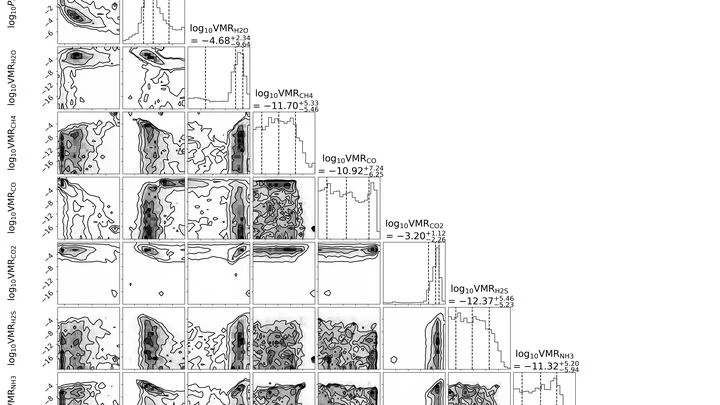
Spectroscopic analysis of planetary atmospheres to determine composition and internal structure.Exoplanet atmospheric spectroscopy is the application of spectroscopic techniques to planets orbiting other stars, allowing scientists to determine the chemical composition and physical conditions of their atmospheres. This field has revolutionized our understanding of worlds beyond the solar system, revealing a diverse range of atmospheres from hydrogen-dominated gas giants to rocky planets with thin envelopes. By analyzing the light of a host star as it filters through a transiting exoplanet's atmosphere, or the planet's own thermal emission, researchers can identify molecules such as water, carbon monoxide, methane, and even clouds of silicates or metals.
The first detection of an exoplanet atmosphere was reported in 2001 by David Charbonneau and colleagues, who observed sodium absorption in the atmosphere of HD 209458b using the Hubble Space Telescope. This pioneering observation opened the field of exoplanet atmospheric characterization.
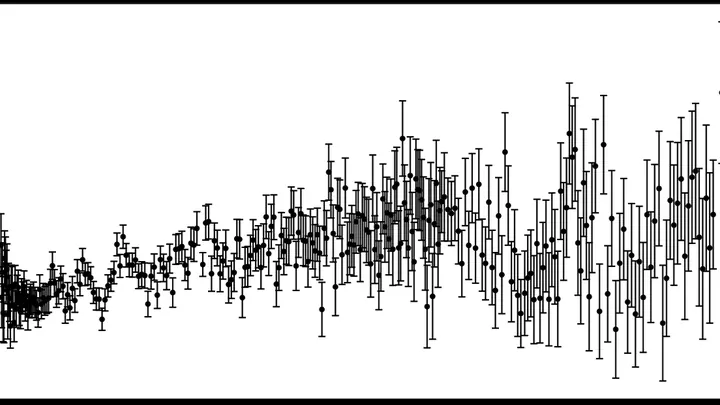
The most common method is transmission spectroscopy, where a planet passes in front of its star. During transit, a tiny fraction of starlight passes through the planet's atmosphere, and molecules absorb specific wavelengths, creating subtle dips in the star's spectrum. By subtracting the star's baseline spectrum, scientists extract the atmospheric absorption signature. Alternatively, emission spectroscopy observes the planet's own infrared glow, which carries information about its temperature and composition. High-resolution spectrographs and advanced statistical techniques are required to separate the faint planetary signal from the overwhelming starlight.
Exoplanet atmospheric spectroscopy is the primary tool for assessing the habitability of rocky exoplanets, searching for biosignature gases like oxygen and methane, and understanding the formation and migration of planetary systems.
Some exoplanets have atmospheres so hot that they contain vaporized metals, such as iron and titanium, which are typically solid on Earth but exist as gases in the extreme heat of these worlds.
| α | variable | Spectral index — spectral index |
| s | variable | Density power-law slope — density slope |