The Chemical Signature of Life: How to Find It by Its Elements express
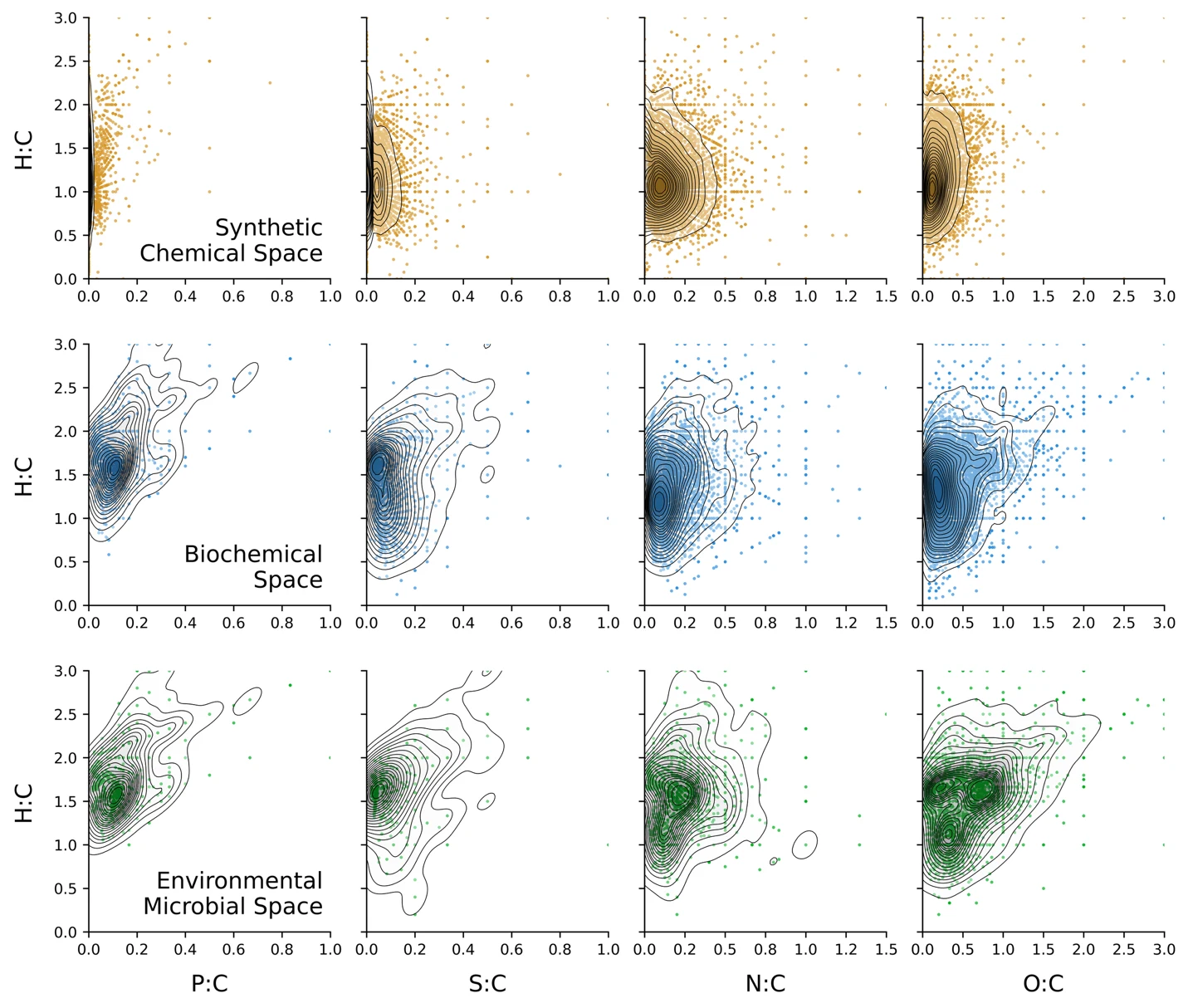
From carbon, nitrogen, oxygen, and sulfur, you can assemble 10⁶⁰ different small molecules: that's a 1 with 60 zeros, more than the stars in the visible universe. Life uses only a tiny fraction of this menu, but not randomly. In any living community, from bacteria to an oak grove, the element ratios shift in the same way: more oxygen and hydrogen, less carbon, and always a dash of sulfur and nitrogen. It's as if every living organism leaves an invisible signature in chemical ink.
Scientists tested this signature on thousands of samples — microbial communities, synthetic mixtures, even data from Mars missions. The picture is clear: living matter differs from non-living matter based solely on elemental composition. Just plot molecules as points with coordinates “oxygen-to-carbon” and “hydrogen-to-carbon,” and the cloud of living points always shifts up and to the right. A mass spectrometer onboard a rover can read such a signature in minutes.
The most surprising twist: this chemical signature is universal. It doesn't depend on specific proteins or DNA, so it's suitable for searching for any carbon-based life — even the most alien. We might already be able to recognize living material in extraterrestrial samples; we just didn't know where to look.
When analyzing Martian samples and meteorites, the 'living' signature hasn't been found yet, but now we know what it looks like.
In Star Trek, tricorders instantly recognized life. Our method is a real step toward such technology: a scanner only needs to measure the ratio of elements to distinguish life from non-living matter.