Dark Matter Sculpts Black Holes express
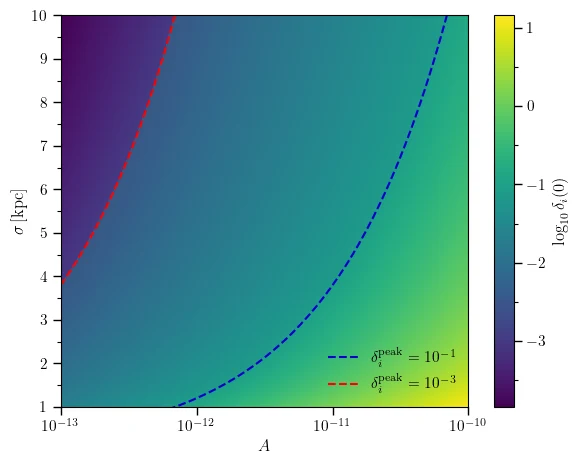
Just a few hundred million years after the Big Bang, in the ocean of invisible dark matter, giant black holes were already taking shape. They were born from the matter itself — without any help from stars. This mechanism, based on the equations of Lemaître, explains their early appearance. The main secret is the shape. Only smooth, broad clumps, like a gentle hill, can collapse into a hole. Sharp peaks or irregular bumps simply fly apart. In the right spot, spacetime curvature becomes so strong that matter falls in uncontrollably. Calculations show: these collapse events happened when the Universe was between one and three billion years old, producing holes with masses of thousands to millions of suns. This explains where supermassive black holes came from just a billion years after the Universe's birth. A surprising twist: the fate of the collapse — whether it collapsed into a point, stretched into a thread, or flattened into a pancake — depended on the tiniest motions of matter. This 'dance' of dark matter also shaped the future galaxies, because these newly formed holes became the seeds around which the familiar star systems later grew.
Original abstract
as written by the authors arXiv:2605.30145
We study black hole (BH) formation from the nonlinear growth and collapse of primordial perturbations during the matter-dominated era. Modelling cold dark matter (CDM) as pressureless dust, we describe the collapse in a fully nonlinear relativistic framework using the Lema\^{i}tre-Tolman-Bondi (LTB) and quasi-spherical Szekeres solutions as exact perturbations of a spatially-flat Friedmann-Lema\^{i}tre-Robertson-Walker (FLRW) $$\Lambda$$CDM background. At first order in relativistic scalar perturbation theory, the growing mode of any relevant quantity can be expressed in terms of the conserved gauge-invariant curvature perturbation $$\mathcal{R}_c$$, which acts as a potential for the 3-curvature of hypersurfaces orthogonal to the matter 4-velocity. We use this result to express the active gravitational mass and curvature functions of the LTB and Szekeres models in terms of the initial values of $$\mathcal{R}_c$$ and its spatial derivatives. From these initial curvature data we derive: (i) the turn-around, collapse, and apparent-horizon formation times, and (ii) the regularity conditions required for BH formation. We show that sinusoidal and Gaussian profiles do not provide viable BH-forming channels, whereas broad compensated curvature peaks, naturally predicted by peak theory, do. We then estimate the formation times of $$10^{3}-10^{6}~\mathrm{M}_\odot$$ massive BH seeds produced by the direct collapse of primordial CDM curvature peaks, finding full BH formation at redshifts $$z>5$$, with core collapse beginning at $$10 \lesssim z \lesssim 16$$. Finally, we characterize the local dynamics and singularity type of the collapse (point-like, cigar-like, or pancake-like) directly from the initial comoving curvature data, clarifying the role of the initial shear in selecting the collapse end-state.
The very first black holes were born not from dying stars, but directly from invisible dark matter. Gravity triggered their collapse — and for that, just the right 'hilly' shape was enough.