When a Quantum Particle Blurs Causality ✎ express
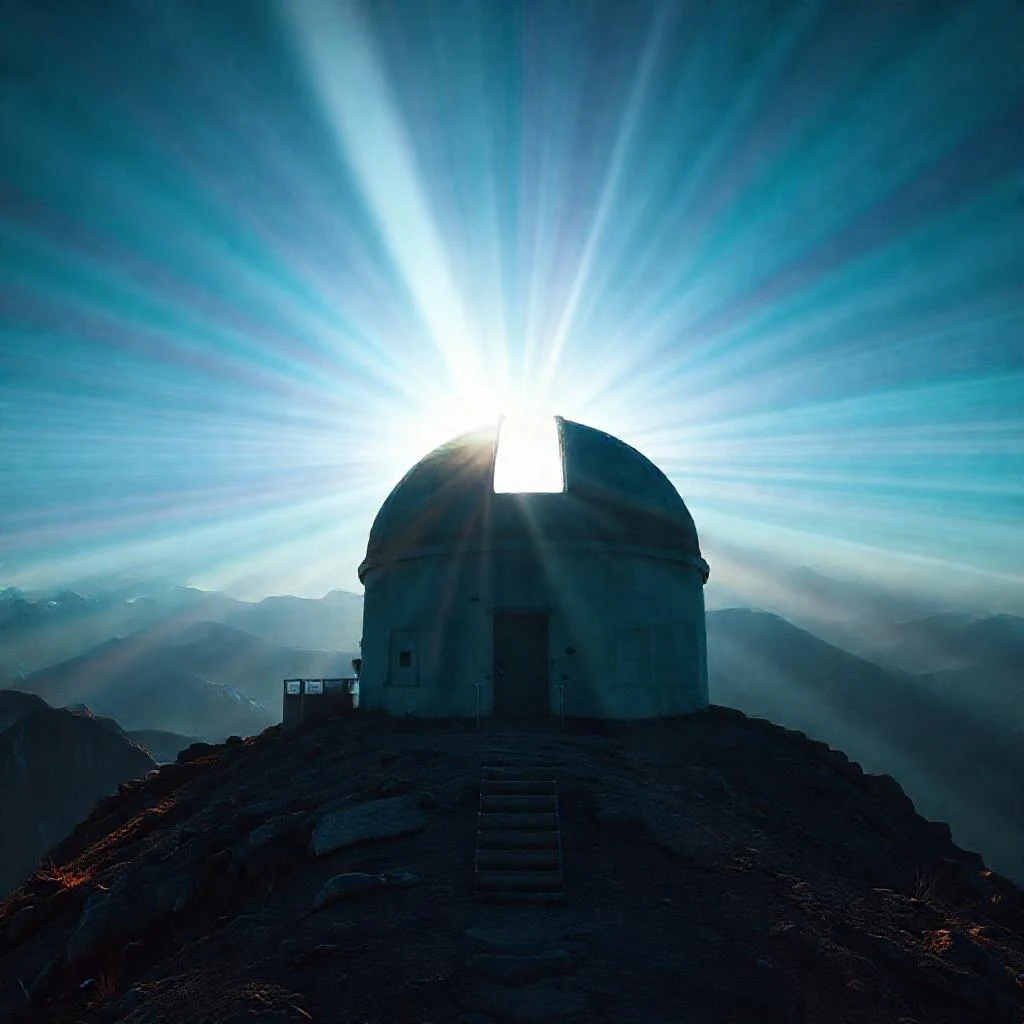
Light cones are not about light; they are boundaries in spacetime that separate causes from effects. These cones are not rigid: a massive object curves them, like a heavy ball pressing into a stretched sheet. The curvature depends on mass, but also on the speed of light — the ultimate speed limit for any signals.
But what if the ball has no exact location? By combining the ideas of Einstein and the uncertainty principle of Heisenberg, physicists have shown that in the quantum world, the cones themselves lose their sharpness. The Shapiro delay emerges, an effect familiar from radio signals bending around the Sun, but now it is not just a number; it is a quantum quantity, changing according to the laws of chance.
Thus quantum causality is born: events can simultaneously influence and not influence each other. The arrow of time vanishes, and past and future intertwine in superposition. Remarkably, this requires no exotic gravitons: the fuzziness of causality is a direct consequence of the quantum nature of mass, and the very fabric of events becomes probabilistic.
The Shapiro delay is real: a radio signal is delayed when passing near a massive body. In a new study, it is described for the first time not as a precise value, but as a quantum phenomenon with inherent uncertainty.