How Galaxy Clusters Change the Color of Gravitational Waves express
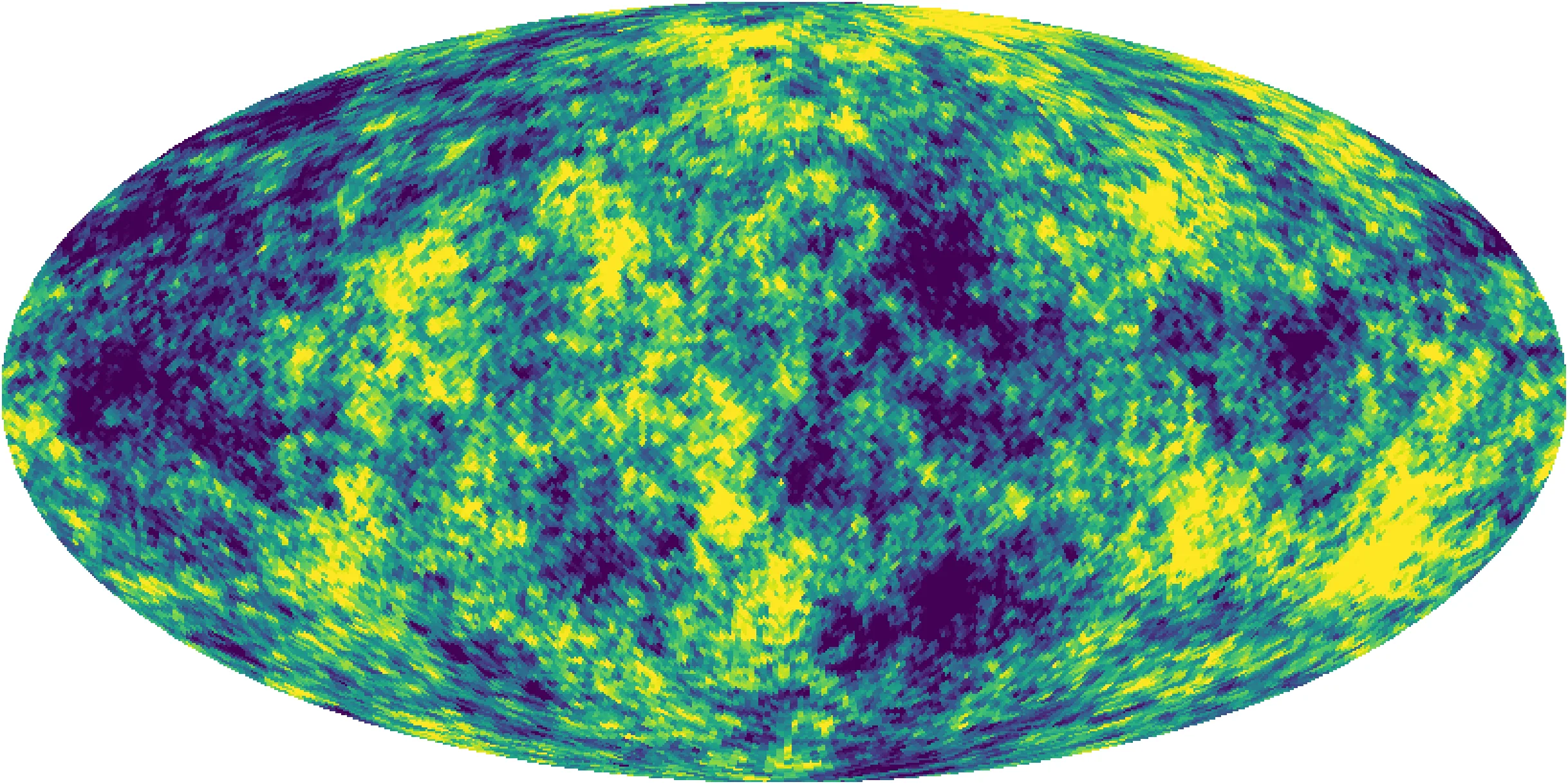
Light passes through a crumpled film — and comes out slightly altered. In much the same way, gravitational waves born in the early universe feel the lumpy distribution of galaxies and dark matter. The Sachs–Wolfe effect is a slight shift in the energy of radiation as it climbs out of a gravitational well or falls into one. It is usually observed in the microwave background, but now it turns out to work for gravitational waves as well.
If the cosmic gravitational-wave background is loud enough — roughly speaking, with an energy above one ten-billionth of the universe's critical density — the effect becomes noticeable. It tints the waves: patches of varying loudness appear across the sky, along with characteristic distortions in the spectrum at high frequencies. A network of space-based interferometers, such as LISA and Taiji, could spot this rippling.
The real intrigue lies in cross-checking. The pattern of patches from gravitational waves should overlay the same pattern already known from the cosmic microwave background. If two such different signals match, it would be irrefutable evidence: the waves truly were born in the very first moments after the Big Bang, not later produced by astrophysical sources. Without accounting for the Sachs–Wolfe effect, one could simply misreconstruct the shape of the original spectrum — and mistake the epoch of the background's birth.
The cosmic microwave background has traveled to us for almost 13.8 billion years, but gravitational waves are older — they emerged from the universe's "dark ages," when light could not yet propagate.
In Carl Sagan's novel Contact, the alien signal contained a "signature" of the Big Bang — much as scientists hope to read the autograph of the beginning of time in the cross-correlation of gravitational waves and the cosmic microwave background.