A Tailwind for Six Galaxies: Why Astronomers Were Fooled ✛
Six runners sprint down a track, and the wind is at their backs. The judges don't notice the wind and record times that are too fast. Likewise, six distant galaxies — cosmic lasers in disguise — led astronomers astray in measuring the universe's expansion rate.
These galaxies allow direct distance measurements, bypassing the long chain of the distance ladder. From distance and recession velocity, astronomers calculate the Hubble constant — the number that tells how fast the universe expands. Previously, these six galaxies yielded a value that agreed with the distance ladder but contradicted early-universe data. Yet all six galaxies are moving in one direction — like runners pushed by the same wind. That motion adds to their velocity, making the expansion look faster than it is.
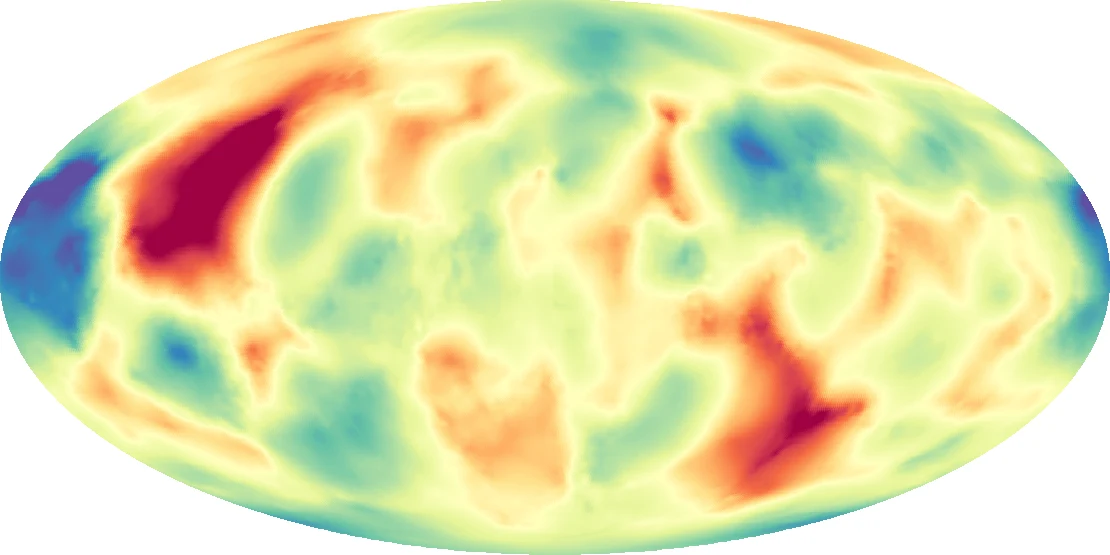
A new map of galaxy motions, built with computer simulations, revealed that the three most distant of the six are part of a common flow. Once this 'tailwind' was accounted for, the Hubble constant dropped to 68–70 km/s/Mpc. This matches early-universe data but disagrees with the distance ladder.
Now suspicion falls on calibration errors in the distance ladder, not on new physics. The six runners are still running, but the judges now know about the wind — and the result has been recalculated.
Megamasers are natural cosmic lasers: water molecules in accretion disks around supermassive black holes amplify microwave radiation. Their angular sizes and velocities allow distance measurements with a few percent accuracy, making them a valuable cosmological tool.