The cosmic distance ladder is a sequence of methods used by astronomers to measure distances to celestial objects, each rung building on the previous one. It starts with nearby objects whose distances can be measured directly, then uses those to calibrate brighter or more distant standard candles and rulers. This step-by-step approach allows us to extend our reach from the solar system to the edge of the observable universe, providing the foundation for determining the scale of the cosmos and the rate of its expansion.
History
The concept was formalized in the early 20th century, with Henrietta Swan Leavitt's discovery of the period-luminosity relation for Cepheids in 1912, and Edwin Hubble's subsequent use of them to show that galaxies are receding from us, leading to the discovery of cosmic expansion in 1929.
How it works
The ladder begins with parallax, where the apparent shift of a nearby star against distant background stars is measured as Earth orbits the Sun. This gives distances to stars within a few thousand light-years. The next rung uses Cepheid variable stars, whose pulsation period is directly related to their intrinsic brightness; by comparing this to their apparent brightness, their distance can be found. These Cepheids are then used to calibrate even brighter standard candles, such as Type Ia supernovae, which can be seen across billions of light-years.
In practice
The cosmic distance ladder is essential for measuring the Hubble constant, the rate of cosmic expansion, and for mapping the large-scale structure of the universe. It is used in projects like the Hubble Space Telescope's Key Project and the Gaia mission to refine distance measurements.
Fun fact
The ladder has a built-in tension: measurements of the Hubble constant using the distance ladder (74 km/s/Mpc) disagree with those inferred from the cosmic microwave background (67 km/s/Mpc), hinting at possible new physics.
Six runners sprint down the track, and officials time their speed without noticing a tailwind. The wind blows at their backs, and the stopwatches show a better result than the truth. Roughly this is how six megamasers — natural cosmic lasers in distant galaxies — misled astronomers measuring the expansion rate of the universe.
Measuring distances in the universe is no easy task. Almost all methods rely on light, which can be absorbed by dust, scattered, or distorted along the way. It's like trying to spot a distant lighthouse through fog and haze. Neutrinos are a different story. These ghostly particles pass through anything without noticing obstacles.
The cosmic dawn is hidden behind a dense veil of time. To see beyond it, you need to catch the radio signal from clouds of neutral hydrogen — the so-called global 21 cm signal. But it is so faint that the receiver's own noise drowns it out.
A family tree becomes a tangle if you account for adopted children and remarriages. Evolution often resembles such a tangle: although the Standard Model, the traditional view of divergent evolution where species branch like a tree, paints a neat tree of species, in reality genes travel not only by inheritance but also directly between unrelated organisms — a process…
The universe sounds with silence. The lion's share of matter — about 85%—remains invisible, manifesting only through gravity. Back when Vera Rubin Vera Rubin showed that galaxies spin as if wrapped in unseen mass.
Modern cosmology has hit a dissonant chord. Local measurements of the Hubble constant from supernovae and Cepheids give around 73 km/s/Mpc, while global constraints from the cosmic microwave background within the standard ΛCDM model point to 67 km/s/Mpc.
The cosmological debate is like two craftsmen measuring the same wall but getting different lengths. One uses a tape measure, applying it to nearby landmarks — Cepheids (pulsating beacon stars) and Type Ia supernovae (flashes of dying stars). He finds the wall is stretching at 73.5 arbitrary units.
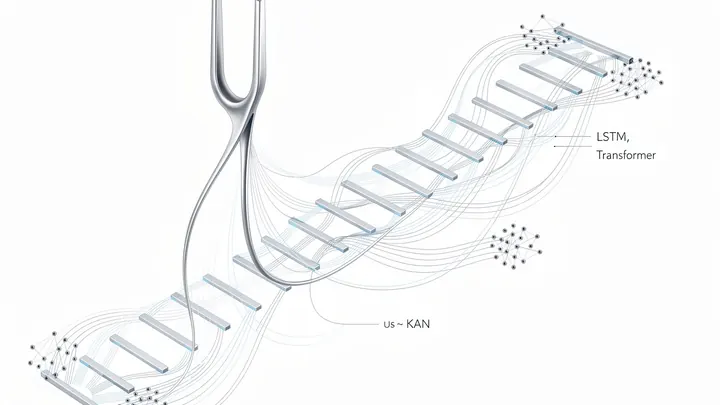
The cosmological orchestra doesn't tune to a single tuning fork. There are two groups of instruments: one listens to the hum of the young universe — the cosmic microwave background, while the other reads notes from mature galaxies and supernovae.
Light from a distant galaxy travels across the universe, passing through vast clumps of dark and ordinary matter. Their gravity slightly bends the path of the rays, like a river's current flowing around invisible boulders. In images, this shows up as a barely noticeable elongation of galaxy shapes, as if they were stretched on an invisible frame.
The Universe resembles a dense forest: up close, individual galaxy-trees are visible, gathered into groves, but from a distance everything merges into a solid green canopy. The boundary beyond which the cosmos becomes homogeneous is called the angular scale of homogeneity: it's the size of a patch of sky from which galaxies are distributed evenly.
Interstellar space is not a cosmic desert, but a super-fast highway. Trillions of asteroids and comets from other systems race past us, yet camera-telescopes only catch a few. Imagine a night highway: the headlights of a distant car flash brightly, but if it zooms by too fast, the camera shutter can't click in time.
A regular rangefinder sends a single light pulse and waits for it to return — like a person shouting into the void and listening for an echo. But if you use multiple sources that glow in unison, and analyze not the volume but the rhythm of the echo of reflected flashes, the picture becomes sharper.
A stone falls into a well, and the splash reaches your ears with a delay. Something similar happens to light as it leaves Earth: its oscillations become less frequent, the beam seems to 'tire.' This is gravitational redshift — a phenomenon Einstein spoke of a century ago.
Edwin Hubble and Georges Lemaître discovered the expansion of the Universe nearly a century ago. One way to test it is the surface brightness test: in an expanding cosmos, the light of a distant galaxy should fade like a pattern on a stretching film.
At the edge of the solar system, far beyond Neptune, hundreds of icy chunks circle the Sun. Some of them move as if an invisible hand had aligned their orbits like compass needles. Ten years ago, this led astronomers to suspect that a massive planet, about ten times heavier than Earth, is hiding there.
Imagine a dark room with dust floating in the air. A bright flashlight goes off, and the dust particles light up, revealing their positions. Astronomers have applied a similar trick to our Galaxy. The flashlights were gamma-ray bursts, the most powerful explosions in distant galaxies, and the dust particles were interstellar clouds.
Astronomers occasionally spot interstellar objects — rocky chunks or comets from other star systems. Most look ordinary, but some puzzle us with their shape, speed, or shine. To stop guessing, scientists applied the Loeb scale: from 0 (plain rock) to 5 (technosignature — an artificial signal from space).
The universe keeps a tally of every newborn star. Over 13.8 billion years, galaxies have ignited so many stars that their 'census' can reveal the nature of the cosmos itself, just as tree rings reveal past climates.
In galaxy clusters, invisible dark matter serves as the framework holding star systems together. Its shape is betrayed by a faint glow — stars ripped from galaxies by tidal forces. This stellar 'broth' fills the cluster like a liquid taking the shape of its container: it envelops the clumps of dark matter, creating a precise cast of their outlines.
Light from distant galaxies passes through clumps of matter, and the gravity of those clumps slightly bends its path, like a lens. By measuring how much the images of distant galaxies are distorted, we can infer the distribution of matter and how gravity affects light.
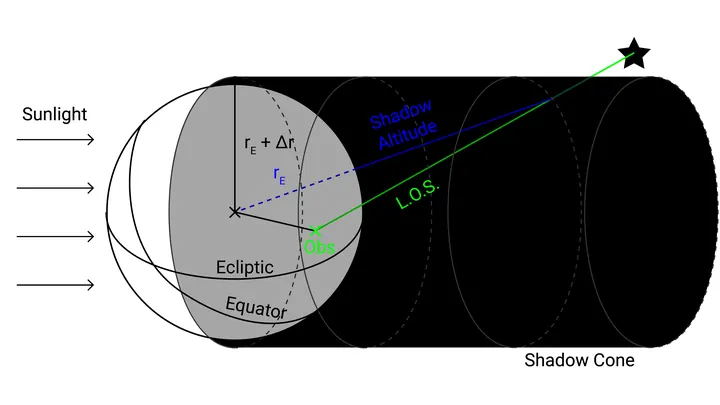
At night, the sky is never completely black. Even far from cities, the upper atmosphere glows faintly: sunlight makes hydrogen atoms emit a reddish glow that astronomers call geocoronal emission. For a telescope, it's like a fogged-up window: it adds extra light and hinders seeing distant galaxies.
The cosmological community has been living in a state of quiet civil war for several years. Two camps measure the expansion rate of the Universe and get different answers. Planck, peering at the cosmic microwave background, says 67.4 km/s/Mpc. SH0ES, climbing the distance ladder from Cepheids to supernovae, insists on 73.2.
Setting up an orchestra without a conductor: the algorithm itself decides which instruments (basis functions) and at what volume (weights) should play to reproduce Earth's gravitational symphony.