The Perfect Mirror: How Entanglement Leads to Dark Matter ✛ ✦
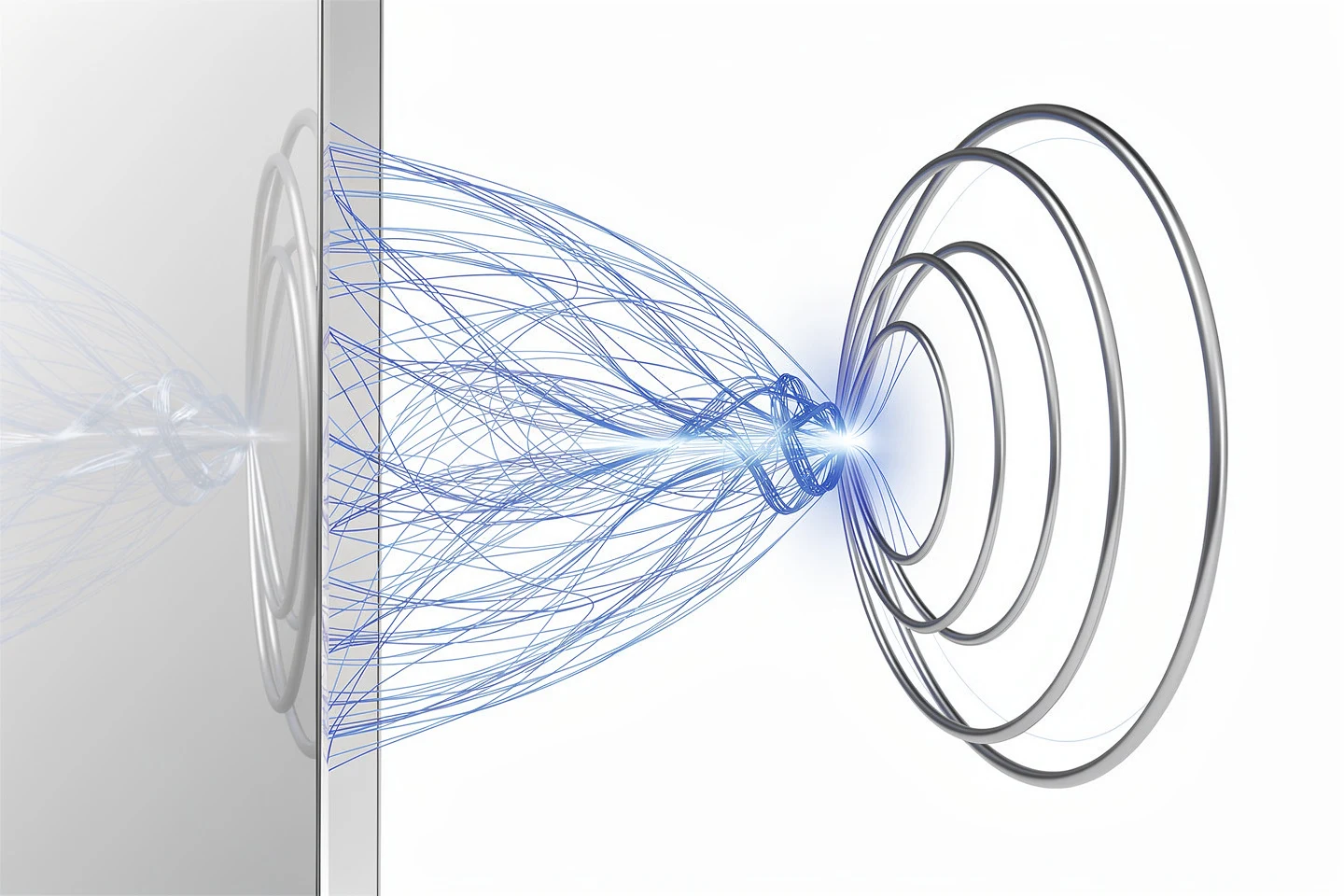
Scientists asked: what if collisions of Higgs particles — the ones that give things mass, discovered by Peter Higgs — always lead to maximum entanglement? It's like a mirror: the movement of one particle completely determines the behavior of another. To test this, they used methods for measuring such correlations, developed earlier by Erwin Schrödinger.
The answer was stunning. It turned out that such entanglement is only possible with a hidden doubling of all laws of nature. Every known particle gets an invisible twin made of dark matter — an entire parallel world, a reflection of ours in a quantum mirror. Thus abstract particle information directly points to the dark side of the Universe.
But the most unexpected: from the condition of mirror symmetry, the correct mass of the Higgs boson naturally emerges — precisely the 125 GeV observed in experiments. Nature seems to reject any variants where symmetry is broken. The idea of linking disorder with symmetries first came from Emmy Noether.
The requirement of perfect entanglement acts like a filter: anything that violates mirror symmetry is automatically excluded — this is how reality constructs itself according to the only possible template.
The idea of a mirror world, where every particle has a twin, is familiar from Isaac Asimov's novel 'The Gods Themselves,' where parallel universes interact through fundamental forces.