One-Way Door: How Quantum Magnets Reconcile Order with Chaos ✛
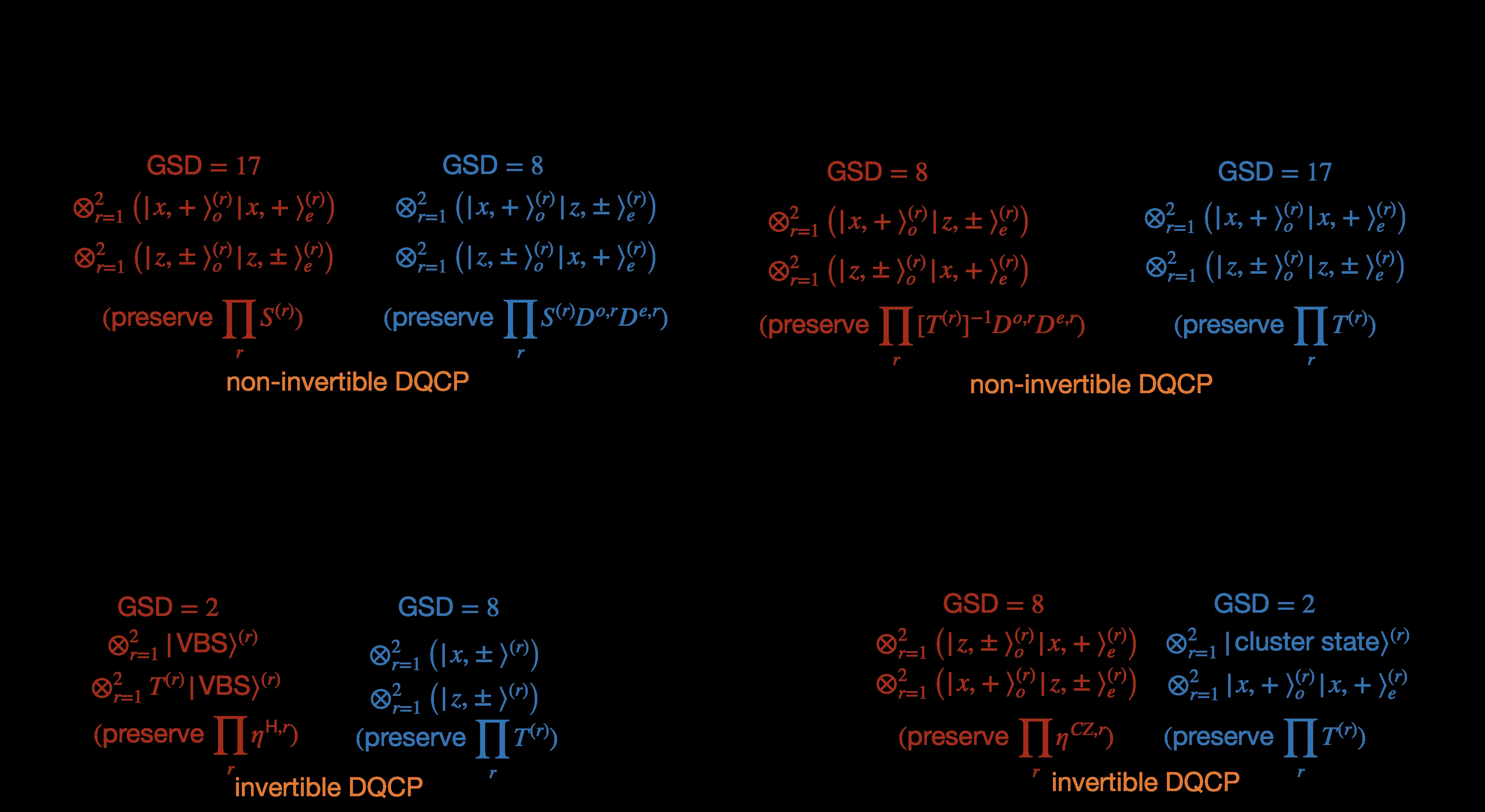
In a chain of atomic magnets, strong cooling makes them all align uniformly — order. Heating makes them spin randomly — chaos. Usually, one state replaces the other, much like Water melting. But a new study found that order and disorder can coexist in the chain. The reason? Special symmetry rules that are as irreversible as a door that opens only one way. This "door" changes the system, but going back is forbidden unless you change the rules.
At this unusual transition point, two key parameters, the alignment of the magnets and their degree of disorder, become uncoupled. Like two movies playing on the same screen without overlapping, they evolve independently. It's as if sound and light in a room suddenly stopped mixing. By applying a mathematical trick that accounts for this quirk, scientists produced a whole family of such bifurcated points, opening a path to materials with tailored quantum properties.
These one-way rules aren't just theory: their fingerprints are already visible in some quantum materials. Following in the footsteps of Emmy Noether, who showed that ordinary symmetries create conservation laws, modern physicists have discovered that nonreciprocal symmetries spawn a 'zoo' of exotic states useful for quantum computers and sensors.
Order and chaos in a quantum chain don't battle; under a special symmetry, they simply ignore each other, as if living by different laws in the same space.
Like in fairy tales — a door you can enter but never leave. Except here it's not magic, but the precise math of nonreciprocal symmetries.