Entangled Photons vs. Murky Media ✛
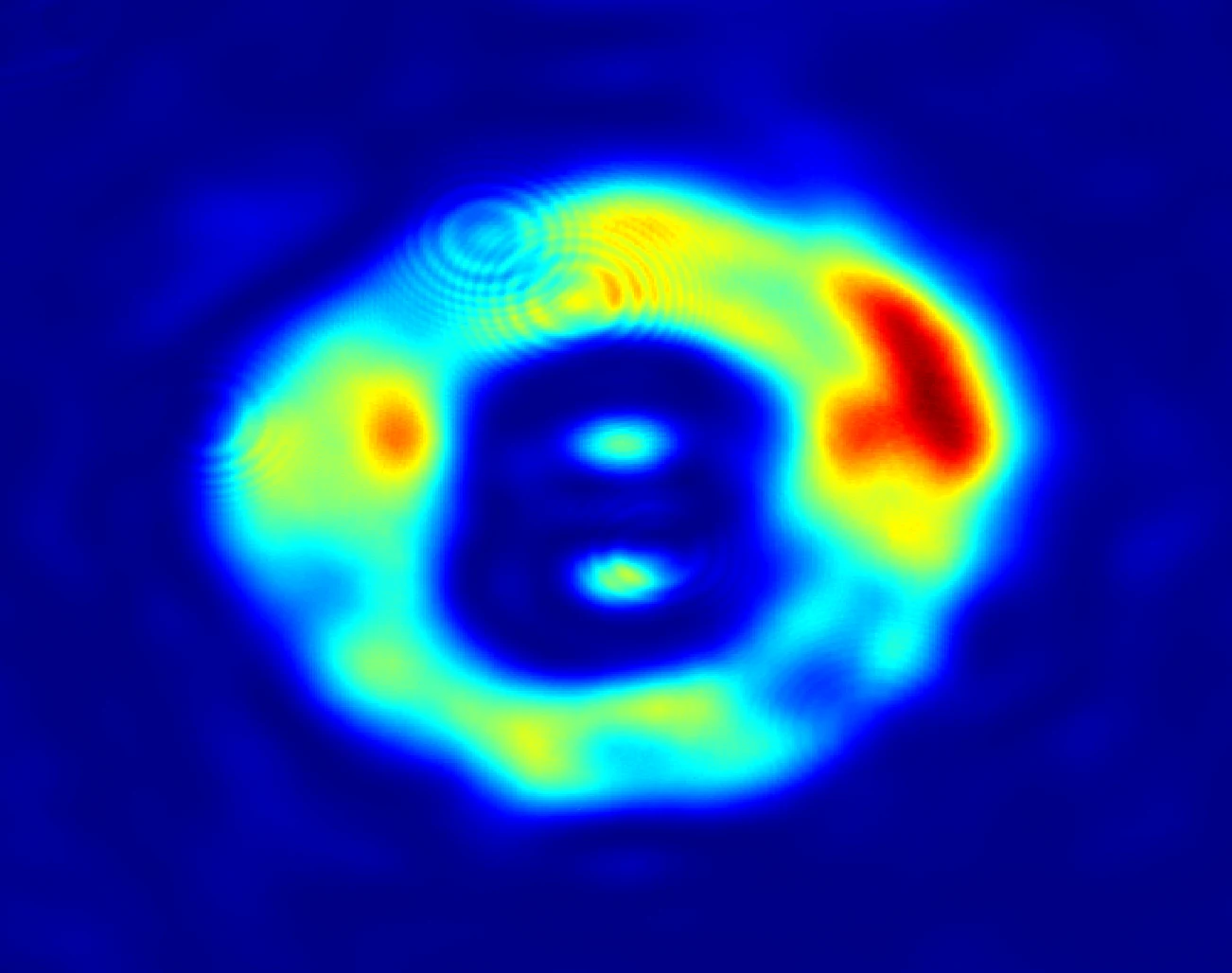
Ordinary light in murky water, fog, or behind cosmic dust scatters, turning any image into a blurry mess. Even precise brightness measurements (photometry) can't cut through this chaos.
But you can take a pair of entangled photons. These particles are linked by an invisible thread: whatever happens to one instantly reflects on the other, like two swimmers always moving in sync. This strange connection was studied by John Bell and Alain Aspect. One photon is sent through murky water, while the other stays aside. Although the transmitted light becomes unrecognizable, the image information doesn't vanish: it's preserved in the movements of the untouched twin. By reading these movements, you can reconstruct a sharp image as if the medium had become transparent, but only for this quantum duo.
You get a hidden channel: to an outside observer, it's just white noise, but for those who know the pair's rhythm, it's a clear picture. Such a connection is nearly impossible to intercept, and it can be adapted to any scattering medium, from biological tissues to clouds.
Quantum entanglement is already used for ultra-secure banking transactions. The new method promises to take this protection to the level of entire images, not just keys.