Search for alien radio signals along the planetary plane ✛
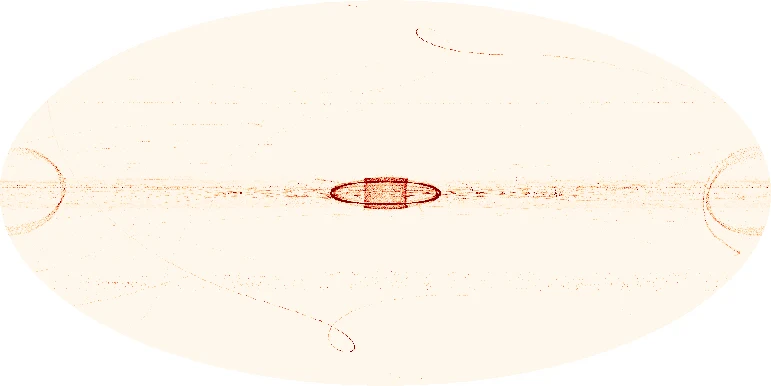
Analysis of 20 years of NASA antenna transmissions shows: the most powerful radio signals from Earth are directed along the plane of the Solar System — right where the planets wheel. This concentration is like a metropolis’s main street: all the noise and chatter gathers there, while side streets are silent. An observer edge-on to the Sun the moment Earth crosses the star’s disk is right on that street — antennas are audible 20 times more often than average. And during planetary close approaches, like Earth and Mars, the chance of catching a transmission over 20 years reached 77%. That’s 400,000 times higher than switching on a receiver at random, as if eavesdropping on the same avenue, but at rush hour. Therefore, telescopes should target planetary systems seen edge-on and capture transit moments. And here’s the twist: our signals aren’t messages, just radars and probe commands. That means alien “technical” beacons could be just as loud.
Earth’s most powerful radio noise isn’t messages for aliens, but asteroid radar and commands to probes like the Voyagers.