Interstellar Visitors: Searching for Alien Technology ✛
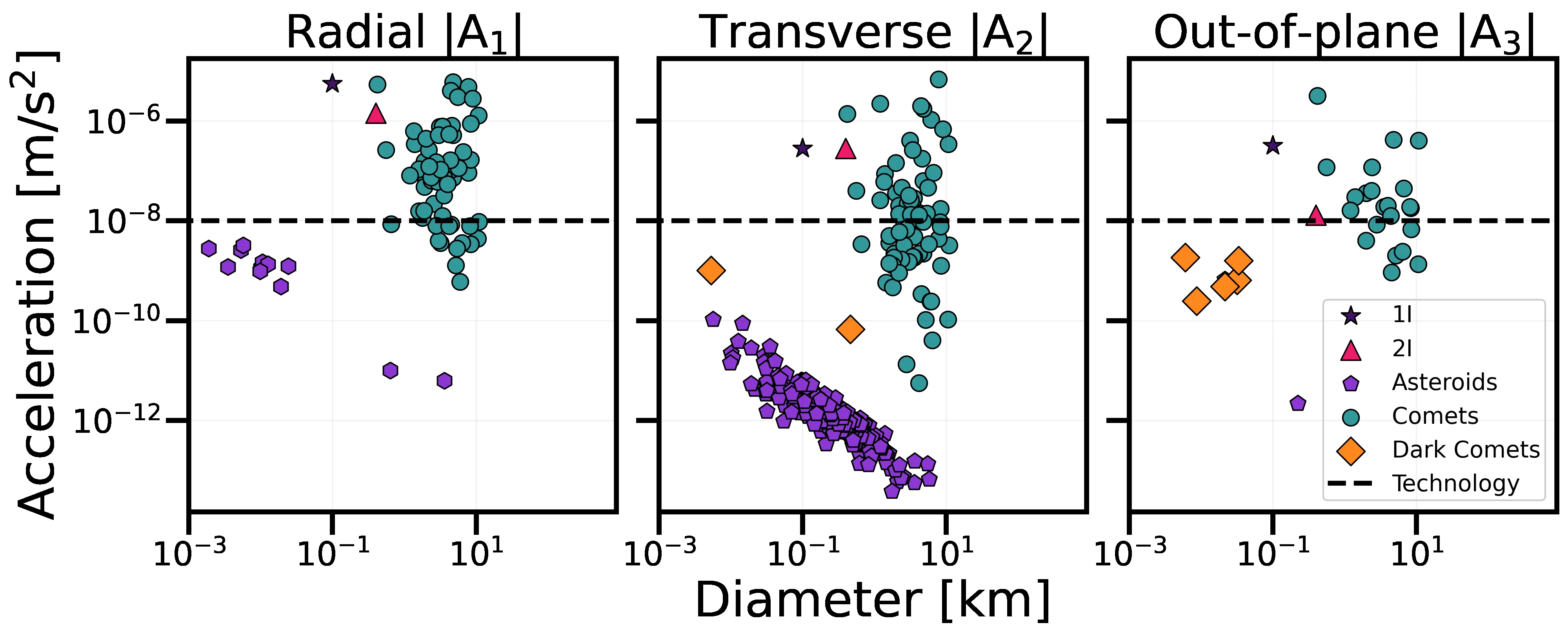
In 2017, astronomers spotted a strange object that came from another star. ‘Oumuamua, the first interstellar guest, sped up as it moved away from the Sun, as if it had an engine. Ordinary lumps of ice and rock don’t behave that way.
The new Vera Rubin Telescope will discover tens of thousands of such visitors. To figure out if they might be someone’s probes, scientists will study their ‘manners’: how their brightness changes (photometry) and what trace their light leaves in a rainbow strip — spectroscopy will reveal their chemical makeup. But there’s a risk of mistaking the alien for the artificial: we have no idea what a typical interstellar boulder looks like. An anomaly by Solar System standards could be the norm in other corners of the Galaxy.
So we’ll scrutinize these visitors following a strict protocol, like customs officers with a detector. And if even one artificial artifact turns up among thousands, humanity will forever stop feeling alone.
The first interstellar guest, ‘Oumuamua, didn’t slow down as it left the Sun: it sped up, like a motorboat. That raised suspicions it might have been artificial.
In ‘Rendezvous with Rama,’ Arthur C. Clarke described the arrival of a mysterious cylinder that turned out to be an alien spaceship, a story that echoes our interstellar visitors.