Quantum Test of Falling Bodies express
All bodies fall the same: this was first observed by Galileo. Einstein elevated the observation to the equivalence principle: gravity and acceleration are indistinguishable, giving birth to curved spacetime. For a quantum test, physicists use a torsion balance — an instrument that senses minuscule differences in attraction.
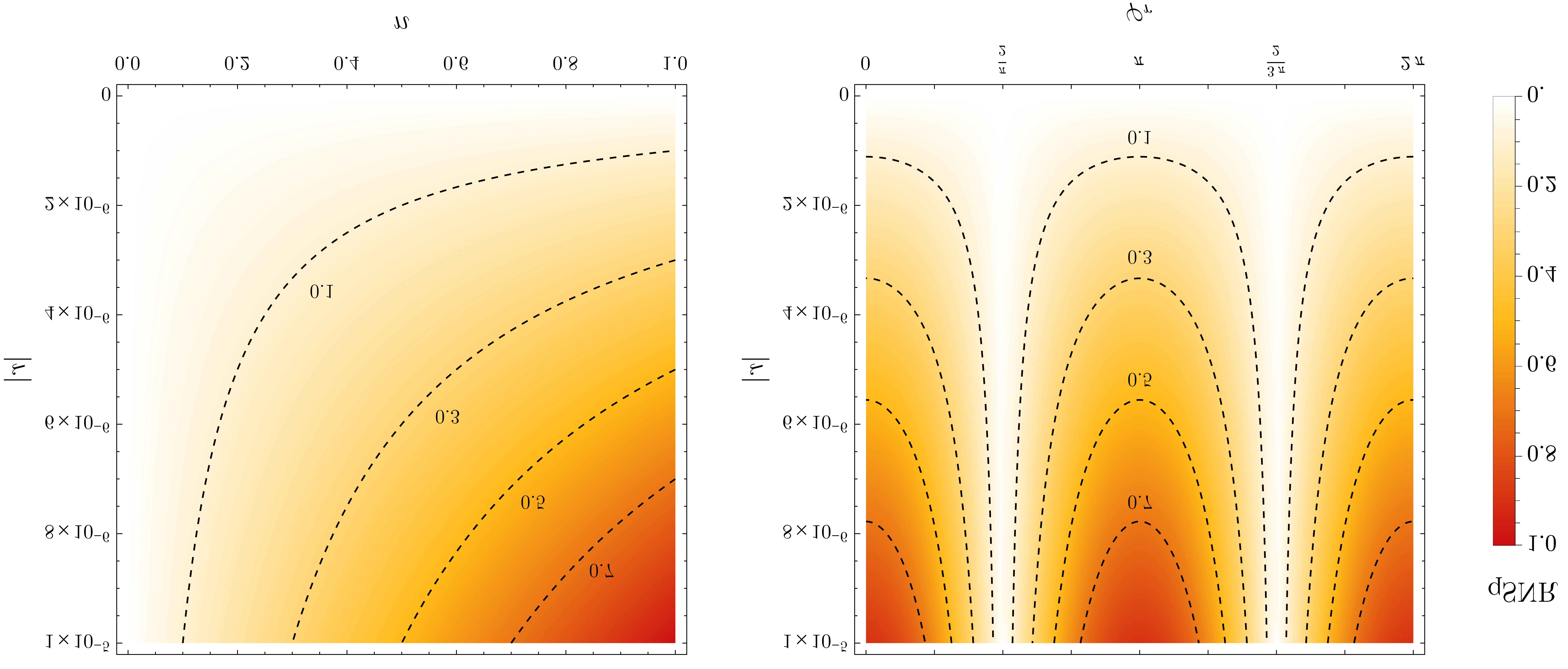
In the new experiment, weights are placed in a quantum state where their energy is spread across many values, like an out-of-focus photograph. Mass loses definiteness, turning into a 'haze.' Instead of a single twist, the balance's jitter is measured from reading to reading. If the equivalence principle is violated, the anomaly will appear in this ripple. To amplify the signal, the gravitational field is gently shaken during the experiment, causing a sharp tug — a kind of gravitational dance. Such hypersensitivity could illuminate hidden forces linked to dark matter or dark energy.
Original abstract
as written by the authors arXiv:2512.06333
We propose tests of the weak equivalence principle (WEP) using a torsion balance, in which superposition of energy eigenstates are created in a controllable way for the test masses. After general considerations on the significance of tests of the WEP using quantum states and the need for considering inertial and gravitational masses as operators, we develop a model to derive the matrix elements of the free-fall operator, showing that the variance of the acceleration operator, in addition to its mean, enables estimation of violations of the WEP due to quantum coherence in a way that is robust with respect to shot-to-shot fluctuations. Building on this analysis, we demonstrate how the validity of the WEP may be tested in a torsion balance setup, by accessing the mean and variance of a torque operator we introduce and quantize. Due to the long acquisition times of the signal as compared to the timescale on which coherent superposition states may survive, we further propose a dynamical setting, where the torsion balance is subject to a time-dependent gravitational field, and measurements of angular acceleration encode possible violations of the WEP.
The first ultra-precise tests with torsion balances were performed by Hungarian Loránd Eötvös in the early 20th century: he achieved an accuracy of $10^{-9}$—as if noticing that an elephant became lighter by the weight of a single ant.
In Isaac Asimov's novel 'The End of Eternity,' reality is governed by barely perceptible forces: this quantum test demands the same hypersensitivity.