A tabletop experiment is a physics experiment that fits on a laboratory bench, as opposed to large-scale facilities like particle accelerators or gravitational wave observatories. These experiments are designed to test fundamental physics—such as quantum mechanics, gravity, or the equivalence principle—using compact, precise apparatus. They are often cheaper and faster to build than their giant counterparts, allowing more groups to participate in cutting-edge research. Recent advances in laser cooling, atom interferometry, and micro-fabrication have enabled tabletop setups to probe phenomena that were once only accessible in space or in huge underground detectors.
History
The concept of tabletop experiments has been around since the early days of modern physics—for instance, Cavendish's torsion balance in 1798 measured gravity between lead spheres on a tabletop. However, the term has gained currency in the 21st century as a way to describe compact experiments that test quantum gravity, dark matter, and other frontier topics without needing a multi-billion-dollar facility.
How it works
Tabletop experiments rely on extreme sensitivity rather than extreme energy. For example, an atom interferometer uses laser pulses to split a cloud of cold atoms into a superposition of two paths, then recombines them to measure the phase difference caused by gravity or acceleration. Another example is a torsion balance, which measures the tiny twist of a fiber due to a gravitational or electric force. The key is to isolate the apparatus from vibrations, temperature fluctuations, and electromagnetic noise, often using vacuum chambers and active feedback systems.
In practice
Tabletop experiments are used to search for dark matter candidates like axions, to test the equivalence principle with quantum objects, and to develop quantum sensors for navigation and geodesy. They also serve as testbeds for technologies that could later be deployed in space.
Fun fact
Some tabletop experiments are so sensitive that they can detect the gravitational pull of a person walking by, requiring the entire apparatus to be placed on vibration-isolation platforms and operated remotely.
Two tiny diamonds float in a vacuum, separated by a distance that light cannot cross during the experiment. Inside each, like a frozen spark, resides an entangled spin — a quantum state linking them into a single whole. Now the diamonds begin to move, but not just any motion: each one seems to split, existing in two places at once.
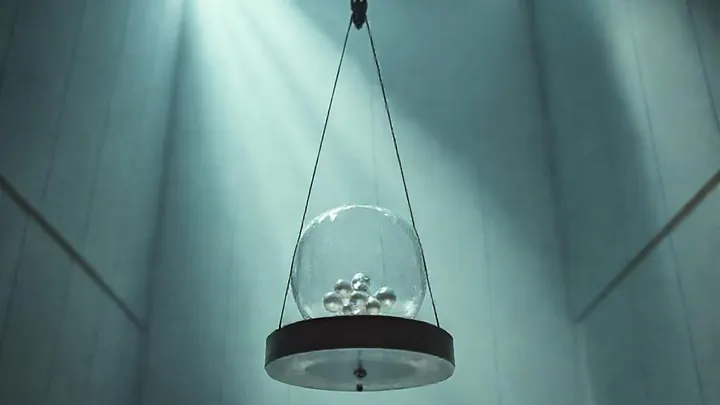
Two tiny weights, each about the mass of a grain of sand, hang in the dark at a temperature colder than deep space. They don't touch, but an invisible thread connects them — gravity. The experiment physicists are now building aims to catch the moment when that thread tugs one weight due to the motion of the other.
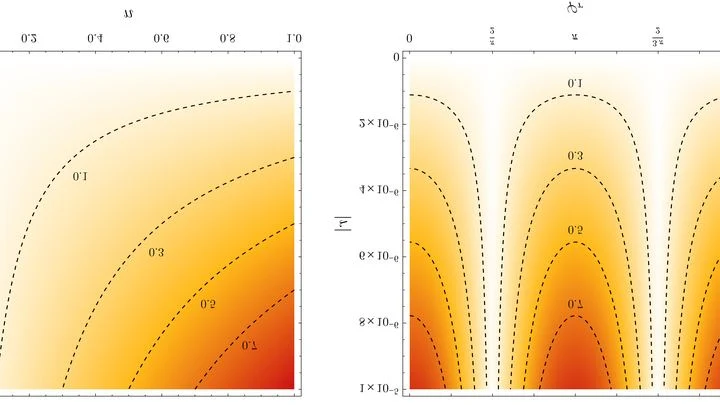
The vacuum is not as empty as it seems. If an observer moves with acceleration, the vacuum around them heats up: this was predicted by William Unruh back in the 1970s. The effect is akin to black hole radiation, but in flat space.
The weak equivalence principle, silently tested since the time of Galileo and laid at the foundation of general relativity, states: all bodies fall equally, regardless of their internal composition.
A flashlight beam in a dark room can hold a dust mote almost still: that's how optical tweezers work. But light doesn't just push the particle; it also jostles it with random kicks. Each absorbed photon strikes it like an invisible hammer. The authors of the new study have devised a light trap of a special shape.
Galileo, legend has it, dropped balls from the Tower of Pisa to prove that heavy and light objects fall equally. This law formed the foundation of Einstein's theory of gravity. Today, scientists have turned an entire space station into such a tower.
Light and matter in the tiny world obey laws that are hard to compute even on a supercomputer. Physicists build special "quantum simulators"—setups where cold atoms play the roles of particles and fields. But until now, such simulators could only depict the field in its simplest form: as if it were either present or absent.
In a quiet lab, a device the size of a microwave oven sits on a table. Inside, a coil glides smoothly up and down while a computer reads electrical signals. This is the tabletop Kibble balance — a machine that links mass to quantum constants.
Previously, such balances occupied a whole room and required a team of engineers.
Since the days of Galileo, it was believed that in a vacuum all bodies fall identically. Einstein elevated this to a principle: gravity travels at the speed of light and is the curvature of spacetime.
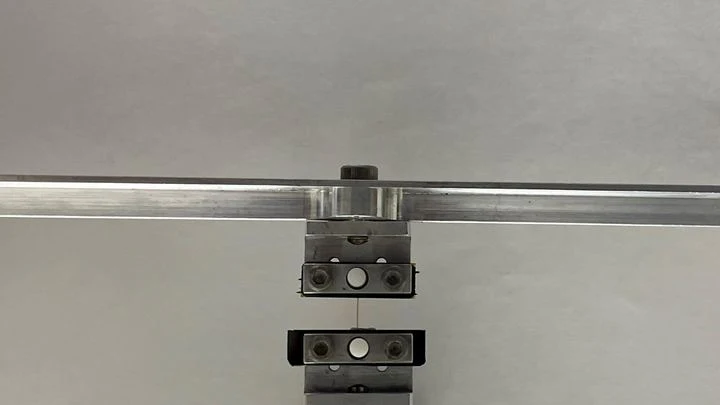
A weight about the size of a small apple hangs from a thread hundreds of times thinner than a human hair. The thread doesn't snap and barely interferes with the weight's swinging. This setup is the heart of a new lab scale for measuring gravitational attraction.
All bodies fall the same: this was first observed by Galileo. Einstein elevated the observation to the equivalence principle: gravity and acceleration are indistinguishable, giving birth to curved spacetime.