Are you one of the authors of this paper? Email us from your institutional or work email address mentioning this article's arXiv ID and we'll verify you and give you edit access to this page.
Are you an author who sees something we missed or got wrong? Write to us — the subject line already carries the paper id. We read every note and correct the write-up.
Amidst strong chaos, a superfluid phase was born, reminiscent of the behavior of helium cooled nearly to absolute zero. Usually the measure of disorder, entropy, only grows, but here quantum chaos gave rise to order. This effect could show up in various materials, from high-temperature superconductors to ultracold atoms. Moreover, it turned out that superfluidity in disorder can be more robust than in perfectly clean systems, as if dirt strengthens the flow.
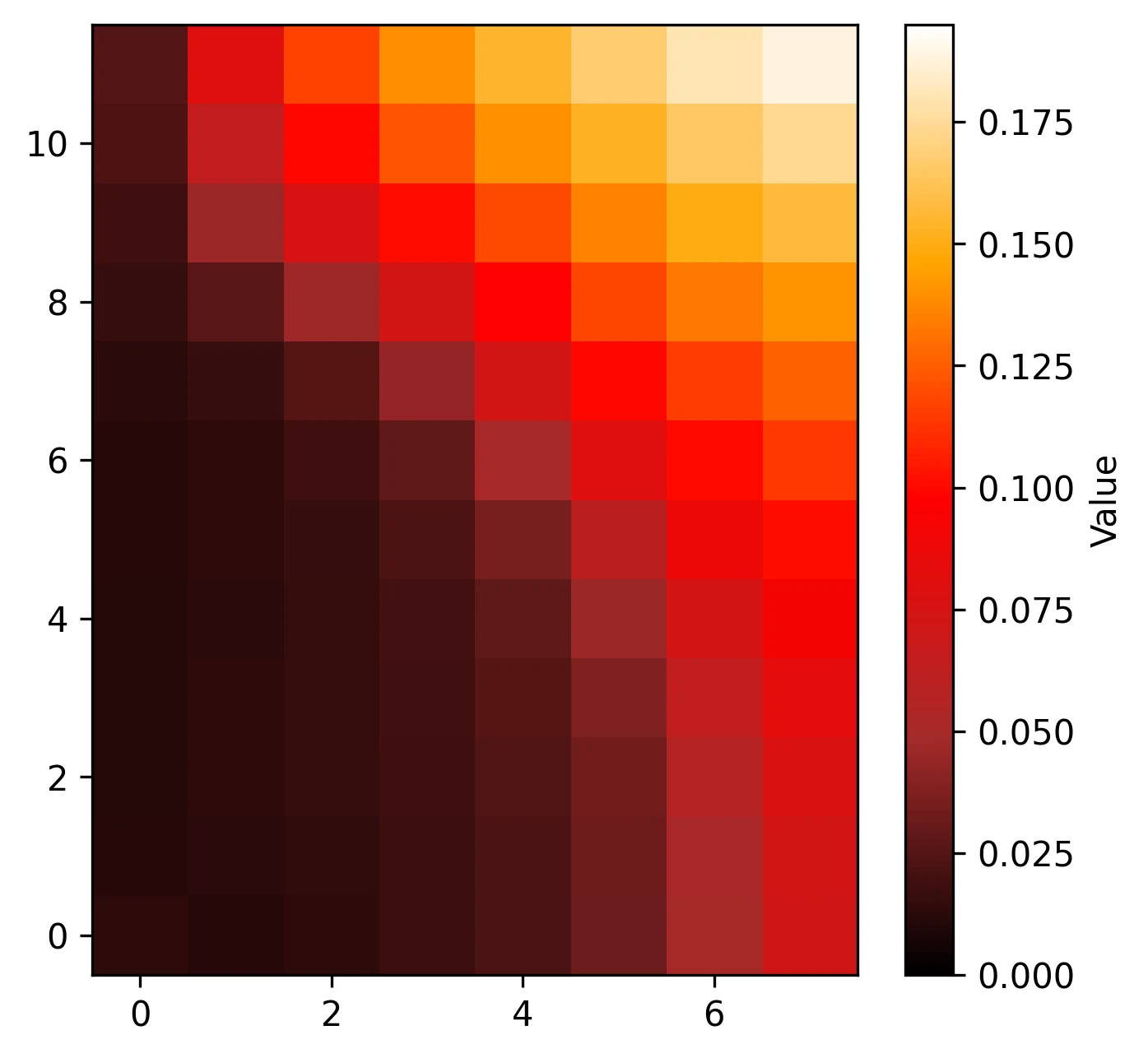
The emergence of states with long-range correlations in a disordered landscape is rare, as disorder typically suppresses the particle mobility required for long-range coherence. But when more than two energy levels are available per site, disorder can induce resonances that locally enhance mobility. Here we explore phases arising from the interplay between disorder, kinetic energy, and interactions on a superconducting processor with qutrit readout and control. Compressibility measurements distinguish an incompressible Mott insulator from surrounding compressible phases and reveal signatures of glassiness, reflected in non-ergodic behavior. Spatially-resolved two-point correlator measurements identify regions of the phase diagram with a non-vanishing condensate fraction. We also visualize the spectrum by measuring the dynamical structure factor. A linearly-dispersing phonon mode materializes in the superfluid, appearing even when disorder is introduced to the clean Mott insulator. Our results provide strong experimental evidence for disorder-induced superfluidity.