Ming Li

6 articles · 30 co-authors · latest: 2026-07-16
32 citations · h-index 2 · 8 papersData: Semantic Scholar

We have retold 6 papers by this author. most often about: quantum computer, quantum state, quantum information. 30 co-authors across our retellings.

Links in the knowledge graph
Quantum Physics2025-12-151 minarXiv:2512.13908express
Magic on a Chip: Growing Quantum States
Quantum computers require magical states — special helper particles for error-free operation. Previously, they were obtained through repeated purification, akin to endless distillation of alcohol: each step added энтропию (disorder), like weeds in a garden, and consumed resources.
Quantum Physics2025-12-241 minarXiv:2512.21416express
When Disorder Gifts Superfluidity
Quantum particles in a strongly disordered environment behave like dancers executing steps in sync: each knows its own move and never collides with others. This kind of coordinated, frictionless flow, superfluidity, unexpectedly emerged in an experiment on a superconducting quantum chip.
Quantum Physics2026-01-041 minarXiv:2601.01309express
Quantum Glass from Qubits
Ice cubes in a glass melt, and the water mixes on its own. Many quantum systems behave this way: particles exchange energy, and after a while, order disappears. But if you add a spoonful of honey to the glass, mixing slows down, and in intense cold, the water freezes into glass — without a crystal lattice, but also without flow.
Quantum Physics2026-01-081 minarXiv:2601.05118express
The Photonic Lathe: 100,000 Custom-Made Photons
Creating light with an exact number of photons is like stamping exactly 100,000 flawless coins. Until now, physicists could only control dozens of particles. The 'optical lathe' technology breaks this barrier: virtual lenses, like milling cutters, eliminate 'blurriness' and ensure each bunch contains exactly the specified number of photons. Counting becomes perfect.
Statistical Mech2026-05-162 minarXiv:2605.16987express
How Connectivity Percolates Through Dimensions
A handful of matches falls on the table. Each lies however it lands, but in our minds we turn each into an arrow — from one end to the other. Now ask: can you get from one point to another by moving only in the direction of the arrows? A group of points where you can reach any one from any other is called a strongly connected cluster.
eess.AS2026-07-161 minarXiv:2607.15198express
How to fish out a friend's voice from a noisy conversation
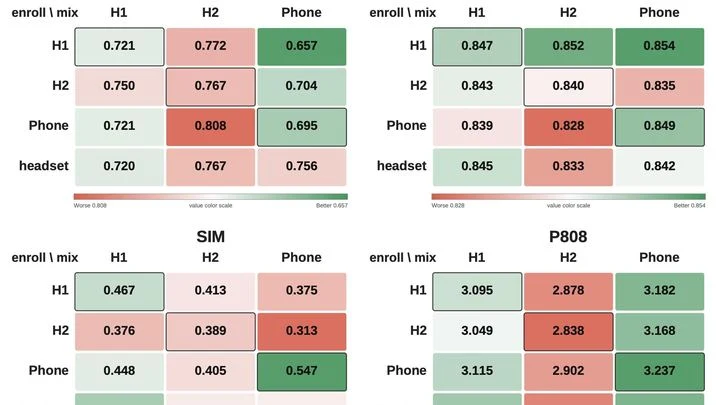
A human effortlessly picks out the desired voice from the clamor of a party. For a computer, the same task is still at the edge of its abilities. Previous programs trained on sterile recordings, free of echo or the clinking of appliances.