Cosmic Fireflies: How Dark Matter Turns into Visible Light ✎ express
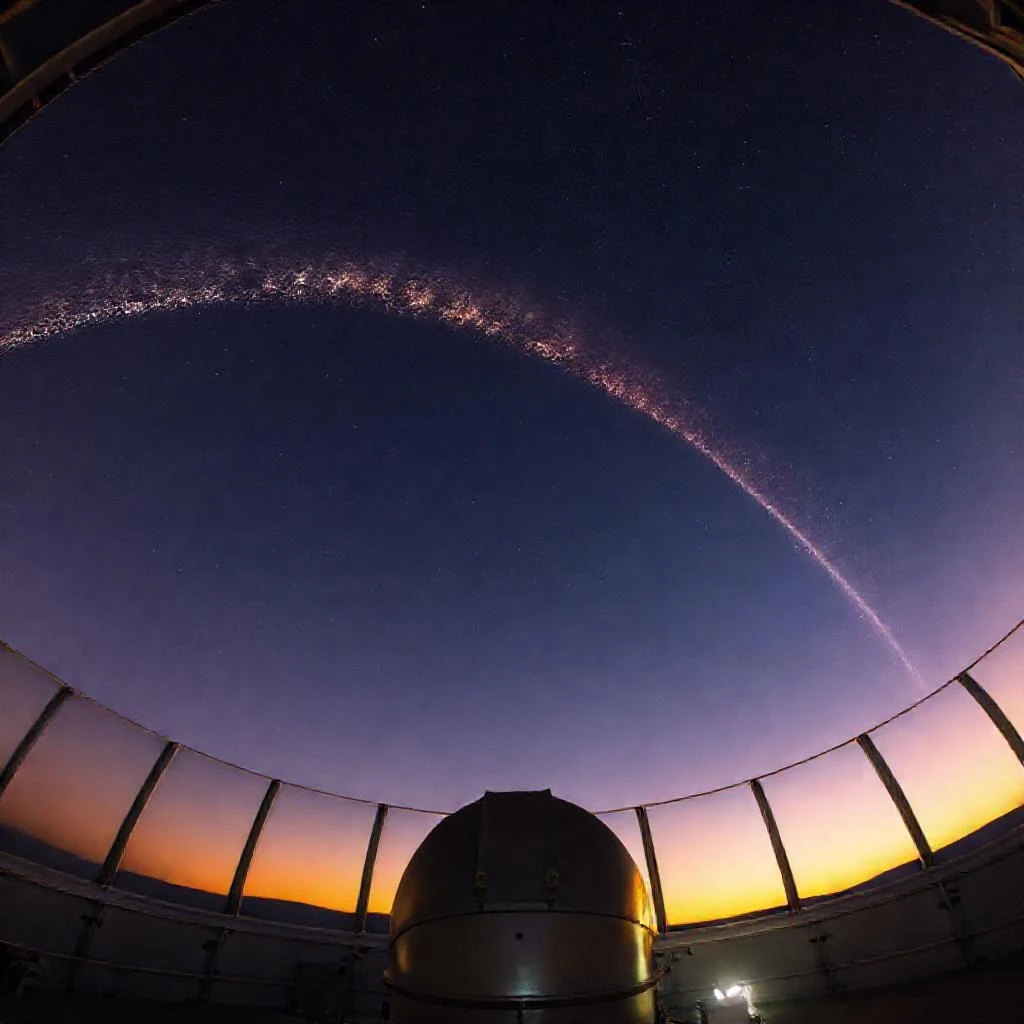
Dark matter is the invisible framework of the Universe. It doesn't emit light, but its gravity keeps galaxies from flying apart. A new hypothesis: dark matter consists of dark photons — ghostly particles that are invisible under ordinary conditions. Inside galaxies, these particles gather into clouds, like invisible fireflies waiting for a signal.
When such a cloud enters a magnetic field, it 'lights up' — the dark photons transform into ordinary light. It's like a firefly's flash in the night. Even Maxwell showed the unity of electricity and light, and Vera Rubin discovered that dark matter in galaxies outweighs visible matter by five times. Now scientists want to catch this faint light with telescopes.
The most unexpected twist: this glow doesn't need giant energies. Even a weak magnetic field, like Earth's, can make dark clumps emit light. Perhaps right now, invisible clouds are passing through us, occasionally flashing in planetary magnetic fields. If the hypothesis is confirmed, the Universe will turn out to be filled with a quiet shimmering — light that has always been there but remained invisible. Next-generation telescopes might already be poised to pick up these signals.
If we could see this glow, the night sky might sparkle with countless clouds — like a swarm of fireflies over a nighttime meadow.