Dark Matter Hunters: How to See the Invisible express
Dark matter is an invisible substance that holds galaxies together but emits no light. Catching its particles is like trying to hear a whisper in a noisy hall. Ordinary detectors only pick up loud impacts, while weak signals get drowned out by background noise.
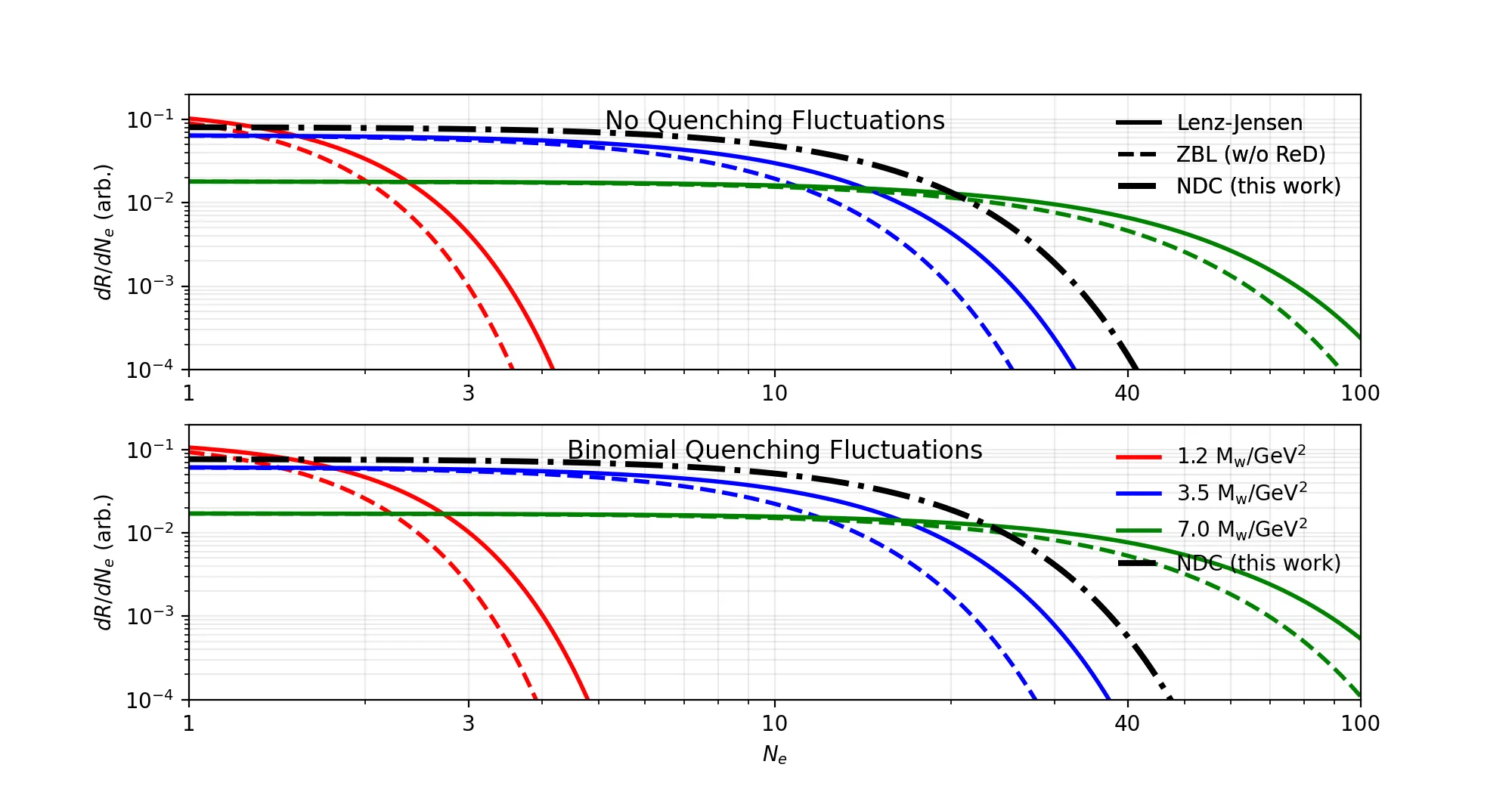
In liquid argon, a dark matter particle colliding with an atomic nucleus produces a spark of light and a cloud of charges. But for a weak nudge, the spark barely glows. Scientists added a correction to the calculations that accounts for how the electric field inside the nucleus enhances the interaction during slow collisions. It's like adjusting a microphone to pick up quiet sounds. Now the detector, equipped with silicon photomultipliers (which count every photon), can spot a nudge a thousand times fainter than before.
Another approach is a detector based on quantum bits. A quantum bit (qubit) is like an ultra-sensitive pendulum that swings with the slightest breeze. Two chips sit side by side: one senses vibrations, the other reads them out. A passing dark matter particle makes atoms in the chip jitter, and the qubit notices. Such a detector can feel an energy of 30 millielectronvolts — a billion times less than the energy needed to lift a speck of dust by a hair's breadth.
These tricks will help hunt for light dark matter particles that previously passed through detectors unnoticed. Perhaps soon we will hear their whisper for the first time.
An energy of 30 millielectronvolts is so tiny that it would only be enough to shift a single electron by a distance of a few atoms.