Dust Grains in Space: Why They Hum Differently Than Expected express
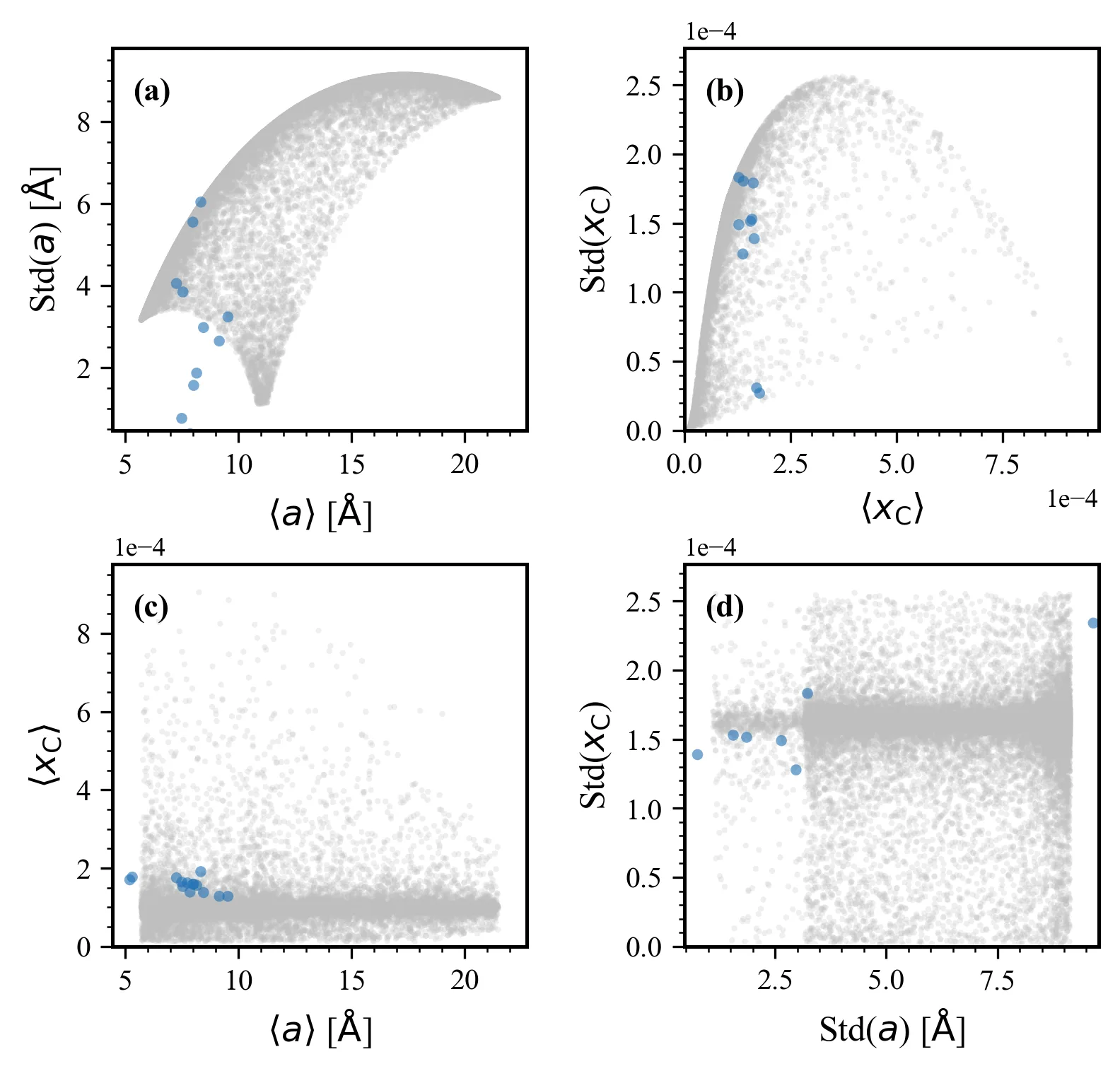
Cosmic dust isn't dirt: it's tiny grains, like soot from a campfire, scattered between the stars. Some of them spin at breakneck speeds, millions of times per second, emitting faint radio waves. Astronomers call this anomalous microwave emission: it interferes with studies of the early universe, but it's also a mystery in its own right.
The authors of a new study tested what most affects the pitch and width of this radio voice. It turns out the key factors are grain size, shape, and the environment. In cold, dark gas clouds, everything matches observations. But in bright regions around hot stars, where hydrogen glows pink, there's a big discrepancy. It seems small grains there simply get destroyed — burned up like paper in a furnace. So the glow telescopes pick up actually comes from neighboring, calmer clouds.
To sort this out, the scientists propose a new analysis method: break the spectrum into components and use computer models to quickly match which set of grains could produce such a signal. It's like guessing how many violins and trumpets played from the sound of an orchestra.
Original abstract
as written by the authors arXiv:2601.06270
Recent observations of anomalous microwave emission (AME) reveal spectral features that are not readily reproduced by spinning dust models. We examine how dust grain distributions and environmental parameters determine the peak frequency and spectral width of AME spectral energy distribution (SED). Using Monte Carlo sampling and global sensitivity analysis, we find that AME features are dominantly controlled by three parameters: grain size, shape, and a phase-dependent environmental parameter. We also quantify the effects of SED broadening from ensembles of these dominant parameters, finding that the level of tension with observations is strongly phase dependent: Molecular Cloud (MC) is fully consistent, Dark Cloud (DC) shows minor deviations, and HII regions exhibit significant offsets in peak frequency. The discrepancy in HII echoes the observed depletion of small dust grains, particularly polycyclic aromatic hydrocarbons (PAHs), in HII regions. However, an observational HII region may still have AME originating from nearby non-HII clouds. In this case, model calculations for HII regions would be inappropriate. Reproducing MC and DC AME features requires ensemble variations in both grain size and environmental parameters are required to reproduce the observed spread in peak frequency and spectral width. We further propose moment expansion and emulation-based inference methods for future AME spectral analysis.
Dust grains in space can spin up to a billion revolutions per second — faster than any human-made motor.