Spectral energy distribution (SED) describes how the energy emitted by an object is spread across different wavelengths of electromagnetic radiation. It is a fundamental tool in astrophysics, as the shape of an object's SED reveals its temperature, composition, and physical processes. For instance, a hot star emits most of its energy in ultraviolet light, while a cool cloud of dust emits in infrared. By measuring the SED, scientists can identify what an object is and what it is doing.
History
The concept emerged in the late 19th and early 20th centuries with the study of blackbodyradiation, leading to Planck's law in 1900. Astronomers began applying SEDs to stars and galaxies in the mid-20th century as detectors improved across different wavelength bands.
How it works
The SED is typically a plot of energy flux versus wavelength or frequency. For a blackbody, the SED follows a smooth curve described by Planck's law, with the peak wavelength inversely proportional to temperature (Wien's law). Real objects deviate from this ideal due to emission lines, absorption features, and non-thermal processes, which provide additional information about the object's composition and environment.
In practice
SEDs are used to classify stars, galaxies, and quasars, and to estimate the properties of dust in interstellar space. In remote sensing, SEDs help identify materials on planetary surfaces.
Fun fact
The Sun's SED peaks in the visible part of the spectrum, which is why human eyes evolved to be most sensitive to that range of wavelengths.
The electron beam of a microscope usually flies through emptiness, like a courier on an empty highway. Any air molecule is a bump that makes it bounce and lose direction. So before, to examine a sample, you had to freeze it, dry it, or coat it with metal—and still you could only look in a vacuum.
Twelve stars have received X-ray passports. Now, for each of them, we know the exact radiation dose received by a planet in the habitable zone, the region where liquid water is possible.
A protein in a cell is not a frozen sculpture. It is constantly in motion: bending, breathing, jittering. This motion, its dynamics, determines how the protein works. But peering directly into the dance is hard, and computer simulations often demand enormous computing power.
A new approach, named DynaMode, views protein motion as a musical piece.
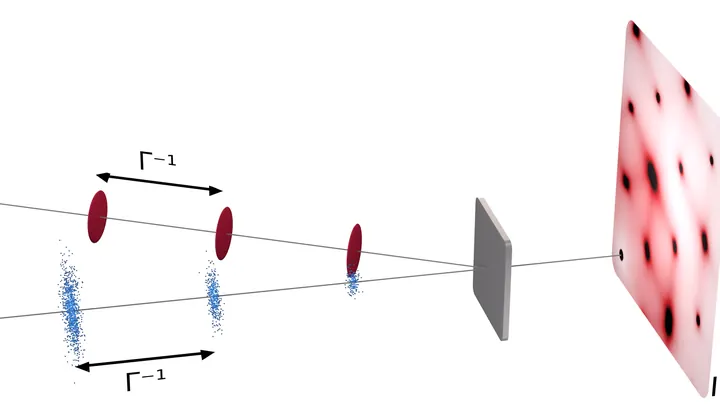
A camera that captures not light but a stream of electrons reflected off a crystal is a hybrid pixel detector. It can count every electron that hits it, generating almost no noise of its own. In normal mode, when the electron beam flows continuously, the detector works perfectly.
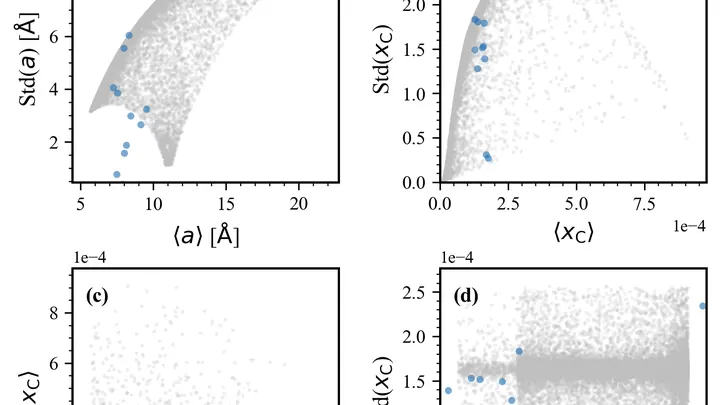
When a bright spot flares up on a star, astronomers want to know how much energy was released into space. They used to picture a flare as a growing campfire: the area of the fire increases, but the heat remains the same. That made calculations simpler, but reality turned out to be different.
A solar flare is like an explosion in the atmosphere: bright, fast, with different 'voices.' X-rays come from electrons that have been accelerated and then abruptly slowed down, losing energy. But in 2017, detectors on the Fermi satellite caught a different signal — gamma rays that didn't fit this picture.
Cosmic dust isn't dirt: it's tiny grains, like soot from a campfire, scattered between the stars. Some of them spin at breakneck speeds, millions of times per second, emitting faint radio waves. Astronomers call this anomalous microwave emission: it interferes with studies of the early universe, but it's also a mystery in its own right.
Fast radio bursts are millisecond-long cosmic signals. Previously, searching for them was like blindly tuning a radio dial. The EDEN neural network sees the entire frequency spread and recognizes the burst pattern like a musician reads notes. On source FRB 20121102A, it found 5,927 bursts — three times more than before.
At Jefferson Lab, electrons are accelerated to 12 GeV and smash into protons to pry out their secrets. But existing detectors are like cameras with a narrow field of view: you either see a lot but dimly, or brightly but only a tiny patch. Electron scattering is the main tool, but statistics are insufficient for subtle effects.