Fossil Stars Found in Dwarf Galaxy express
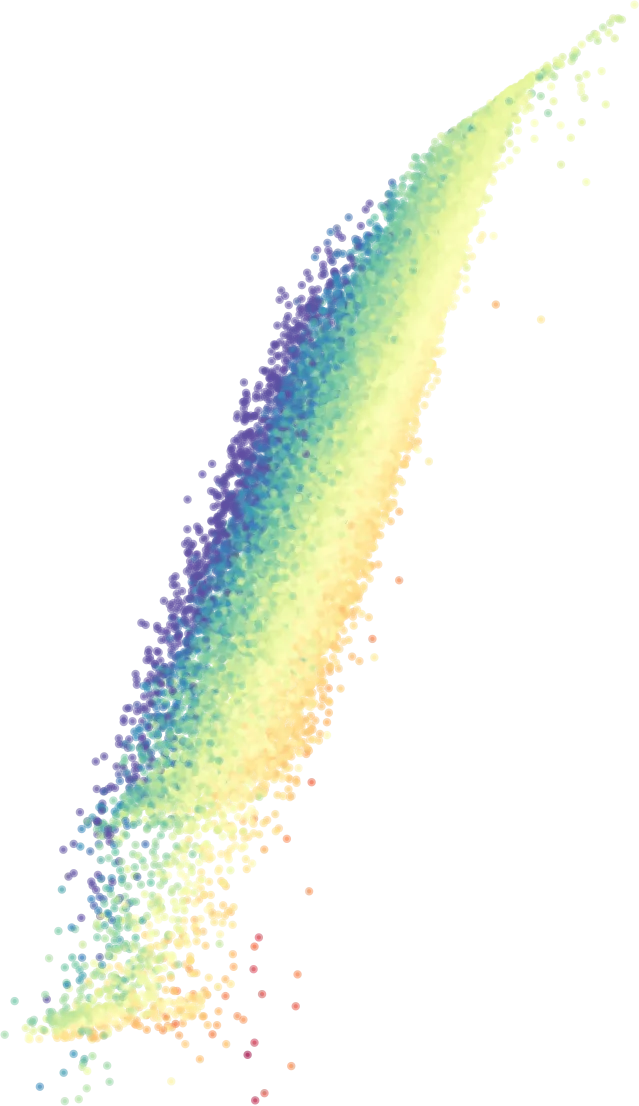
In the Large Magellanic Cloud, a galaxy that orbits our Milky Way, astronomers have caught five stars that look like fossils from the very distant past. They contain almost no metals, only one-hundredth to one-thousandth of what the Sun has, but they have tens of times more carbon. Such stars are called carbon-enhanced metal-poor stars, or CEMP stars for short.
These stars are like old photographs of the early universe. When they were born, the heavy elements that supernova explosions and dying stars later scattered around did not yet exist. So their composition tells us what was happening at the very beginning. Previously, no such stars had been found in the Large Magellanic Cloud, although many are known in our Galaxy. Astronomers suspected the selection method was to blame: the instruments were filtering out exactly these stars because they look different than expected.
The new finds were selected using data from the SDSS-V telescope, and they turned out to be the most metal-poor among all known stars in this galaxy. The carbon in them likely came from a neighboring companion star: it aged, swelled, and shed its outer layers, rich in carbon, onto its partner. It's as if one star shared its "ashes" with another. Now scientists are waiting for a full analysis of all the data to confirm whether this is really the case and how common such stars are beyond the Milky Way.
The discovery is important because by comparing such stars in different galaxies, we can test whether early chemical evolution proceeded the same way throughout the universe. If the frequencies and properties of CEMP stars turn out to be different, it means the environment influenced how the first generations of stars were born.
Astronomers call all elements heavier than helium "metals," even carbon and oxygen. So a star with "few metals" can be rich in carbon.
In Stanislaw Lem's novel "Solaris," the planet's ocean consists of unusual matter that may have formed in the early universe, where the chemical composition was quite different.