Atom in a Mirror Trap: A Step Toward the Quantum Internet express
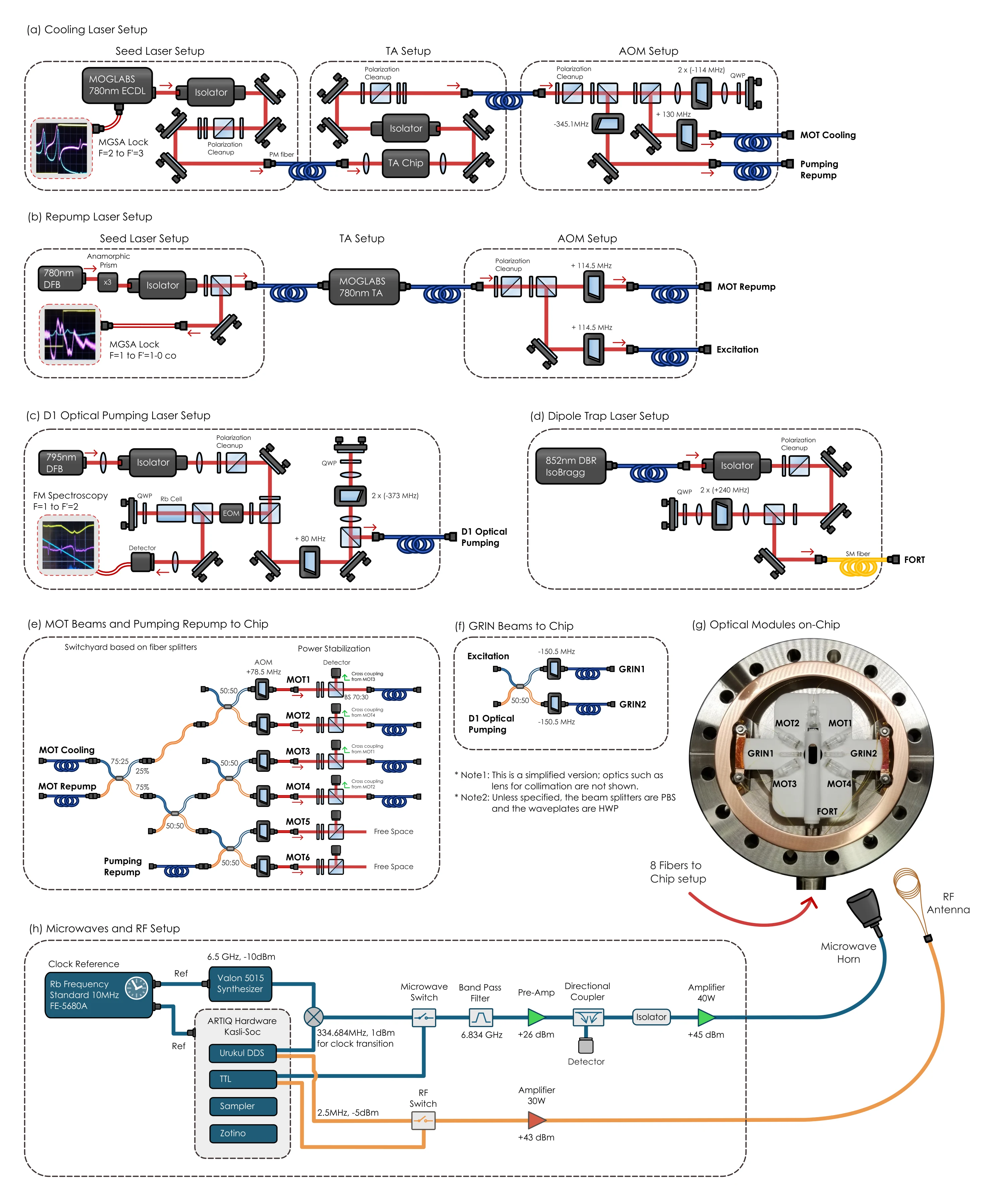
A grain-of-sand-sized device: a tiny mirror-dish holds a single rubidium atom and collects the glow it emits under a laser beam. The trapped light particles are sent into an optical fiber — the whole setup is precise and stays aligned even when shaken.
The key achievement is reliable entanglement between the atom and a quantum of light. Entanglement means: measuring one particle instantly tells you the state of the other, no matter where it is. The fidelity of this link reached 93%, and with correction for readout errors — 98%. The foundation was laid by Nobel laureates Alain Aspect, John Clauser, and Anton Zeilinger.
Ironic: the parabolic mirror — an ancient invention, Archimedes' legendary weapon for setting enemy ships on fire — today catches light from individual atoms with 5% efficiency (and 9% after coupling to an optical fiber). This design was replicated in two labs, proving its modularity. Such nodes can be mass-produced, assembling a quantum internet from ready-made blocks.
Parabolic mirrors are ancient: legend has it Archimedes used them to set Roman ships on fire. Now they catch single particles of light.
The idea of entanglement inspired the ansible — the instant interstellar communicator from Ursula K. Le Guin's novels.