Mass production refers to the manufacturing of large quantities of a standardized product, typically on an assembly line or through automated processes. In the context of catalysts, it means producing catalytic materials—such as those used in chemical reactors, automotive exhaust systems, or industrial synthesis—in volumes sufficient for commercial or industrial use, rather than in small laboratory batches. The challenge is maintaining consistent quality and performance across millions of units, since even tiny variations in catalyst composition or structure can drastically alter efficiency.
History
The concept of mass production was popularized by Henry Ford in the early 20th century for automobiles, but its application to catalysts grew with the petrochemical industry in the 1940s–1950s, when companies like Standard Oil developed fluid catalytic cracking processes requiring enormous quantities of uniform catalyst particles.
How it works
Mass production of catalysts relies on scalablesynthesis methods, such as precipitation, impregnation, or chemical vapor deposition, adapted from lab-scale recipes. Key steps include precise control of raw material purity, temperature, and reaction time, followed by automated shaping (e.g., pellets, monoliths) and rigorous quality testing. Statistical process control ensures that each batch meets specifications, while continuous manufacturing lines allow for high throughput.
In practice
Mass-producedcatalysts are essential in oil refineries, fertilizer production (Haber-Bosch process), and automotive catalytic converters, where millions of units are manufactured annually to meet global demand.
Fun fact
A single modern catalytic converter contains about 3–7 grams of platinum-groupmetals, and mass production of these devices consumes roughly half of the world's annual platinum supply.
Dark matter remains one of the greatest mysteries of modern physics. Back when Vera Rubin observed galaxy rotation, she proved that visible matter is insufficient to keep stars from flying apart.
A cell is like a library where thousands of books are copied every day. Molecular machines, polymerases and ribosomes, slide along a template chain and assemble a copy, link by link. These machines have several states: they can slow down, make mistakes, or switch. Previously, calculating such a process took hours.
A busy intersection without traffic lights. Cars drive, brake, and change lanes, and from the outside, it looks like complete chaos. But if you watch for a while, you can notice a rhythm: the flow thickens and thins. In physics, this rhythm of disorder is called entropy: it shows how far a system is from calm equilibrium, like water in a boiling kettle.
A library of 27,000 books, and every one of them is about concrete. Each contains a mix recipe, temperature, and strength. But the information is scattered across paragraphs, tables, and footnotes. For a human, gathering it all together would take years. The program did it in an hour.
The Red Planet is surrounded by the rubble of failed worlds — rocky boulders stuffed with metal. Shipping a kilogram of steel from Earth to Mars costs as much as several cars. It's far cheaper to pick up space junk right in orbit.
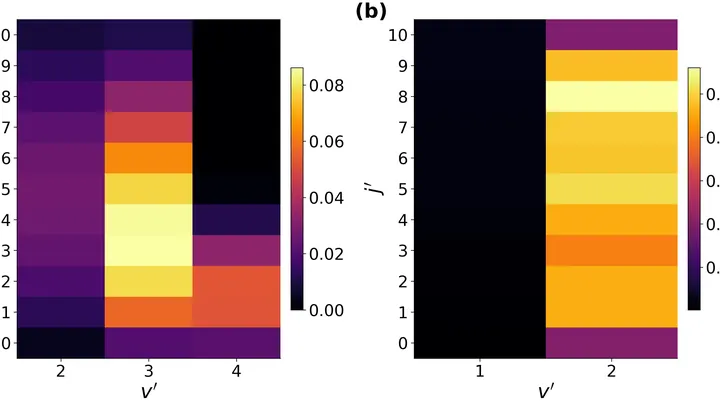
In the quantum world, a collision between particles doesn't destroy their individuality but ties them into an inseparable knot: internal states and motions become intertwined like threads in an intricate tapestry.