First Stars Left Their Mark in Dwarf Galaxies express
The oven that once baked the first stars has long gone cold, but crumbs from that bread remain. These crumbs are carbon atoms scattered on the surfaces of old stars in tiny satellite galaxies of the Milky Way. Such galaxies are called ultra-faint dwarfs: each contains only a few thousand stars and shines barely perceptibly. But they are the oldest and most metal-poor corners of our galactic neighborhood.
The first stars in the universe consisted only of hydrogen and helium — other elements simply did not exist. When such stars died, they scattered new atoms around them, including carbon. The next generation of stars was born from this 'polluted' gas. Therefore, stars with high carbon and low iron content (so-called CEMP-no stars) are considered direct descendants of the first lights.
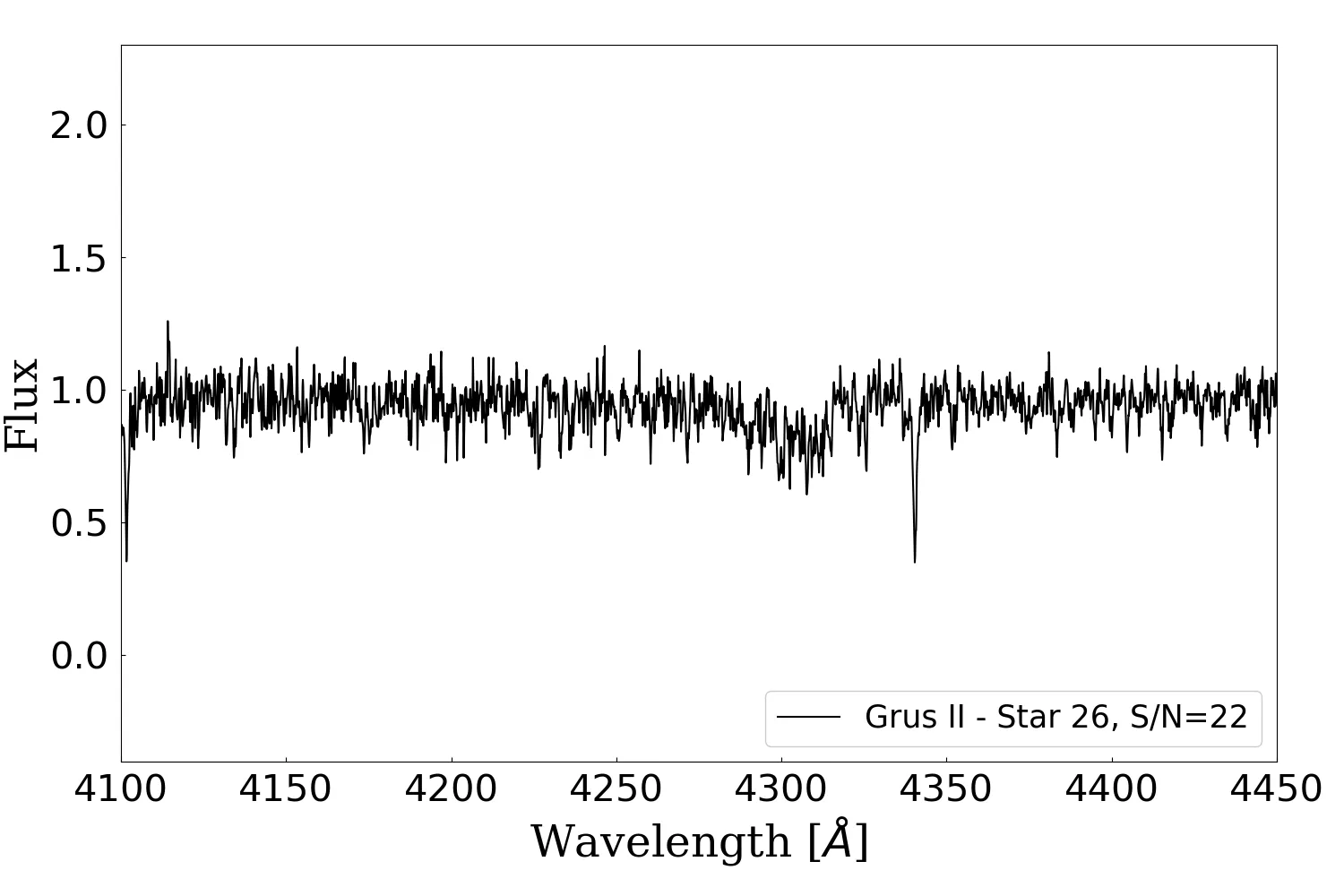
Astronomers pointed the Very Large Telescope (VLT) in Chile at two such galaxies — Grus II and Tucana IV. The FLAMES/Giraffe spectrograph split the light from 38 candidate stars into a rainbow to measure their chemical composition. In Grus II, they found 13 stars belonging to the galaxy; in Tucana IV, 7. Among them were three stars with extreme carbon content: carbon in them is ten times more abundant than iron. It's like finding in an old house a recipe written by the first baker's hand.
Such findings help reconstruct the history of the first chemical enrichments in the universe. Each CEMP-no star is a living record of what happened when the first stars exploded and seeded the cosmos with new elements. The more such stars we find in different dwarf galaxies, the clearer the picture becomes of how all the diversity of chemical elements, including those that make up ourselves, was born from simple hydrogen and helium.
In Grus II, stars were found with carbon content more than 10 times higher than iron: it's as if a pie had ten times more raisins than flour.