A Window That Opens by Itself express
A tiny vanadium oxide particle behaves like a window with adjustable transparency: in one state it lets infrared light through, and in another it starts absorbing it. The switch doesn't happen abruptly but smoothly, like turning a dimmer knob to adjust a lamp's brightness. It's this transition between metallic and insulating states that scientists have now examined with unprecedented detail.
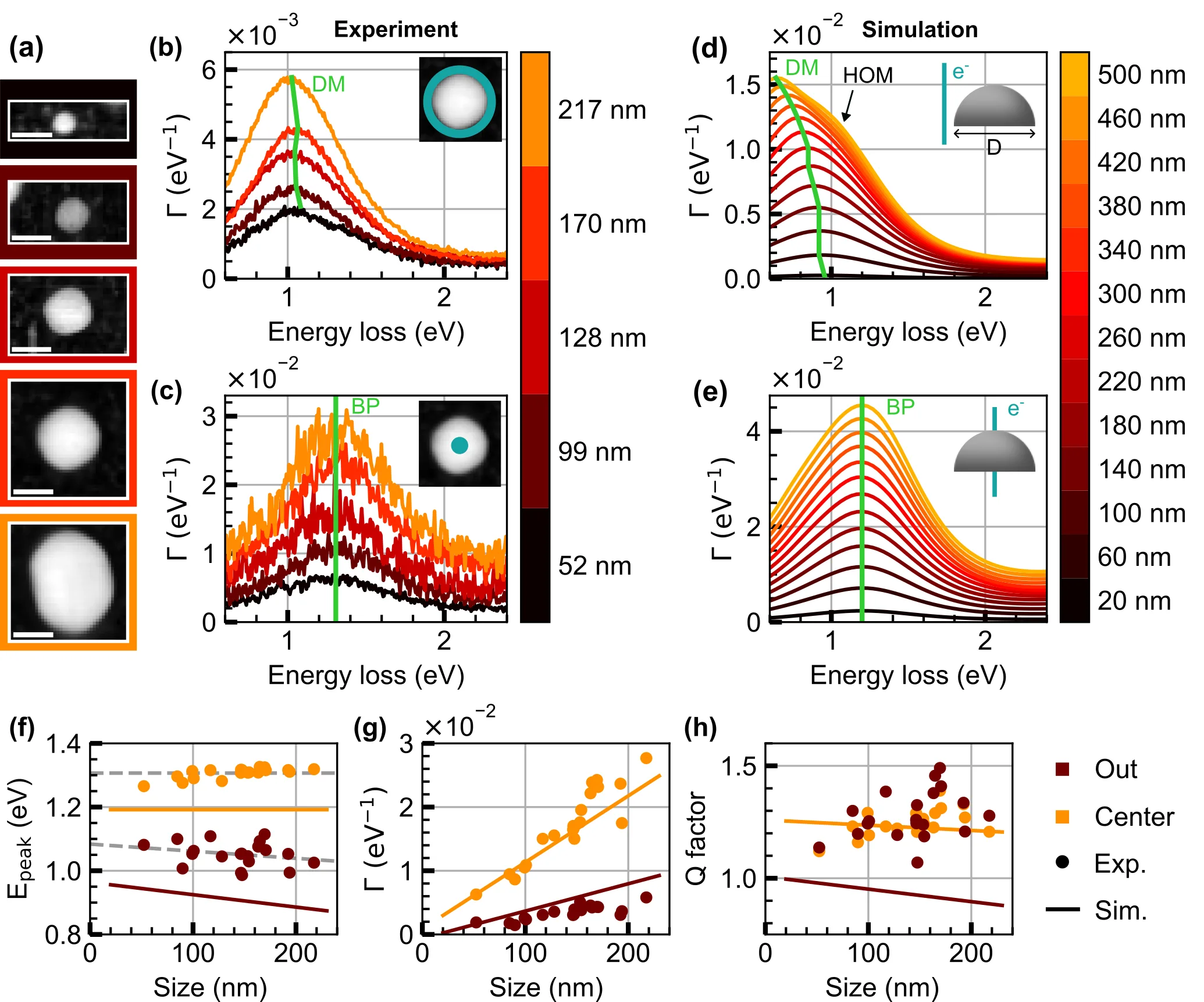
Using an electron microscope that bombards the particle with electrons and analyzes the energy they lose, researchers saw how light interacts with vanadium oxide particles of different sizes. They captured several types of electron oscillations — from the fundamental "breathing" mode to higher harmonics, akin to the overtones of a musical string. It turned out that when a 120-nanometer particle is heated, the light absorption peak shifts smoothly by 0.18 electron-volts, as if a note played by an instrument gradually rose by a quarter tone.
Such smooth tunability opens the way to smart glass that darkens on its own in hot weather, or optical switches for future computers where photons, not electrons, do the work. The researchers believe that by stretching particles into elongated shapes, an even wider tuning range could be achieved, like a window that could change not just its transparency but also the color of the light it lets through.
The vanadium oxide transition from insulator to metal can be triggered not only by heat but also by an electric voltage or a laser pulse, and it's reversible millions of times.
In Neal Stephenson's novel "The Diamond Age," smart materials adapt to their surroundings — vanadium oxide particles could be a first step toward such adaptive surfaces.